ADVERTISEMENT

Celebrating the pillars of our homes

Published Jun 15, 2025 12:05 am  |  Updated Jun 14, 2025 04:44 pm
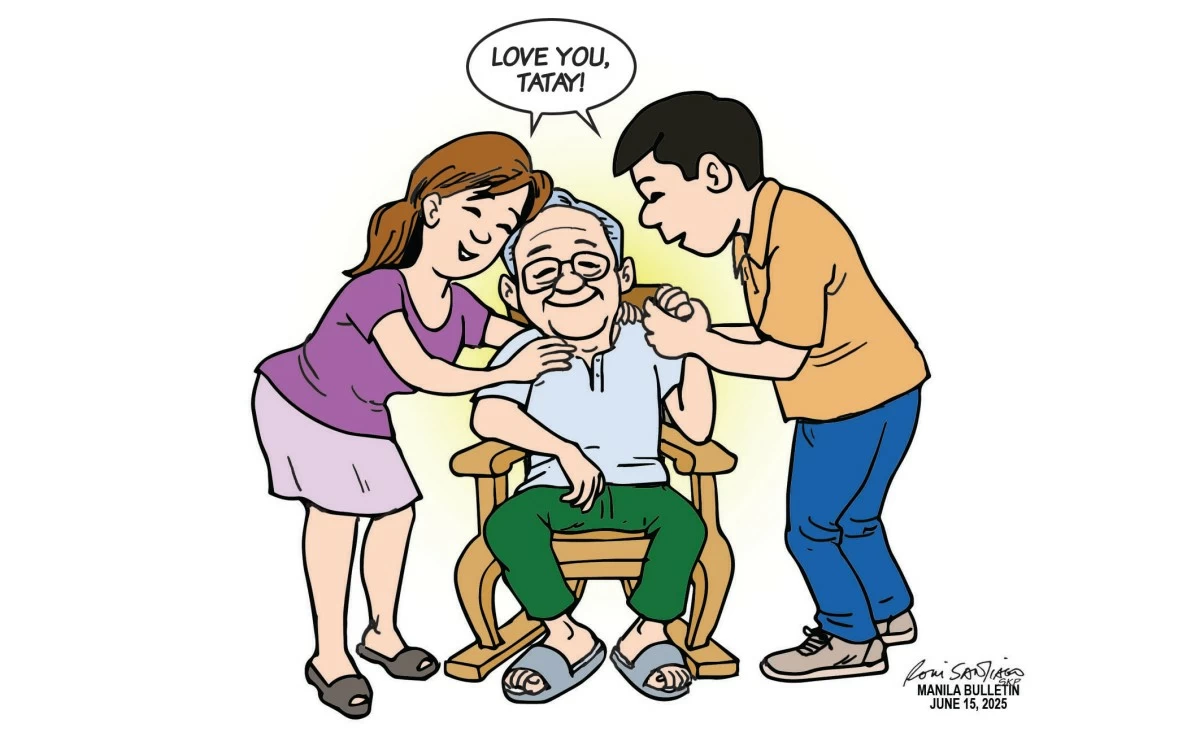
Today, June 15, we pause to honor one of the most influential figures in our lives—our fathers. On Father’s Day, celebrated every third Sunday of June in many countries, we pay tribute to the strength, sacrifice, and steadfast love of fathers who serve as the quiet yet powerful anchors of our families. Many of them are considered the quiet parent who keeps a distance from the emotional needs of their children.
In the traditional Filipino household, the role of a father has long been regarded as the “haligi ng tahanan” or the pillar of the home. He is the provider, protector, and moral compass. Whether working long hours in the fields, in offices, or abroad as an overseas Filipino worker (OFW), the Filipino father shoulders immense responsibilities to ensure his family’s well-being. His sacrifices, though often unspoken, often becomes like a legend, told as stories through generations.
While fathers have historically been associated with financial provision, the evolving Filipino family now recognizes their emotional presence as equally vital. More fathers are involved in parenting beyond discipline and decision-making. They take their turn to baby-sit their children, drive them to school, help with homework, cook meals, and lend a listening ear during difficult times. Modern Filipino dads are redefining masculinity—not as a stoic figure but as a caring, nurturing partner and parent.
Father’s Day reminds us not just to honor them once a year, but to cultivate daily gratitude for their presence and influence.
How can we meaningfully pay tribute to the fathers in our lives?
First, give him your time. A simple conversation over a meal, a day spent hiking, or just watching his favorite movie together can mean more than material gifts. Quality time allows fathers and children to bond, to share, and to create lasting memories.
Second, express gratitude for what he has done – or is doing – for you. Words are powerful. A handwritten letter or a sincere “Thank you, Tatay” can go a long way in affirming a father’s sacrifices and dedication. We often assume they know how much we care—but saying it aloud, or writing it, makes all the difference.
Third, continue their legacy. Fathers are not only providers but also teachers. Carrying forward their values—integrity, resilience, humility—is perhaps the most enduring tribute. Let their lessons shape your actions and decisions.
Fourth, support their well-being. Many fathers neglect their own health while providing for others. Encourage them to get checkups, to rest, and to engage in hobbies they enjoy. Caring for them is one way we show love in return.
And lastly, honor the memory of fathers who have passed on. Light a candle, say a prayer, or gather as a family to share stories. Keeping their memory alive strengthens our connection with them and reminds us of the mark they left on our lives.
On this Father’s Day, let us look beyond the stereotypes and see our fathers for who they truly are—complex, compassionate, and courageous. Let us honor not only the traditional father figure but also grandfathers, uncles, brothers, stepfathers, and all men who have played a father’s role in someone’s life.
To all the fathers, thank you. You are our silent heroes, our pillars of strength, and the hearts behind our homes. Happy Father’s Day!
ADVERTISEMENT
.most-popular .layout-ratio{ padding-bottom: 79.13%; } @media (min-width: 768px) and (max-width: 1024px) { .widget-title { font-size: 15px !important; } }

{{ articles_filter_1561_widget.title }}

.most-popular .layout-ratio{ padding-bottom: 79.13%; } @media (min-width: 768px) and (max-width: 1024px) { .widget-title { font-size: 15px !important; } }

{{ articles_filter_1562_widget.title }}

.most-popular .layout-ratio{ padding-bottom: 79.13%; } @media (min-width: 768px) and (max-width: 1024px) { .widget-title { font-size: 15px !important; } }

{{ articles_filter_1563_widget.title }}

{{ articles_filter_1564_widget.title }}

.mb-article-details { position: relative; } .mb-article-details .article-body-preview, .mb-article-details .article-body-summary{ font-size: 17px; line-height: 30px; font-family: "Libre Caslon Text", serif; color: #000; } .mb-article-details .article-body-preview iframe , .mb-article-details .article-body-summary iframe{ width: 100%; margin: auto; } .read-more-background { background: linear-gradient(180deg, color(display-p3 1.000 1.000 1.000 / 0) 13.75%, color(display-p3 1.000 1.000 1.000 / 0.8) 30.79%, color(display-p3 1.000 1.000 1.000) 72.5%); position: absolute; height: 200px; width: 100%; bottom: 0; display: flex; justify-content: center; align-items: center; padding: 0; } .read-more-background a{ color: #000; } .read-more-btn { padding: 17px 45px; font-family: Inter; font-weight: 700; font-size: 18px; line-height: 16px; text-align: center; vertical-align: middle; border: 1px solid black; background-color: white; } .hidden { display: none; }
function initializeAllSwipers() { // Get all hidden inputs with cms_article_id document.querySelectorAll('[id^="cms_article_id_"]').forEach(function (input) { const cmsArticleId = input.value; const articleSelector = '#article-' + cmsArticleId + ' .body_images'; const swiperElement = document.querySelector(articleSelector); if (swiperElement && !swiperElement.classList.contains('swiper-initialized')) { new Swiper(articleSelector, { loop: true, pagination: false, navigation: { nextEl: '#article-' + cmsArticleId + ' .swiper-button-next', prevEl: '#article-' + cmsArticleId + ' .swiper-button-prev', }, }); } }); } setTimeout(initializeAllSwipers, 3000); const intersectionObserver = new IntersectionObserver( (entries) => { entries.forEach((entry) => { if (entry.isIntersecting) { const newUrl = entry.target.getAttribute("data-url"); if (newUrl) { history.pushState(null, null, newUrl); let article = entry.target; // Extract metadata const author = article.querySelector('.author-section').textContent.replace('By', '').trim(); const section = article.querySelector('.section-info ').textContent.replace(' ', ' '); const title = article.querySelector('.article-title h1').textContent; // Parse URL for Chartbeat path format const parsedUrl = new URL(newUrl, window.location.origin); const cleanUrl = parsedUrl.host + parsedUrl.pathname; // Update Chartbeat configuration if (typeof window._sf_async_config !== 'undefined') { window._sf_async_config.path = cleanUrl; window._sf_async_config.sections = section; window._sf_async_config.authors = author; } // Track virtual page view with Chartbeat if (typeof pSUPERFLY !== 'undefined' && typeof pSUPERFLY.virtualPage === 'function') { try { pSUPERFLY.virtualPage({ path: cleanUrl, title: title, sections: section, authors: author }); } catch (error) { console.error('ping error', error); } } // Optional: Update document title if (title && title !== document.title) { document.title = title; } } } }); }, { threshold: 0.1 } ); function showArticleBody(button) { const article = button.closest("article"); const summary = article.querySelector(".article-body-summary"); const body = article.querySelector(".article-body-preview"); const readMoreSection = article.querySelector(".read-more-background"); // Hide summary and read-more section summary.style.display = "none"; readMoreSection.style.display = "none"; // Show the full article body body.classList.remove("hidden"); } document.addEventListener("DOMContentLoaded", () => { let loadCount = 0; // Track how many times articles are loaded const offset = [1, 2, 3, 4, 5, 6, 7, 8, 9, 10]; // Offset values const currentUrl = window.location.pathname.substring(1); let isLoading = false; // Prevent multiple calls if (!currentUrl) { console.log("Current URL is invalid."); return; } const sentinel = document.getElementById("load-more-sentinel"); if (!sentinel) { console.log("Sentinel element not found."); return; } function isSentinelVisible() { const rect = sentinel.getBoundingClientRect(); return ( rect.top < window.innerHeight && rect.bottom >= 0 ); } function onScroll() { if (isLoading) return; if (isSentinelVisible()) { if (loadCount >= offset.length) { console.log("Maximum load attempts reached."); window.removeEventListener("scroll", onScroll); return; } isLoading = true; const currentOffset = offset[loadCount]; window.loadMoreItems().then(() => { let article = document.querySelector('#widget_1690 > div:nth-last-of-type(2) article'); intersectionObserver.observe(article) loadCount++; }).catch(error => { console.error("Error loading more items:", error); }).finally(() => { isLoading = false; }); } } window.addEventListener("scroll", onScroll); });

Sign up by email to receive news.