ADVERTISEMENT

The ocean emergency and why the world must act now

Published Jun 14, 2025 12:01 am  |  Updated Jun 13, 2025 04:23 pm

The Third United Nations Ocean Conference (UNOC3) just ended a five-day gathering in Nice, France of scientists, heads of state, conservationists, and business leaders to answer one question: can humanity still save the ocean — and in turn, itself?

“The ocean is facing an unprecedented crisis due to climate change, plastic pollution, ecosystem loss, and the overuse of marine resources,” said Li Junhua, the UN undersecretary-general for Economic and Social Affairs, who is also serving as secretary-general of the event.

Oceans are warming at record rates, absorbing over 90 percent of excess heat from greenhouse gas emissions. Coral reefs — which sustain a quarter of all marine species — are “vanishing before our eyes, and their collapse could unleash cascading effects on biodiversity, food security, and climate resilience,” the UN website said.

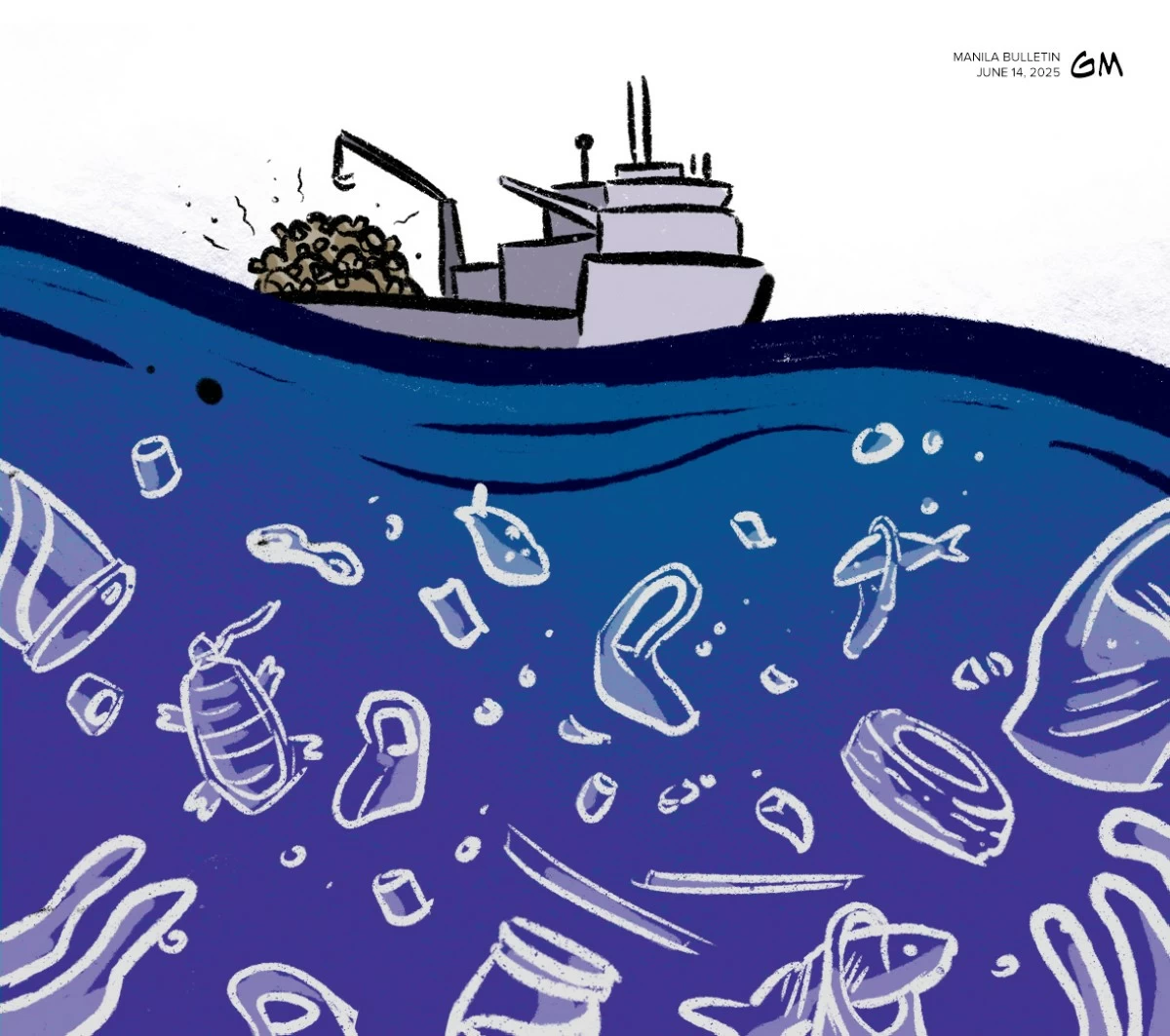
Plastic pollution is now so pervasive that up to 12 million metric tons of plastic enter our seas each year, the equivalent of a garbage truck dumped every minute. And fish stocks are collapsing, threatening food security for over three billion people who depend on marine biodiversity for survival.

For the Philippines, this is not just a global issue. As an archipelagic nation with more than 7,600 islands, our culture, economy, and food systems are inseparable from the sea. We rank among the world’s top plastic polluters due to inadequate waste management systems, and our rich coral reefs, mangroves, and fisheries are at severe risk. The future of our oceans has much to do with the future of our nation.

UNOC3 aimed to shift the world from promises to protection. At the heart of the summit is the anticipated Nice Ocean Action Plan, a comprehensive blueprint to scale up marine conservation, curb illegal fishing, reduce plastic pollution, and fund blue economies.

The conference was also aligned with the Kunming-Montreal Global Biodiversity Framework, which calls for protecting 30 percent of marine and terrestrial ecosystems by 2030 — a target known as “30x30.” Yet currently, only 2.7 percent of the ocean is effectively protected from destructive activities.

One of the most crucial developments at UNOC3 is the momentum behind the High Seas Treaty, formally known as the Agreement on Biodiversity Beyond National Jurisdiction (BBNJ). Adopted in 2023, it provides a legal framework to protect marine life in international waters — which cover nearly two-thirds of the ocean. With 49 countries having ratified it so far, just 11 more signatures are needed to bring the treaty into force. This would unlock the power to create marine protected areas on the high seas, turning “no man’s seas” into sanctuaries governed by science and cooperation.

Yet, despite oceans providing half our oxygen and absorbing nearly a third of our carbon emissions, ocean conservation remains the most underfunded of all UN Sustainable Development Goals. The estimated annual need to restore marine ecosystems is $175 billion — yet between 2015 and 2019, global investments totaled less than $10 billion, the secretary-general of UNCOC3 said.

What the world needs now is not more declarations, but delivery. That includes stronger enforcement of marine protections, bans on harmful practices like bottom trawling, and new funding mechanisms that empower coastal communities, Indigenous peoples, and fisherfolk — especially in developing nations like the Philippines.

The time for vague pledges is over. If this conference is to be remembered, let it not be for speeches made, but for action taken — bold, inclusive, and swift.

Related Tags

PLASTIC POLLUTION
ADVERTISEMENT
.most-popular .layout-ratio{ padding-bottom: 79.13%; } @media (min-width: 768px) and (max-width: 1024px) { .widget-title { font-size: 15px !important; } }

{{ articles_filter_1561_widget.title }}

.most-popular .layout-ratio{ padding-bottom: 79.13%; } @media (min-width: 768px) and (max-width: 1024px) { .widget-title { font-size: 15px !important; } }

{{ articles_filter_1562_widget.title }}

.most-popular .layout-ratio{ padding-bottom: 79.13%; } @media (min-width: 768px) and (max-width: 1024px) { .widget-title { font-size: 15px !important; } }

{{ articles_filter_1563_widget.title }}

{{ articles_filter_1564_widget.title }}

.mb-article-details { position: relative; } .mb-article-details .article-body-preview, .mb-article-details .article-body-summary{ font-size: 17px; line-height: 30px; font-family: "Libre Caslon Text", serif; color: #000; } .mb-article-details .article-body-preview iframe , .mb-article-details .article-body-summary iframe{ width: 100%; margin: auto; } .read-more-background { background: linear-gradient(180deg, color(display-p3 1.000 1.000 1.000 / 0) 13.75%, color(display-p3 1.000 1.000 1.000 / 0.8) 30.79%, color(display-p3 1.000 1.000 1.000) 72.5%); position: absolute; height: 200px; width: 100%; bottom: 0; display: flex; justify-content: center; align-items: center; padding: 0; } .read-more-background a{ color: #000; } .read-more-btn { padding: 17px 45px; font-family: Inter; font-weight: 700; font-size: 18px; line-height: 16px; text-align: center; vertical-align: middle; border: 1px solid black; background-color: white; } .hidden { display: none; }
function initializeAllSwipers() { // Get all hidden inputs with cms_article_id document.querySelectorAll('[id^="cms_article_id_"]').forEach(function (input) { const cmsArticleId = input.value; const articleSelector = '#article-' + cmsArticleId + ' .body_images'; const swiperElement = document.querySelector(articleSelector); if (swiperElement && !swiperElement.classList.contains('swiper-initialized')) { new Swiper(articleSelector, { loop: true, pagination: false, navigation: { nextEl: '#article-' + cmsArticleId + ' .swiper-button-next', prevEl: '#article-' + cmsArticleId + ' .swiper-button-prev', }, }); } }); } setTimeout(initializeAllSwipers, 3000); const intersectionObserver = new IntersectionObserver( (entries) => { entries.forEach((entry) => { if (entry.isIntersecting) { const newUrl = entry.target.getAttribute("data-url"); if (newUrl) { history.pushState(null, null, newUrl); let article = entry.target; // Extract metadata const author = article.querySelector('.author-section').textContent.replace('By', '').trim(); const section = article.querySelector('.section-info ').textContent.replace(' ', ' '); const title = article.querySelector('.article-title h1').textContent; // Parse URL for Chartbeat path format const parsedUrl = new URL(newUrl, window.location.origin); const cleanUrl = parsedUrl.host + parsedUrl.pathname; // Update Chartbeat configuration if (typeof window._sf_async_config !== 'undefined') { window._sf_async_config.path = cleanUrl; window._sf_async_config.sections = section; window._sf_async_config.authors = author; } // Track virtual page view with Chartbeat if (typeof pSUPERFLY !== 'undefined' && typeof pSUPERFLY.virtualPage === 'function') { try { pSUPERFLY.virtualPage({ path: cleanUrl, title: title, sections: section, authors: author }); } catch (error) { console.error('ping error', error); } } // Optional: Update document title if (title && title !== document.title) { document.title = title; } } } }); }, { threshold: 0.1 } ); function showArticleBody(button) { const article = button.closest("article"); const summary = article.querySelector(".article-body-summary"); const body = article.querySelector(".article-body-preview"); const readMoreSection = article.querySelector(".read-more-background"); // Hide summary and read-more section summary.style.display = "none"; readMoreSection.style.display = "none"; // Show the full article body body.classList.remove("hidden"); } document.addEventListener("DOMContentLoaded", () => { let loadCount = 0; // Track how many times articles are loaded const offset = [1, 2, 3, 4, 5, 6, 7, 8, 9, 10]; // Offset values const currentUrl = window.location.pathname.substring(1); let isLoading = false; // Prevent multiple calls if (!currentUrl) { console.log("Current URL is invalid."); return; } const sentinel = document.getElementById("load-more-sentinel"); if (!sentinel) { console.log("Sentinel element not found."); return; } function isSentinelVisible() { const rect = sentinel.getBoundingClientRect(); return ( rect.top < window.innerHeight && rect.bottom >= 0 ); } function onScroll() { if (isLoading) return; if (isSentinelVisible()) { if (loadCount >= offset.length) { console.log("Maximum load attempts reached."); window.removeEventListener("scroll", onScroll); return; } isLoading = true; const currentOffset = offset[loadCount]; window.loadMoreItems().then(() => { let article = document.querySelector('#widget_1690 > div:nth-last-of-type(2) article'); intersectionObserver.observe(article) loadCount++; }).catch(error => { console.error("Error loading more items:", error); }).finally(() => { isLoading = false; }); } } window.addEventListener("scroll", onScroll); });

Sign up by email to receive news.