

ADVERTISEMENT

Death toll in Indian plane crash climbs to 270

Search teams find more bodies

Published Jun 14, 2025 03:49 pm
AHMEDABAD, India (AP) – Search and recovery teams continued scouring the site of one of India's worst aviation disasters for a third day after the Air India flight fell from the sky and killed at least 270 people in Gujarat state, officials said Saturday.
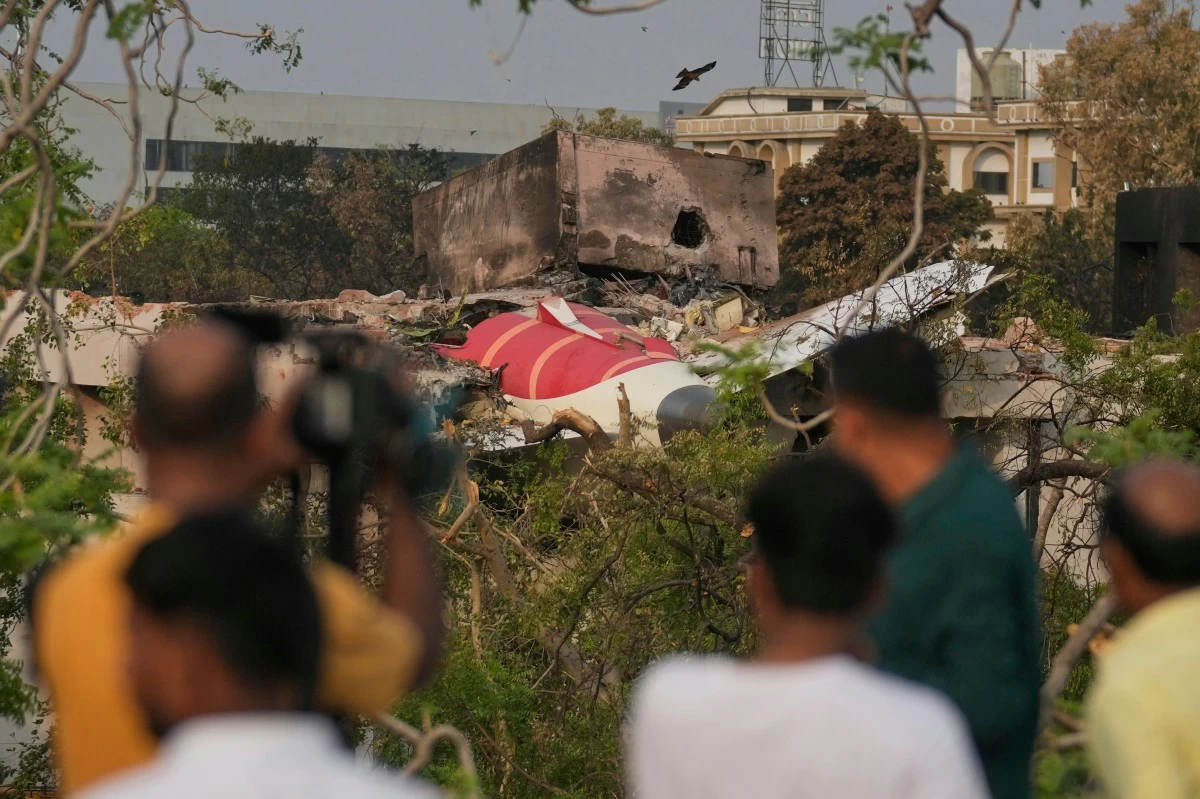
ONLOOKERS watch wreckage from Thursday's Air India plane crash lying atop a building in Ahmedabad, India, Saturday, June 14, 2025. (AP)
The London-bound Boeing 787 struck a medical college hostel in a residential area of the northwestern city of Ahmedabad minutes after takeoff Thursday, killing 241 people on board and at least 29 on the ground. One passenger survived.
Recovery teams working until late Friday found at least 25 more bodies in the debris, officials said.
Dr. Dhaval Gameti at the Civil Hospital in Ahmedabad told The Associated Press the facility had received 270 bodies, adding that the lone surviving passenger was still under observation for some of his wounds.
He is doing very well and will be ready to be discharged anytime soon, Gameti said Saturday.
Hundreds of relatives of the crash victims have provided DNA samples at the hospital. Most bodies were charred or mutilated, making them unrecognizable.
Some relatives expressed frustration Saturday that the process was taking too long. Authorities say it normally takes up to 72 hours to complete DNA matching and they are expediting the process.
Where are my children? Did you recover them? asked Rafiq Abdullah, whose nephew, daughter-in-law, and two grandchildren were on the flight. I will have to ask questions. Government is not answering these questions.
Another relative persistently asked hospital staff when his relative's body would be handed over to the family for last rites.
Give us the body, the relative insisted.
Investigators on Friday recovered the plane's digital flight data recorder, or the black box, which was recovered from a rooftop near the crash site and likely will lead to clues about the cause of the accident.
India's Aircraft Accident Investigation Bureau said it had started working with full force to extract the data.
The device is expected to reveal information about the engine and control settings, while the voice recorder will provide cockpit conversations, said Paul Fromme, a mechanical engineer with the UK-based Institution of Mechanical Engineers.
Aviation safety consultant Jeff Guzzetti, a former crash investigator for both the US National Transportation Safety Board and Federal Aviation Administration, said investigators should be able to answer some important questions about what caused the crash as soon as next week as long as the flight data recorder is in good shape.
Investigators likely are looking at whether wing flaps were set correctly, the engine lost power, alarms were going off inside the cockpit, and if the plane's crew correctly logged information about the hot temperature outside and the weight of the fuel and passengers, Guzzetti said.
Mistakes in the data could result in the wing flaps being set incorrectly, he said.
Thursday's Air India crash involved a 12-year-old Boeing 787. Boeing planes have been plagued by safety issues on other types of aircraft.
There are currently around 1,200 of the 787 Dreamliner aircraft worldwide and this was the first deadly crash in 16 years of operation, according to experts.

Related Tags

World news
ADVERTISEMENT
.most-popular .layout-ratio{ padding-bottom: 79.13%; } @media (min-width: 768px) and (max-width: 1024px) { .widget-title { font-size: 15px !important; } }

{{ articles_filter_1561_widget.title }}

.most-popular .layout-ratio{ padding-bottom: 79.13%; } @media (min-width: 768px) and (max-width: 1024px) { .widget-title { font-size: 15px !important; } }

{{ articles_filter_1562_widget.title }}

.most-popular .layout-ratio{ padding-bottom: 79.13%; } @media (min-width: 768px) and (max-width: 1024px) { .widget-title { font-size: 15px !important; } }

{{ articles_filter_1563_widget.title }}

{{ articles_filter_1564_widget.title }}

.mb-article-details { position: relative; } .mb-article-details .article-body-preview, .mb-article-details .article-body-summary{ font-size: 17px; line-height: 30px; font-family: "Libre Caslon Text", serif; color: #000; } .mb-article-details .article-body-preview iframe , .mb-article-details .article-body-summary iframe{ width: 100%; margin: auto; } .read-more-background { background: linear-gradient(180deg, color(display-p3 1.000 1.000 1.000 / 0) 13.75%, color(display-p3 1.000 1.000 1.000 / 0.8) 30.79%, color(display-p3 1.000 1.000 1.000) 72.5%); position: absolute; height: 200px; width: 100%; bottom: 0; display: flex; justify-content: center; align-items: center; padding: 0; } .read-more-background a{ color: #000; } .read-more-btn { padding: 17px 45px; font-family: Inter; font-weight: 700; font-size: 18px; line-height: 16px; text-align: center; vertical-align: middle; border: 1px solid black; background-color: white; } .hidden { display: none; }
function initializeAllSwipers() { // Get all hidden inputs with cms_article_id document.querySelectorAll('[id^="cms_article_id_"]').forEach(function (input) { const cmsArticleId = input.value; const articleSelector = '#article-' + cmsArticleId + ' .body_images'; const swiperElement = document.querySelector(articleSelector); if (swiperElement && !swiperElement.classList.contains('swiper-initialized')) { new Swiper(articleSelector, { loop: true, pagination: false, navigation: { nextEl: '#article-' + cmsArticleId + ' .swiper-button-next', prevEl: '#article-' + cmsArticleId + ' .swiper-button-prev', }, }); } }); } setTimeout(initializeAllSwipers, 3000); const intersectionObserver = new IntersectionObserver( (entries) => { entries.forEach((entry) => { if (entry.isIntersecting) { const newUrl = entry.target.getAttribute("data-url"); if (newUrl) { history.pushState(null, null, newUrl); let article = entry.target; // Extract metadata const author = article.querySelector('.author-section').textContent.replace('By', '').trim(); const section = article.querySelector('.section-info ').textContent.replace(' ', ' '); const title = article.querySelector('.article-title h1').textContent; // Parse URL for Chartbeat path format const parsedUrl = new URL(newUrl, window.location.origin); const cleanUrl = parsedUrl.host + parsedUrl.pathname; // Update Chartbeat configuration if (typeof window._sf_async_config !== 'undefined') { window._sf_async_config.path = cleanUrl; window._sf_async_config.sections = section; window._sf_async_config.authors = author; } // Track virtual page view with Chartbeat if (typeof pSUPERFLY !== 'undefined' && typeof pSUPERFLY.virtualPage === 'function') { try { pSUPERFLY.virtualPage({ path: cleanUrl, title: title, sections: section, authors: author }); } catch (error) { console.error('ping error', error); } } // Optional: Update document title if (title && title !== document.title) { document.title = title; } } } }); }, { threshold: 0.1 } ); function showArticleBody(button) { const article = button.closest("article"); const summary = article.querySelector(".article-body-summary"); const body = article.querySelector(".article-body-preview"); const readMoreSection = article.querySelector(".read-more-background"); // Hide summary and read-more section summary.style.display = "none"; readMoreSection.style.display = "none"; // Show the full article body body.classList.remove("hidden"); } document.addEventListener("DOMContentLoaded", () => { let loadCount = 0; // Track how many times articles are loaded const offset = [1, 2, 3, 4, 5, 6, 7, 8, 9, 10]; // Offset values const currentUrl = window.location.pathname.substring(1); let isLoading = false; // Prevent multiple calls if (!currentUrl) { console.log("Current URL is invalid."); return; } const sentinel = document.getElementById("load-more-sentinel"); if (!sentinel) { console.log("Sentinel element not found."); return; } function isSentinelVisible() { const rect = sentinel.getBoundingClientRect(); return ( rect.top < window.innerHeight && rect.bottom >= 0 ); } function onScroll() { if (isLoading) return; if (isSentinelVisible()) { if (loadCount >= offset.length) { console.log("Maximum load attempts reached."); window.removeEventListener("scroll", onScroll); return; } isLoading = true; const currentOffset = offset[loadCount]; window.loadMoreItems().then(() => { let article = document.querySelector('#widget_1690 > div:nth-last-of-type(2) article'); intersectionObserver.observe(article) loadCount++; }).catch(error => { console.error("Error loading more items:", error); }).finally(() => { isLoading = false; }); } } window.addEventListener("scroll", onScroll); });

Sign up by email to receive news.