







Cedrick dela Paz confronts his 'Mid-Career Crisis'
How this artist deals with the tides of time in his latest exhibit
By S.C. Fojas
Published Jun 14, 2025 12:56 am
|
Updated Jun 14, 2025 08:34 am


At A Glance
- 'I wanted to share these fears and frustrations with the world and use my art to tell this story and share it with everyone.'
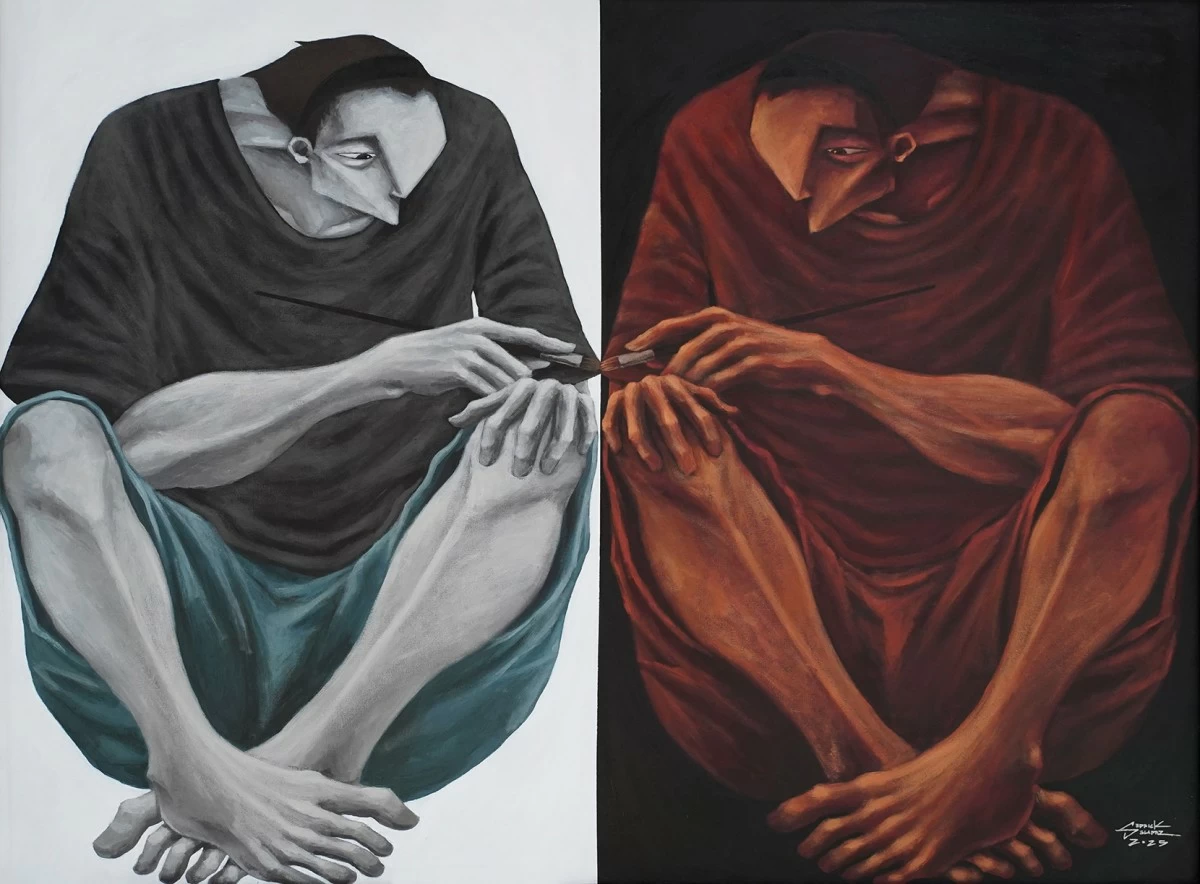
'UNFINISHED,' acrylic on canvas, 36x48 inches, 2025
Cedrick dela Paz’s exhibit showcases the life of an artist beyond the brushstrokes, its challenges, routines, and the evolving meaning of each painting. The exhibit delves directly into the often-difficult point of an individual’s career, where the initial spark of promise has matured into responsibilities, and the path forward is still being charted.
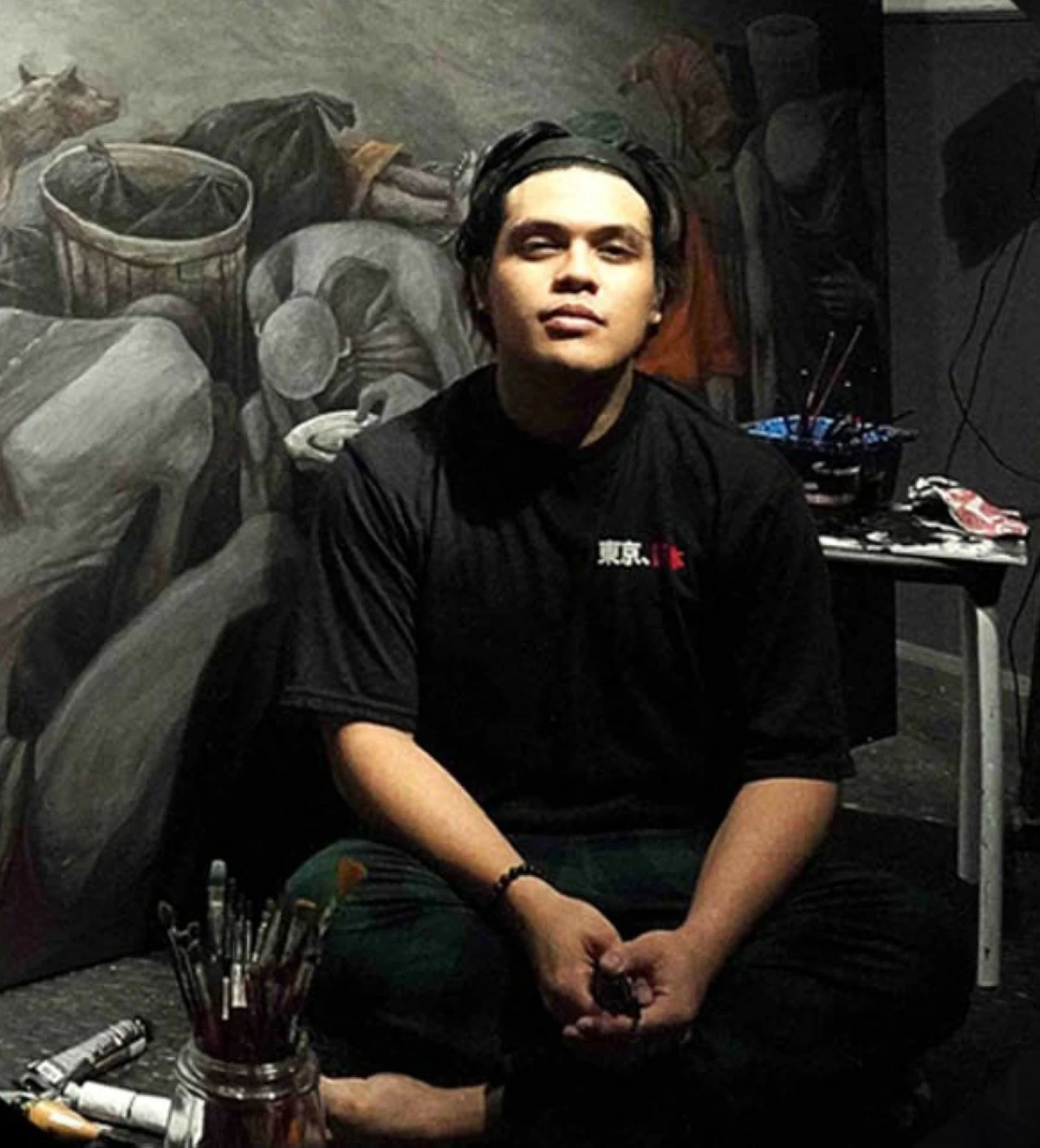
MEET THE ARTIST Cedrick dela Paz
The very title, “Mid-Career Crisis,” signals a pivotal moment many artists and even other individuals encounter. It is a “space where youthful uncertainty is no longer a valid excuse, and the expectations—internal and external—begin to mount.” Cedrick’s work does not shy away from these pressures. Instead, it lays them bare.
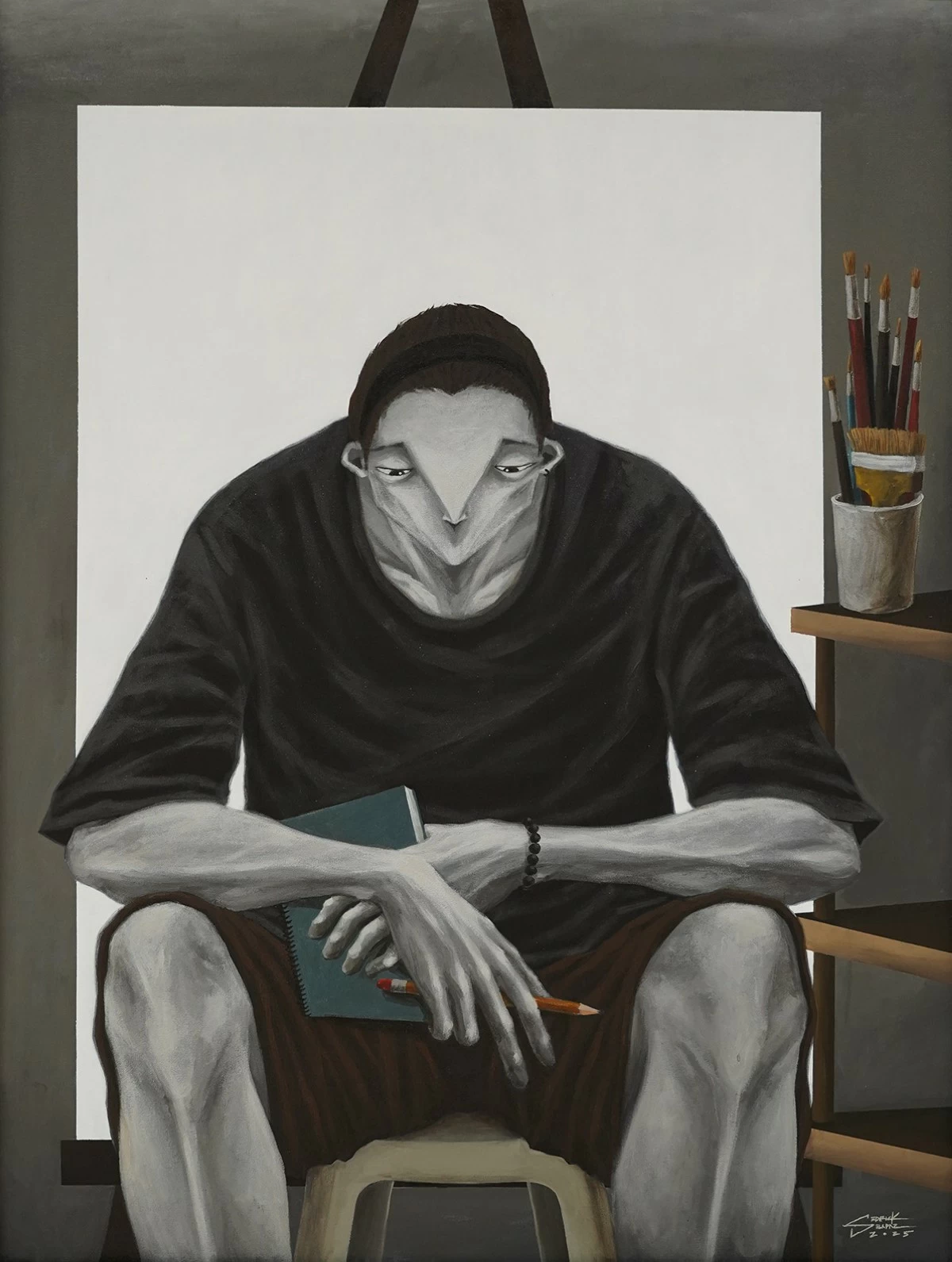
'BLANGKO,' acrylic on canvas, 48x36 inches, 2025
The unsettling black canvas and the relentless clock
Among the pieces in Cedrick’s exhibit is “Blangko,” where a seemingly untouched canvas becomes a powerful presence, embodying the artist’s struggle to create something for his audience. Cedrick explains that the blank canvas isn’t passive. Instead, it “imposes itself as a burden and a frame, visually suggesting that the artist and his work are one and the same.” For him, facing this blank space is an encounter with “the limits of one’s own drive, vision, and persistence.” It’s a visual representation of the creative block and internal questioning inherent in a mid-career reckoning.
Another striking work is “Nocturnal,” which depicts the artist hunched over his work, a mechanical key on his back, and a clock looming in the background. The imagery is unmistakable, a painting or work has become a race against time. This sense of being wound up, driven by forces beyond an individual’s control, conveys the fatigue and the repetition that comes with deadlines and professional pressures.
The exhibit isn’t solely introspective, though. Cedrick also casts a critical eye on the larger art world, revealing its role in shaping an artist’s crisis. In “Silaw,” the spotlight itself becomes the subject, hinting at how visibility can both illuminate and distort, adding another layer of external pressure. Other pieces feature the looming fight of the collector, not merely as benefactor, but as “unseen force shaping artistic production.” His works highlight how expectations direct the path of an individual more than his dreams and aspirations.
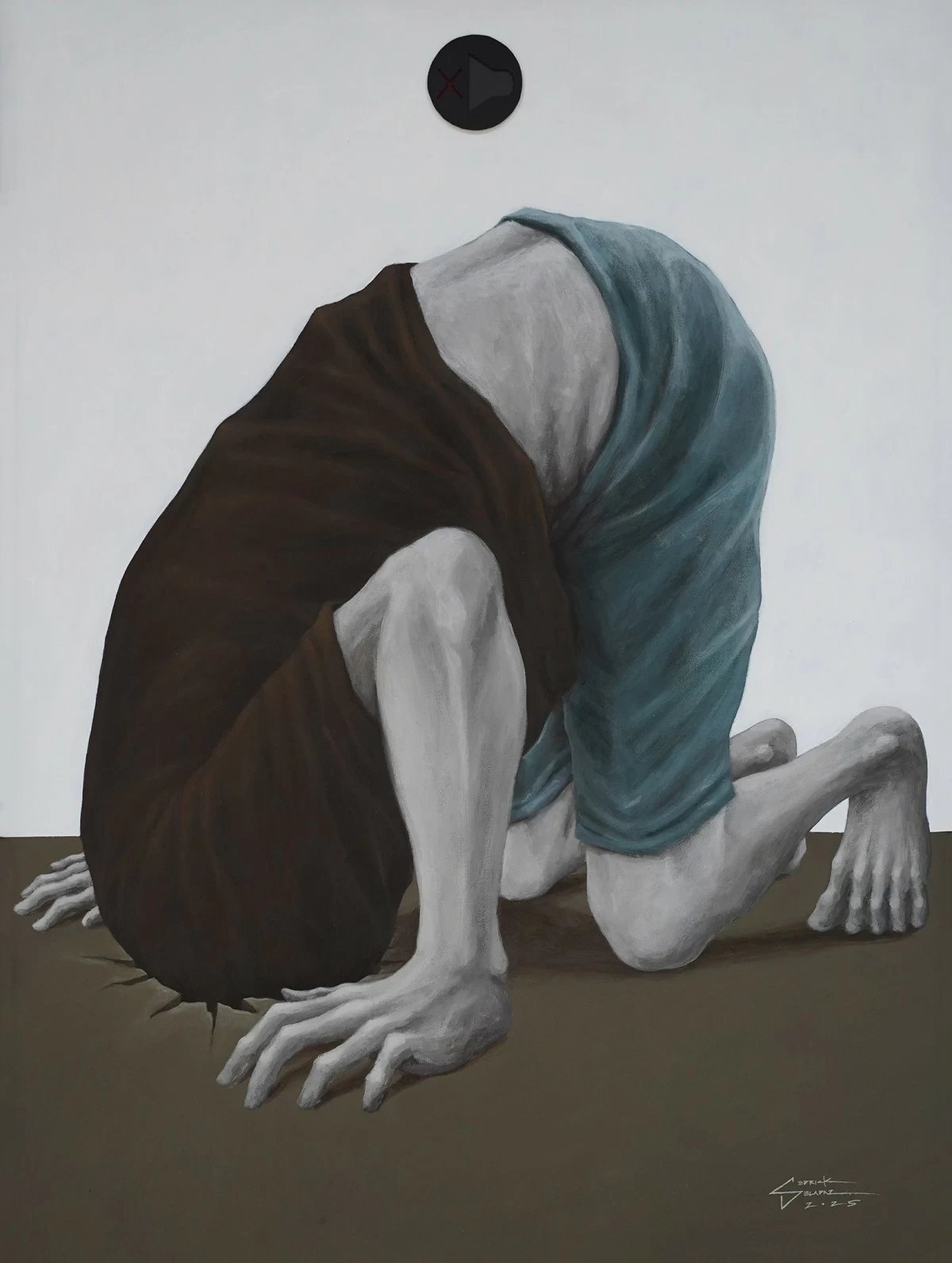
'NILAMON NG LUPA,' acrylic on canvas, 48x36 inches, 2025
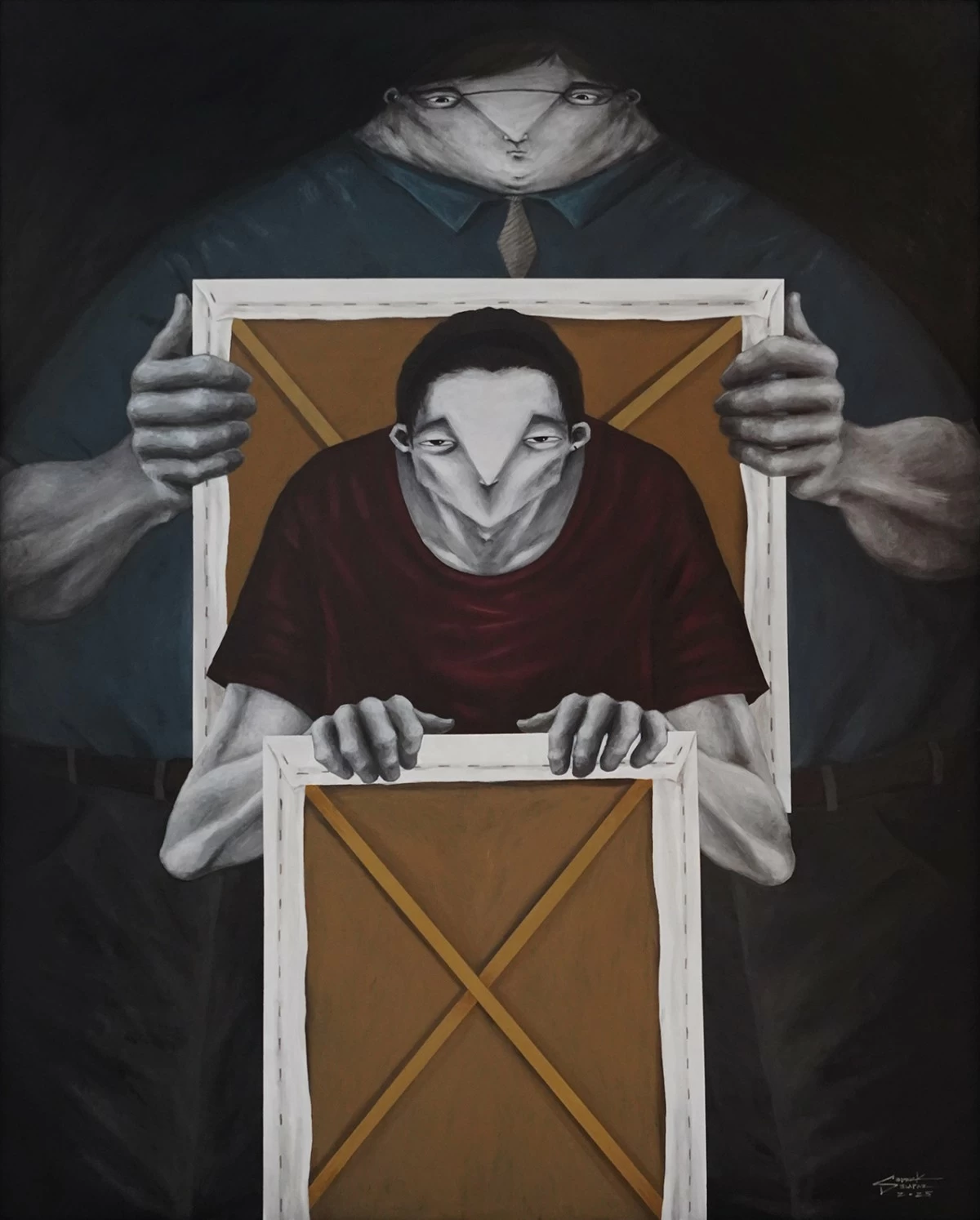
'KLBN,' acrylic on canvas, 60x48 inches, 2025
From personal crisis to art
Cedrick shares how a deeply personal journey about his own mid-career crisis served as the inspiration behind his exhibit. “When I was starting as an artist and attending exhibits, mentorships, or even just simple conversations with established artists, I would often hear the word ‘mid-career crisis’ mentioned by my seniors and mentors,” he recalls. “I absorbed the idea at that time, but I can truly say it’s different when you experience it yourself, and it’s not just something you hear from others. I was slowly entering that stage.”
The specific moment that cemented this realization came when he saw one of his older works in a second-hand market. “Maybe not that old of a work yet,” he clarifies. “I truly felt it, and I felt fear for my career as an artist, especially since I have my own family now, and I’m no longer alone—I am a provider. That’s probably where I started having questions about myself and my artworks. I developed a fear of going out in public, talking to people, and even on social media. I needed to rest. I can also say that my trust in people was affected.”
It was these personal fears and frustrations that ultimately inspired the exhibit. “I wanted to share these fears and frustrations with the world and use my art to tell this story and share it with everyone,” he says.
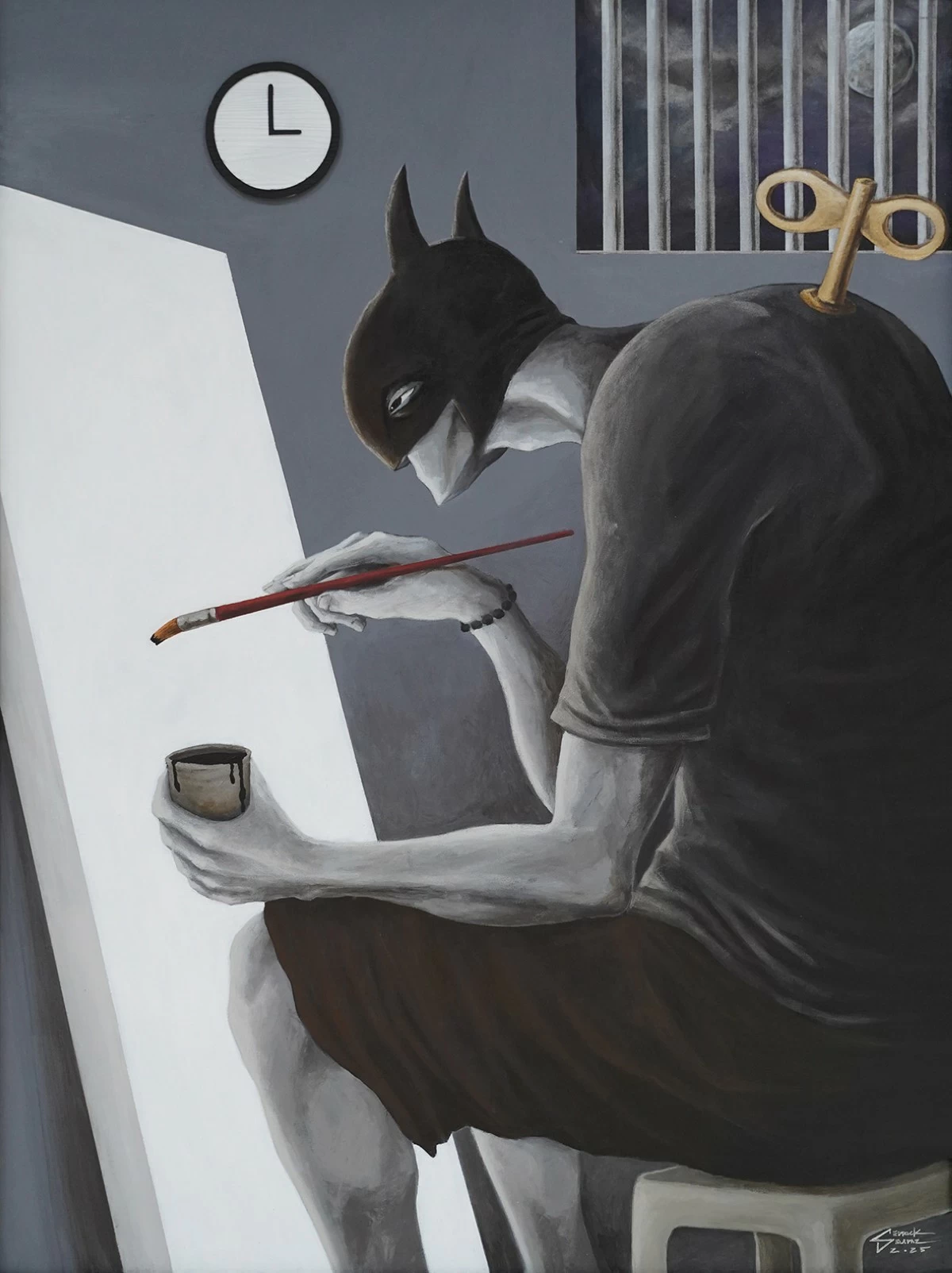
'NOCTURNAL,' acrylic on canvas, 48x36 inches, 2025
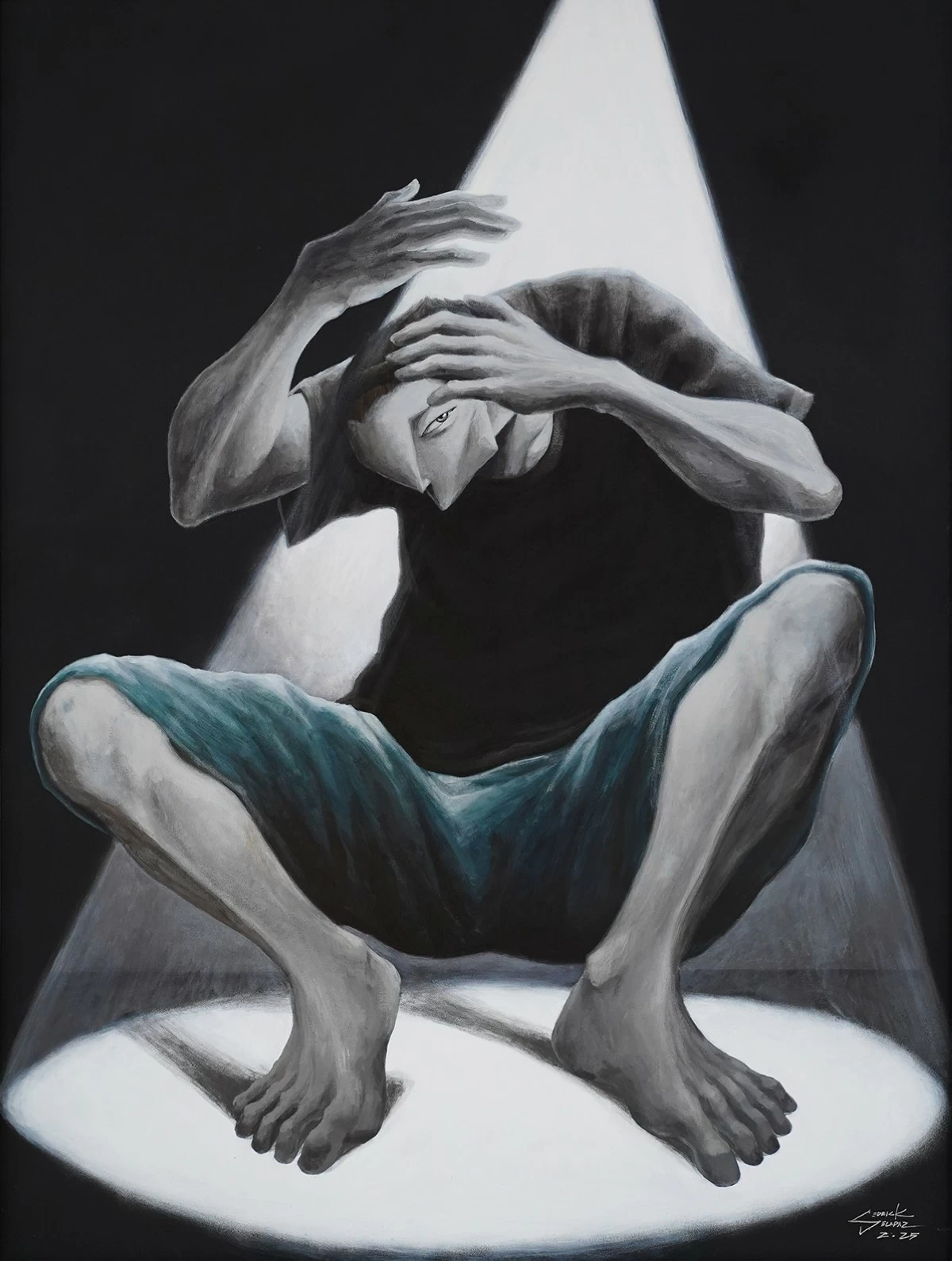
'SILAW,' acrylic on canvas, 48x36 inches, 2025
Transforming negativity to creativity
Creating the exhibit has proven to be a transformative process for Cedrick, offering a path through his crisis. He discovered that “the questions and negativity I felt at that time could actually be turned into something positive and pleasing to the eye through my art.” He also learned the importance of “facing your fears to lighten your burden,” a realization that underscores the therapeutic power of his work.
One of the heartwarming aspects of the experience was speaking with people during the exhibit’s opening. “It’s truly heartwarming to talk to people during the opening of the exhibit and hear them say that they can relate to every piece I shared, to know that I am not alone,” he says.
Ultimately, Cedrick hopes his audience will enjoy the experience and find resonance in his honesty. “I’m happy if they enjoy the pieces I prepared for the exhibit,” he says. “If they can say that their travel and time spent to see it were worth it.”
His exhibit offers a chance for people to recognize their struggles and uncertainties, knowing they are not alone. As for what’s next, Cedrick plans to keep on creating. “I’ll continue sharing my artworks,” he affirms. “I need to extend the stories.” His journey promises further explorations of growth and the complex realities of an artist’s life, showing that the “mid-career crisis” is not an end but a catalyst for deeper introspection and continued creation.
“Mid-Career Crisis” runs until June 28 at Art Cube Gallery, OPVI Centre 2295 Chino Roces Ext., Makati City.