







We had the opportunity to attend Lenovo Philippines’ TechDay 2025—and having previously witnessed how initiatives like Lenovo’s EdVision and other ecosystem-driven campaigns come to life, the event felt like a meaningful continuation of a story I’ve long admired. Lenovo doesn’t just build hardware—it develops smarter, purpose-driven technology systems that center around people, not just profit.
Why Filipinos must rethink what AI really means in our daily lives
Published Jun 13, 2025 06:19 am


This year’s theme, “It’s Time for AI-nomics: Unleashing the Potential of AI,” wasn’t just another tech buzzword-fueled conference. It was a well-grounded, evidence-backed call to action—especially for countries like the Philippines. And if you’re a parent, an educator, or a decision-maker in business or government, this isn’t just another tech trend. This is personal.
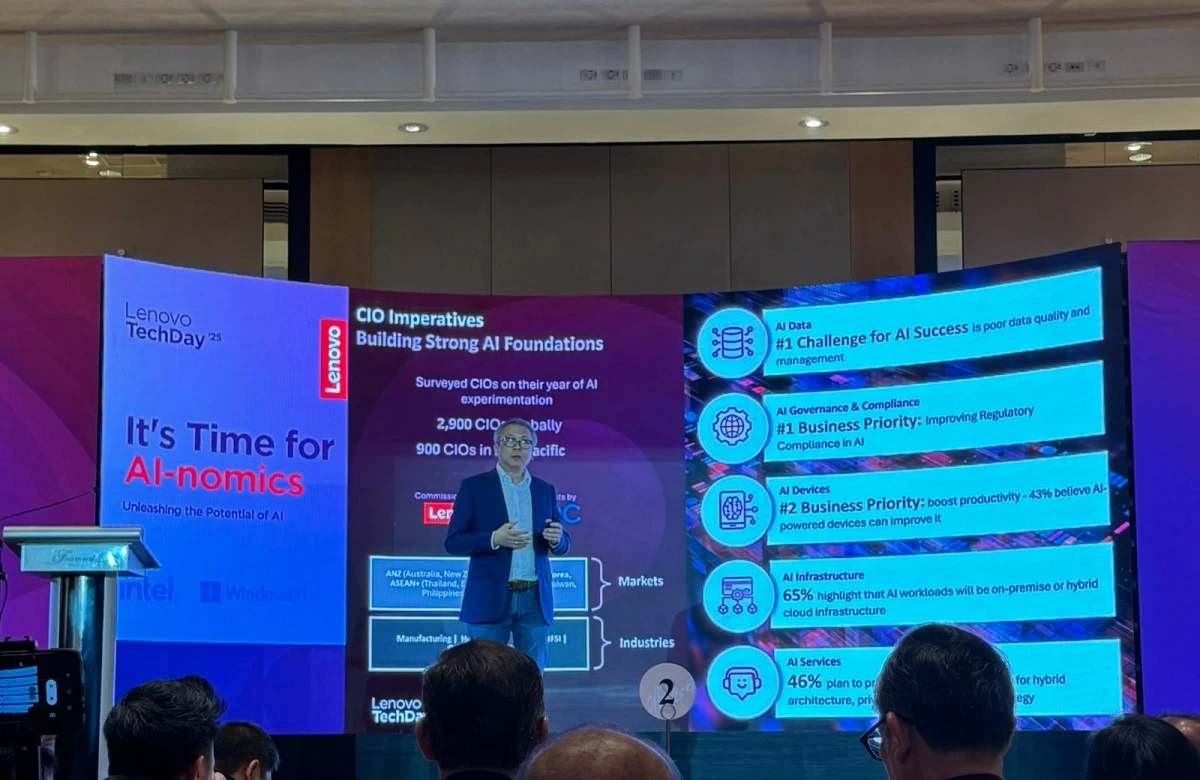
Lenovo Philippines’ President and General Manager, Michael Ngan (Photo by: Wyatt David Manahan)
We got to ask a rare one-on-one question with Lenovo Philippines’ President and General Manager, Michael Ngan: "On your own terms, Sir Mike, how would you describe the level of AI awareness or adoption among Filipinos?"
His answer was simple but powerful: "A lot of Filipinos don’t even realize they’re already using AI - think about Waze,” he answered. Succinctly, AI is embedded in our everyday choices—and yet many people still associate it with robots or futuristic tech out of reach. That gap in perception is exactly why education, both formal and informal, remains essential.
Based on Lenovo’s CIO Playbook 2025, AI spending in Asia Pacific is multiplying rapidly—3.3x in AP and 2.7x in ASEAN+1. The Philippines, interestingly, is part of the early wave of adopters making foundational moves. With national strategies like the AI Roadmap (2021–2028) and plans for a National Center for AI Research, we’re slowly but surely embedding AI into agriculture, healthcare, BPOs, and manufacturing.
But while 47% of ASEAN+ organizations are currently evaluating or planning to implement AI in the next year, our numbers still lag behind the global average of 49%. One of the main reasons? ROI. Many organizations are struggling to measure or predict return on AI investments.
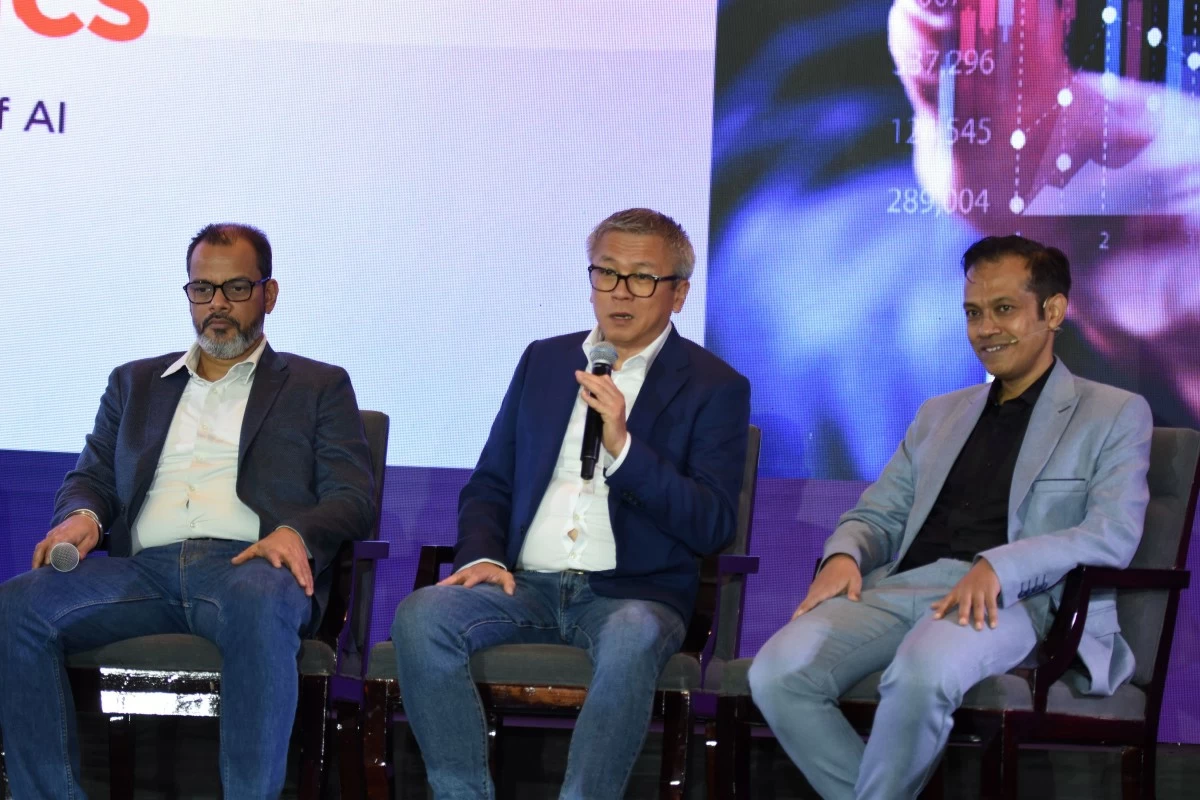
From left: Kumar Mitra, ISG Regional General Manager, Lenovo GTAP; Michael Ngan, President and General Manager, Lenovo Philippines; and Debdut Maiti, SSG Sales Leader, GTAP, during the Lenovo TechDay 2025 Media Roundtable held at Fairmont Hotel Makati.
Inclusive Productivity and Smarter Technology
One of the event’s strongest narratives—and one I personally believe in—is that AI isn’t here to replace people, it’s here to amplify productivity and potential.
Lenovo’s research shows that 43% of organizations in Asia Pacific are already reporting productivity gains from AI-powered PCs. And in ASEAN+, 65% of organizations are actively planning their adoption.
For those of us raising children or guiding the next generation, this insight is crucial. The jobs of tomorrow aren’t just about coding or engineering—they’re about adaptability, critical thinking, ethical decision-making, and collaboration with intelligent systems. That means upskilling not only within organizations, but also within our classrooms and even our households.
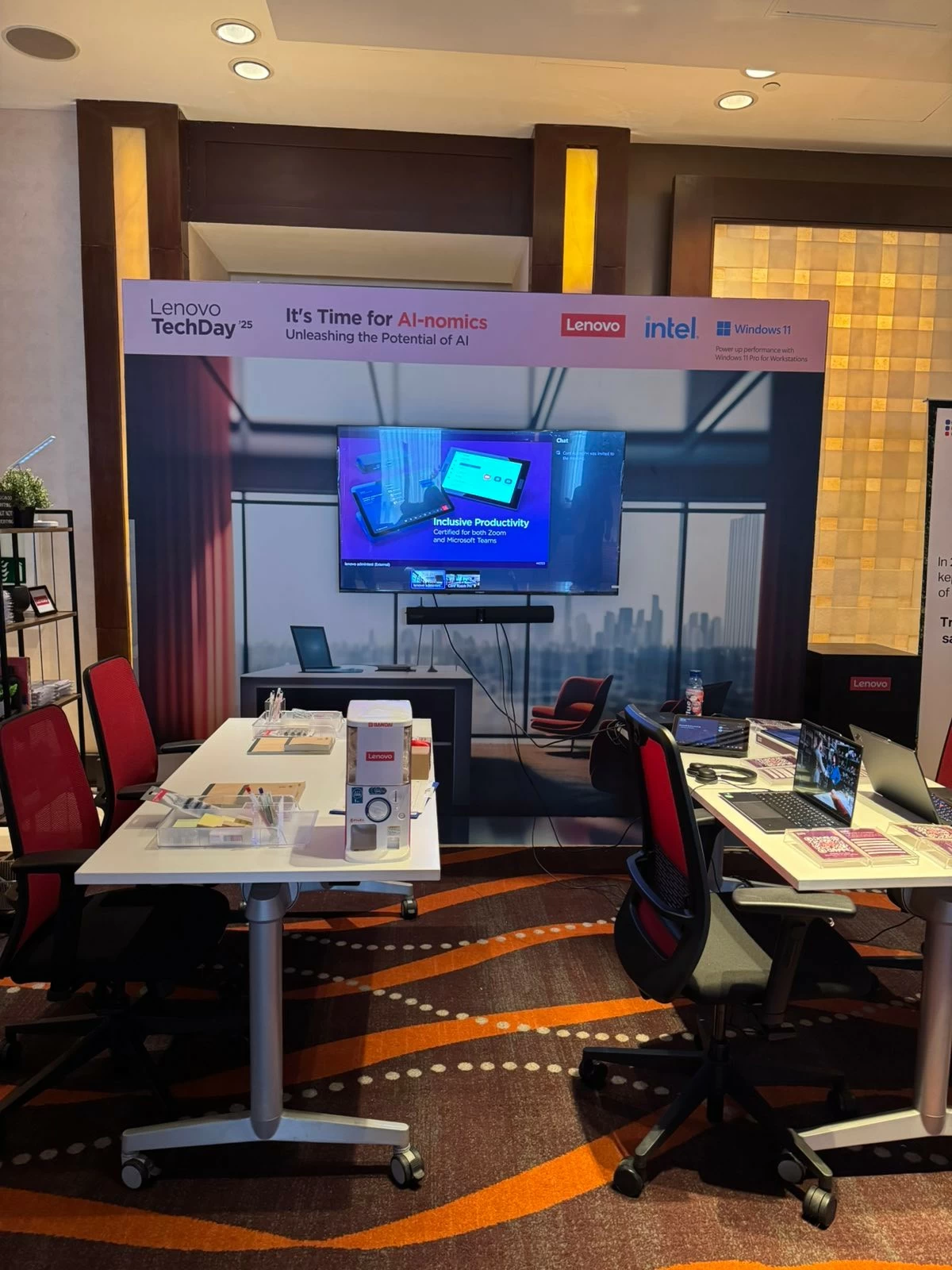
We were introduced to a real-world setup of the hybrid future. Lenovo’s Smart Office solutions—integrating AI-powered devices, seamless conferencing tools, and enterprise-ready security—stood out as one of the most practical and forward-thinking systems I’ve seen. Designed for both in-person and remote collaboration, it's proof that productivity and flexibility can coexist in the modern workspace. (Photo by: Wyatt David Manahan)
Another key highlight from the event was the surge in hybrid and on-premise infrastructure adoption. According to the CIO Playbook, 68% of ASEAN+ organizations are choosing hybrid models over full cloud deployment. For Filipino businesses—often navigating power interruptions, data security issues, and budget constraints—this blended model offers a more secure, scalable, and flexible approach.
What does this mean for policymakers and SMEs? We don’t have to go all in on cloud or overhaul everything overnight. There’s room for measured, strategic transformation—especially if we focus on secure infrastructure and training.
Lenovo’s message this year wasn’t just about technology for technology’s sake. It was about inclusive productivity—making sure that AI’s benefits don’t just stay within large corporations or global tech hubs, but reach small businesses, educators, government workers, and freelancers.
Having previously been part of education-focused initiatives like EdVision, I’ve seen firsthand how Lenovo’s approach to innovation is both top-down and grassroots—integrating AI-ready tools in classrooms while also supporting everyday users and small businesses through scalable, human-centered solutions.
One insight that hit home for me, is this: AI adoption will rise or fall on skills, not software. In ASEAN+, 44% of CIOs are already relying on professional AI services to bridge knowledge gaps. Another 56% are planning to do so. Lenovo’s Fast Start program, for instance, helps companies pilot and scale AI projects with expert guidance. This support is crucial for MSMEs and even LGUs trying to understand how AI fits into local governance or education.
Ethics, Trust, and the Role of Governance
We can’t talk about AI without talking about trust. Only 24% of global organizations have implemented full AI governance and compliance policies. In ASEAN+, the number is nearly the same.
The risks are real: bias, ethical misuse, data privacy lapses. But the solution isn’t fear—it’s transparency, accountability, and explainability. This is where government and industry need to collaborate more intentionally, and where platforms like TechDay ’25 are so important: they don’t just showcase innovation—they spark necessary conversations.
Raising AI-Literate Families and Communities
As someone raising children in the digital age, I left TechDay feeling both grounded and inspired. AI isn't a future concept—it’s already here. And like any tool, it’s only as powerful, safe, and inclusive as the people who design, use, and regulate it.
So to my fellow parents, educators, and leaders: Let’s stop asking if AI will take our jobs. Instead, let’s ask: How can AI make our jobs, our communities, and our children’s futures better?
Because with the right systems, the right skills, and the right support, we’re not just preparing for the AI economy—we’re shaping it.
As Lenovo continues to introduce innovations like Smart Lockers and push the boundaries of Smarter Technology, it raises an important question: Could Smart Packaging be next—particularly to help address the growing concern over single-use plastics? It’s a timely conversation, and one that warrants deeper exploration—perhaps in a follow-up piece.