







Former president Rodrigo Duterte is seeking his interim release from the International Criminal Court (ICC), with his legal team arguing that the conditions for continued detention no longer apply, and that he poses no flight risk, threat to witnesses, or danger to the integrity of the case.
Duterte seeks ICC interim release; prosecution does not oppose
Published Jun 13, 2025 07:52 am
|
Updated Jun 13, 2025 01:28 pm


At A Glance
- The country that allegedly expressed willingness to host Duterte is redacted in the public version of the filing.
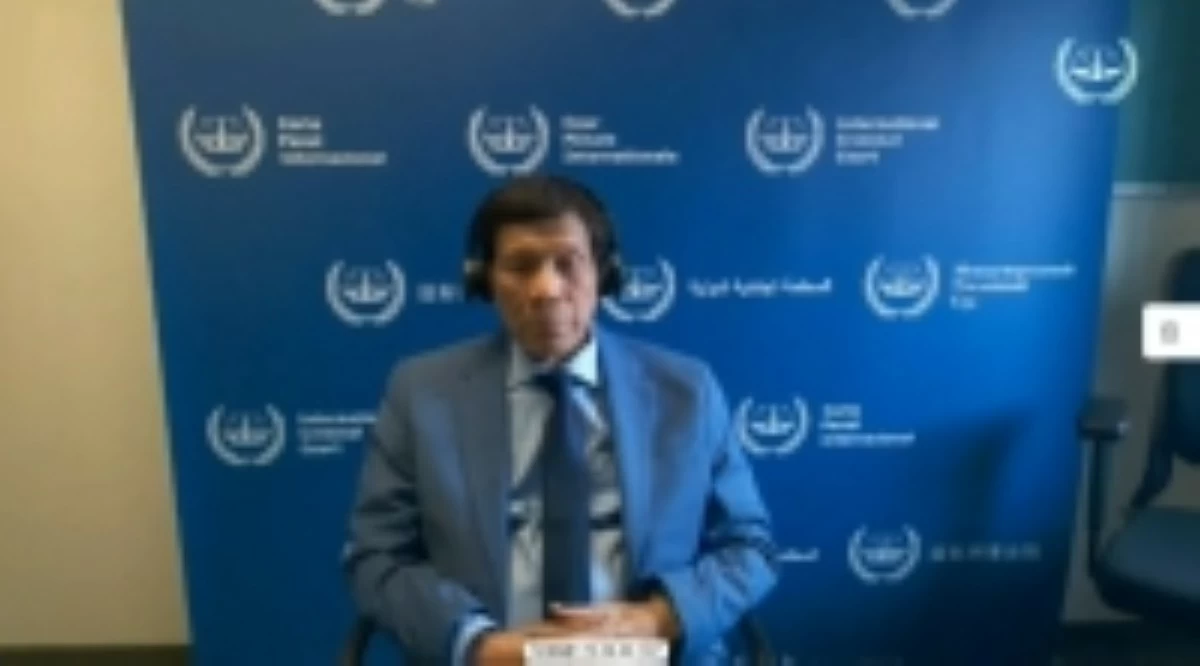
Former president Rodrigo Duterte (ICC)
In a public redacted version of an urgent motion submitted to the ICC Pre-Trial Chamber I dated June 12, Duterte’s defense team said he does not meet the legal thresholds under Article 58(1)(b) of the Rome Statute, and therefore should be released from ICC custody while awaiting the confirmation of charges hearing in Sept. 23.
“No real or concrete risk exists under Article 58(1)(b)(iii) that would justify Mr. Duterte’s continued pre-trial detention,” the 16-page filing read, emphasizing his age, medical condition, and lack of political power since leaving the presidency in 2022.
“He does not pose an objective risk of flight, nor is his arrest necessary to ensure the integrity of the investigations or to preclude the continued commission of crimes. He must, as a result, be immediately released from ICC custody,” it added.
Duterte’s legal counsel likewise said that the ICC Office of the Prosecutor does not object to Duterte’s interim release, provided it is to a cooperating State that agrees to a set of strict conditions.
The name of the cooperating State was redacted in the publicly released version of the filing, but the defense said the State has expressed its willingness to host Duterte “subject to the imposition of conditions deemed necessary by the Chamber.”
“Chambers at the ICC and ad hoc tribunals have been minded to grant interim release where the Prosecutor does not oppose the request, or where State guarantees are presented in support of the application,” it said.
“[REDACTED] has affirmed its principled willingness to cooperate with the Court, and to accept Mr Duterte onto its territory for the duration of his interim,” it added.
Defense cites no flight risk, no obstruction danger
Eighty-year-old Duterte’s lawyers underscored his age and retirement from public life as proof that he has no capacity to influence witnesses, flee the jurisdiction, or obstruct justice.
The former president has reportedly committed to staying within the host country, refraining from all public communications, and not using Internet or mobile devices if released.
“He (Duterte) will refrain from public engagement, office, or communications with persons outside his family,” the filing read.
“He has also agreed to abstain from [the] use of the internet or any electronic devices, such as a mobile phone,” it added.
Humanitarian grounds invoked
The defense also raised humanitarian considerations, citing Duterte’s “declining health,” although specific details were redacted in the public document. The team referenced precedents from both the ICC and international ad hoc tribunals where elderly or ailing detainees were provisionally released pending trial.
According to the motion, these grounds further tilt the balance toward immediate and reasonable release, especially with a cooperating State’s guarantees.
Respect ICC decision
Meanwhile, Communications Undersecretary Claire Castro said Malacañang will respect whatever the ICC’s decision is on the matter.
“Nasa kamay na po ng ICC kung ano po ang kanilang magiging decision or resolution on that matter (It’s up to the ICC what their decision or resolution on the matter is),” she said.
However, Castro hoped the promises made by Duterte’s defense team would not turn out to be another joke, as she pointed out that the Duterte camp has a penchant for resorting to kidding around.
“If that's their strategy, sana lang po ay mapaniwala nila yung mga ICC judges at huwag nilang masabi later na ang kanilang mga pinangako ay masabing nagbibiro lang sila at tulad ng nangyari sa pangako sa jetski (I hope they convince the ICC and don’t say later on that their promises are just jokes like the promise about the jetski),” she said. Castro was referring to Duterte’s promise during the presidential elections in 2016 that he would ride a jetski to the West Philippine Sea and plant a Philippine flag there.
Urgency of request and legal basis
The motion also asked the ICC judges to reduce the standard deadlines for responses due to the urgent nature of liberty interests at stake.
Defense likewise cited that pre-trial detention must not be the default and should only be imposed when there are clear, substantiated risks.
The ICC issued a sealed arrest warrant against Duterte on March 7, which was made public four days later. The warrant followed the Prosecution’s application accusing him of crimes against humanity allegedly committed during his tenure as Davao City mayor and Philippine president between 2011 and 2019.
Duterte was arrested and surrendered to the ICC by Philippine authorities on March 11, following the reclassification of the arrest warrant from secret to public.
He initially appeared via video link before the Chamber on March 14. The hearing on the confirmation of charges, including crimes against humanity related to murder, is scheduled for Sept. 23, 2025.
The Prosecutor’s office earlier said it has submitted over 400 documents, nine photographs, and nearly 16 hours of audio and video files as part of its case.