






KYIV, Ukraine (AP) — Russian forces launched a new drone assault across Ukraine overnight on Wednesday, killing three people and wounding 64 others, Ukrainian officials said.
Manila Bulletin
 World
Russian attacks kill 3 and wound 64 as drones hit Kharkiv and other parts of Ukraine
World
Russian attacks kill 3 and wound 64 as drones hit Kharkiv and other parts of Ukraine
World
Russian attacks kill 3 and wound 64 as drones hit Kharkiv and other parts of Ukraine
Russian attacks kill 3 and wound 64 as drones hit Kharkiv and other parts of Ukraine
Published Jun 12, 2025 04:32 am


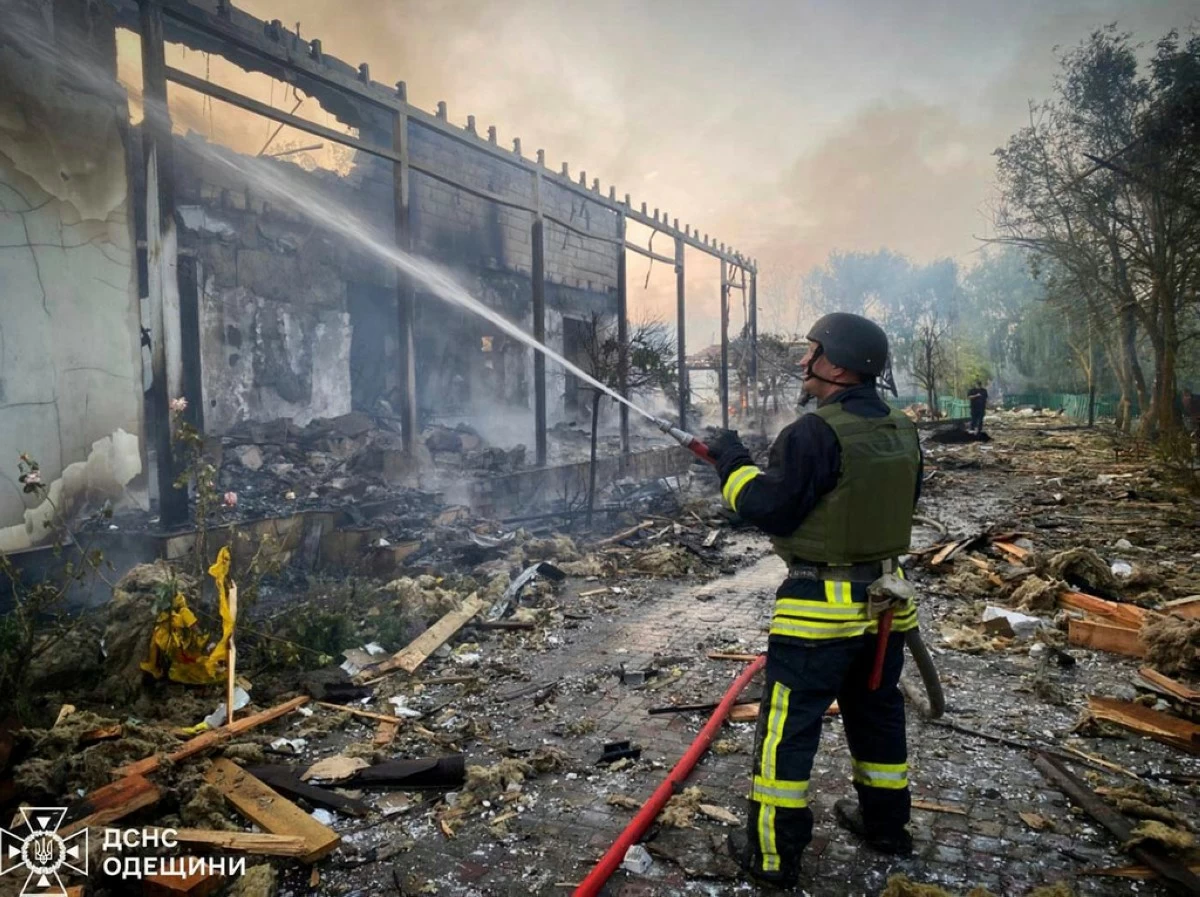
In this photo provided by the Ukrainian Emergency Service, a firefighter tackles a blaze after a Russian attack that hit a private house in Odesa region, Ukraine, Wednesday, June 11, 2025. (Ukrainian Emergency Service via AP)
One of the hardest-hit areas was the city of Kharkiv in northeastern Ukraine, where 17 attack drones struck two residential districts, Mayor Ihor Terekhov said. Emergency crews, municipal workers and volunteers worked through the night to extinguish fires, rescue residents from burning homes, and restore gas, electricity and water services.
“Those are ordinary sites of peaceful life — those that should never be targeted,” Terekhov wrote on Telegram.
Three people were confirmed killed, according to Kharkiv regional head Oleh Syniehubov. In a statement, Ukrainian President Volodymyr Zelenskyy said that 64 people had been wounded and reiterated his calls for greater international pressure on Moscow.
"Every new day now brings new vile Russian attacks, and almost every strike is telling," he said. “We must not be afraid or postpone new decisions that could make things more difficult for Russia. Without this, they will not engage in genuine diplomacy. And this depends primarily on the United States and other world leaders. Everyone who has called for an end to the killings and for diplomacy must act.”
Moscow's forces have launched waves of drones and missiles in recent days, with a record bombardment of almost 500 drones on Monday and a wave of 315 drones and seven missiles overnight on Tuesday.
The attacks come despite discussions of a potential ceasefire in the war. The two sides traded memorandums at direct peace talks in Istanbul on June 2 that set out conditions. However, the inclusion of clauses that both sides see as n********ers make any quick deal unlikely.
Zelenskyy urges more sanctions
Speaking at a meeting of leaders of countries of southeast Europe in Odesa, Zelenskyy urged the European Union to toughen its latest package of sanctions now being prepared.
EU foreign policy chief Kaja Kallas said Tuesday that the bloc is proposing to lower a cap on the price of Russian oil from $60 to $45, which is lower than the market price, to deprive the Kremlin of extra profits to fund its war in Ukraine.
Zelenskyy prodded the EU to lower the cap further, arguing that “real peace comes with a $30 cap -– that’s the level that will truly change thinking in Moscow.”
“You can all see -– Putin does not want to end this war,” he told his audience. “He believes that as long as he can fight and dominate his neighbors, he stays politically alive.
“But no matter what he believes, our job is to force Russia into a position where they must seek peace and political survival by non-military means. This is absolutely possible.”
Widespread destruction
Kharkiv has been frequently targeted in recent months as Russia launched repeated large-scale drone and missile attacks on civilian infrastructure.
Wednesday's strikes also caused widespread destruction in Kharkiv's Slobidskyi and Osnovianskyi districts, hitting apartment buildings, private homes, playgrounds, industrial sites and public transportation. Images from the scene published by Ukraine’s Emergency Service on Telegram showed burning apartments, shattered windows and firefighters battling the blaze.
“We stand strong. We help one another. And we will endure,” Terekhov said. “Kharkiv is Ukraine. And it cannot be broken.”
Ukraine's air force said that 85 attack and decoy drones were fired over the country overnight. Air defense systems intercepted 40 of the drones, while nine more failed to reach their targets without causing damage.
'Repatriation of the deceased'
In other developments, Russia has returned 1,212 bodies of Ukrainian soldiers in line with an agreement reached during the talks in Istanbul between Russian and Ukrainian delegations.
Ukraine's Coordination Headquarters for Treatment of Prisoners of War said that the bodies came from Kharkiv, Luhansk, Donetsk, Zaporizhzhia, and Kherson regions, as well as Russia's Kursk region where Ukrainian forces waged an incursion. It said that authorities would work to determine their identities as quickly as possible.
Russia has received the bodies of 27 fallen soldiers as part of an exchange with Ukraine, said Vladimir Medinsky, who led Russia's delegation at the Istanbul talks.
International Committee of the Red Cross spokesperson Pat Griffiths said the ICRC was involved in the repatriation of remains as neutral observers, providing technical advice and monitoring the process.
“The repatriation of the deceased is an important step that can be taken by authorities to maintaining the dignity of the dead," Griffiths said. "It can provide answers to their families and give closure to people who have lived with endless uncertainty as they waited for news of their loved ones.”