






LOS ANGELES (AP) - Before Celine Song was an Oscar-nominated filmmaker, she was a playwright in New York who needed day jobs to pay rent. That’s how she found herself as a professional matchmaker.
Manila Bulletin
 Entertainment
Celebrities
Dakota Johnson and Celine Song on love, dating and 'Materialists'
Entertainment
Celebrities
Dakota Johnson and Celine Song on love, dating and 'Materialists'
Entertainment
Celebrities
Dakota Johnson and Celine Song on love, dating and 'Materialists'
Dakota Johnson and Celine Song on love, dating and 'Materialists'
Published Jun 12, 2025 02:24 pm


At A Glance
- Song and Johnson discuss how they got to know each other before making 'Materialists'
What may have begun as a purely transactional gig, a way for her to keep making her art in an expensive city, taught her more about people’s wants and needs and the true contents of their hearts than she could have ever imagined.
“I always wanted to write something about it because there seemed to be a story in it that is massive and very epic in proportion,” Song said. “It affects every human being on Earth.”
And while waiting for her breakout film “Past Lives” to debut, she did. That film is “Materialists,” a modern-day New York love story starring Dakota Johnson, Pedro Pascal and Chris Evans that’s heading to theaters this weekend. Johnson is the matchmaker presented with two different types of men for herself — one a poor struggling actor and ex-boyfriend, the other a wealthy “unicorn” — and the internet has already been drawing battle lines. But, like “Past Lives” wasn’t really about a love triangle, “Materialists” is about something more than the question of which guy is the “correct” choice.
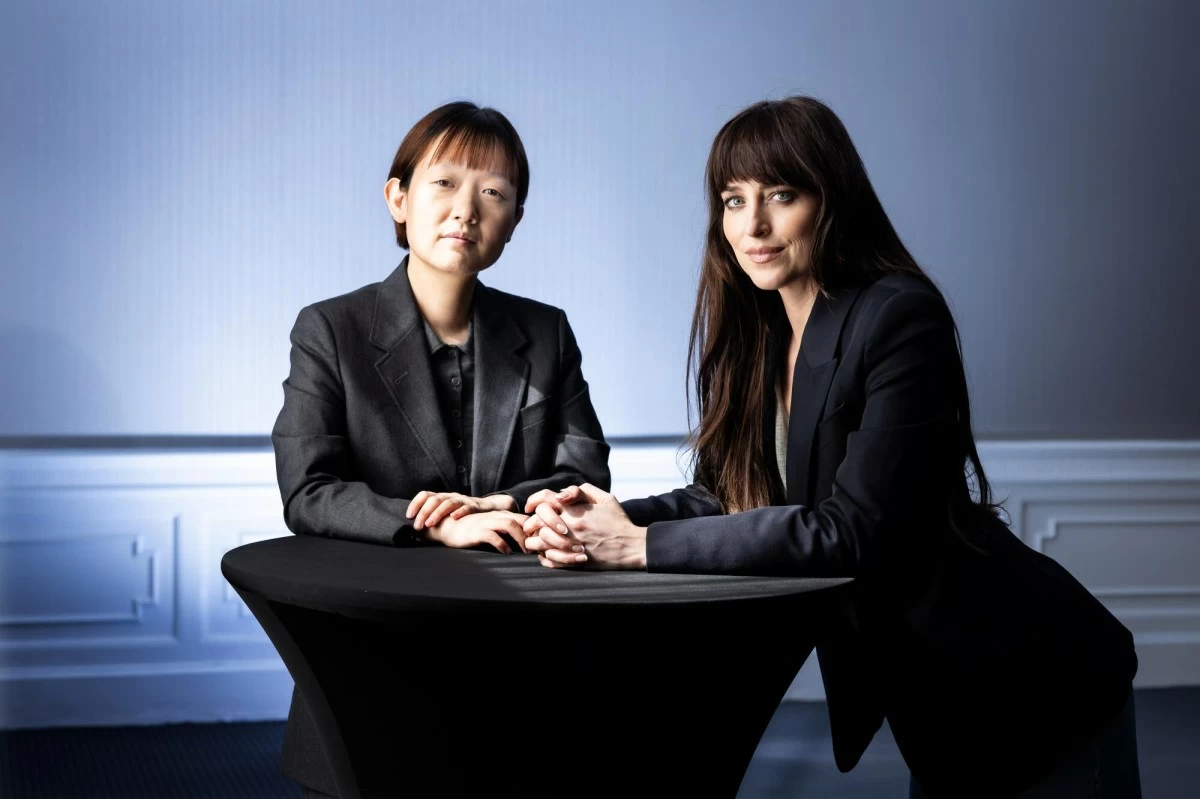
Song and Johnson spoke with The Associated Press about the film, falling in love and the modern marketplace of dating. Remarks have been edited for clarity and brevity.
AP: How did you find each other?
SONG: We met up thinking that we were just going to get to know each other and be friends and I walked away from that conversation — this is just from my perspective — but I think I was still sitting there when I texted my producers and the studio being like, “I think I’ve found my Lucy.” That’s how casting works for me, it’s always about falling in love. It’s very connected to what we talk about in the film. Like, there’s no mathematical anything. It just the feeling that you get talking to someone and you’re like, oh I just know.
JOHNSON: I knew you had this movie that you were about to start making. I was basically told it was too late. I was like, but I really want to meet her because she’s so smart, and I’ve seen interviews and obviously had seen “Past Lives.” I just wanted talk and get to know her as an artist and a person and so I went into this being like there’s no chance that I’ll be in this movie, but maybe she’ll make another one. We just had such a good time talking, I didn’t even know that I was someone she was thinking about. A few weeks later we spoke. It was very romantic.
AP: Where do we meet Lucy in life?
JOHNSON: She’s sort of at the top of her game in her work and is very disconnected from her heart and focused on being a perfectionist and getting people to get married. On the surface, you see her as a very transactional person and not really invested in people’s souls, but she actually is and really does want the best for them. She’s also on her own journey of trying to figure out what it is she wants for herself in this life, and, essentially, do you fight for the thing that you think you want, or do you fight for that thing that you know you need? Is that right, Celine?
SONG: That’s so good.
AP: What are you trying to say through the two men in her life?
SONG: It was never going to be a conversation about which flavor of a person. It’s actually so much more about this marketplace of dating that all of us live in if you’re single, and also the marketplace that Dakota’s character is navigating. She knows the math better than anyone else in the film. She’s an excellent matchmaker.
Pedro plays somebody who is probably, in straight dating, someone of the highest possible value. Chris’ character, in the spectrum in the marketplace of values of dating, is someone who is of the lowest value possible. I find them to be such adorable characters, very worthy of an adoration.
Lucy knows exactly where they fall in the in the stock market of men. It’s actually about the way that the math around that is going to blow up.
JOHNSON: Celine speaks so eloquently about the marketplace of dating and I glitch at those words because I’m like, you can’t explain love that way. But that’s actually how people are. Marriage used to be a business deal. It was like, my father wants your cows and my mother needs your wheat and whatever. It was a trade-off. But now there’s all these books about how we expect our partner to fulfill every single aspect of our needs. And the world being dominated by social media, people don’t meet in real life anymore. They don’t behave normally in public.
People are in a very strange place in evolution, and I think the difference between these two characters and these two men, sure they are different ends of the spectrum in terms of like technical value, materialistic value. But also each of them have the opposite in terms of psycho-spiritual value and emotional value and what they can offer the other person in terms of soul evolution and growth.
Perhaps because she works in this world of trying to understand people and what they want, she’s forced to go more inward and really interrogate herself and say, what do I really want and what is actually important in this life? Is it how much money I have or is it how truly loved I am?
SONG: To me, it’s about this contradiction, right? It’s this thing of how we talk about what we want in our partner, when we’re asked to use language to describe it, and how we literally, spiritually fall in love. The gap between those two things is terrifyingly big. To me, that’s where the mystery of the film is.