






 Philippines
National
SC justice implores lawmakers to practice 'greater empathy, inclusivity' in crafting marriage laws
Philippines
National
SC justice implores lawmakers to practice 'greater empathy, inclusivity' in crafting marriage laws
SC justice implores lawmakers to practice 'greater empathy, inclusivity' in crafting marriage laws


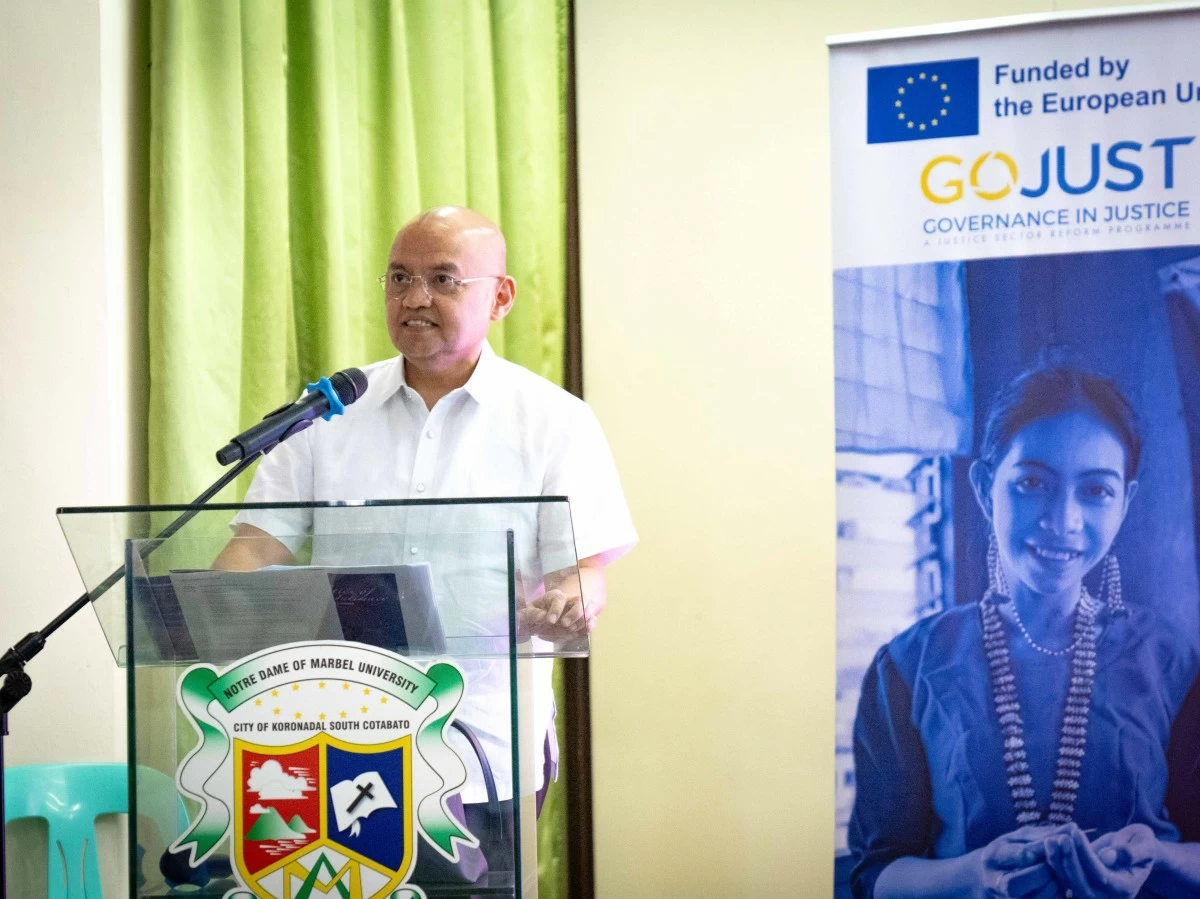
A Supreme Court (SC) justice underscored the “disconnect” between existing laws on marriage and the “lived realities” of many Filipinos, and urged lawmakers for “greater empathy and inclusivity” in crafting laws.
Senior Associate Justice Marvic M.V.F. Leonen said: “Our current law, including its dominant interpretation, does not fully recognize that you can love who you want to love in the way you want to love and for how long you can stay in love.”
During a recent lecture on Legal and Political Foundations of the Current Restrictions on Intimacies and Relationships, Justice Leonen also said: “Those who establish and maintain relationships and love differently from the ideals of a conservative religious morality are not less human. They are no less Filipinos.”
The SC’s Office of the Spokesperson said that Justice Leonen also spoke on the concepts of illegitimacy and psychological incapacity, one of the grounds for voiding marriage under the Family Code.
The Family Code, under Article 36, allows nullity of marriage if one or both parties suffer from psychological incapacity that existed at the time of marriage.
Psychological incapacity “refers to the psychological condition or disorder that renders a spouse incapable of fulfilling essential marital obligations, and it involves the inability to understand, commit to, or carry out the responsibilities and duties of marriage.”
Leonen said: “To be different is not to be abnormal. To be different from the hegemonic definition of what humans should be, is not illegitimate. We should not pathologize them with words like ‘psychological incapacity.’ They are not illegitimate. What they do should not be illegal. After all, the capacity to love is a human capacity.”
The event where Leonen delivered a lecture was held at the Notre Dame of Marbel University (NDMU) in Koronadal, South Cotabato.
It was part of the lecture series “On the Politics of Regulating Intimacy” which was organized by NDMU in partnership with the European Union’s Governance in Justice II Programme (EU GOJUST II).
Leonen urged for greater empathy and inclusivity in lawmaking, emphasizing that compassion should guide legal reforms.
He said: “If we truly are for justice, we will feel how we impose a burden that is a vestige of our colonial past, that even our past colonizer chose no longer to impose on its own people. If we can be truly, justly compassionate, we will know how our law privileges a morality that not all of us share. But that kind of morality, which they do not share, is likewise ethical.”
EU GOJUST II Team Leader Christian Eldon also attended the lecture series.
Eldon commended the Philippine judiciary and academic institutions for supporting the GOJUST Legal Feminism studies. He also praised the SC’s progressive decisions that have served as “consciousness-raising tools” for the legal community and society.
The lecture was attended by over 200 participants from the academic, legal, and judicial communities. It included the official handover of EU GOJUST II’s Legal Feminism publication to NDMU.
EU GOJUST II supports justice sector reform in the Philippines in collaboration with justice sector institutions, including the SC, to improve access to justice and enhance court performance across the country.
Also present during the lecture were Executive Judge Dennis A. Velasco, Branch 23, Regional Trial Court (RTC), General Santos City; Presiding Judge Dinah Jean S. Cornejo, Branch 55, RTC, General Santos City; and Presiding Judge Josie A. Felipe, Branch 6, Municipal Circuit Trial Court, Surallah-Lake Sebu.
They were joined by NDMU officials led by President Bro. Paterno S. Corpus; College of Law Dean lawyer Paisal D. Tanjili; Director for Student Affairs and Publication lawyer Sylvie Blanche F. Tandog; Director for Legal Aid and Community Extension Services and Marist Hope Center for Justice and Good Governance lawyer Rene M. Barrion; lawyer Nena A. Santos; Sr. Mary Ann B. Rhudy; and Sr. Pacita Babiera.