






Inspection on the San Juanico Bridge must be done every three years, President Marcos said, citing that failure to do so has caused the bridge to deteriorate.
Manila Bulletin
 Philippines
National
San Juanico Bridge in critical condition; must be inspected every 3 years—Marcos
Philippines
National
San Juanico Bridge in critical condition; must be inspected every 3 years—Marcos
Philippines
National
San Juanico Bridge in critical condition; must be inspected every 3 years—Marcos
San Juanico Bridge in critical condition; must be inspected every 3 years—Marcos
Published Jun 11, 2025 03:24 pm


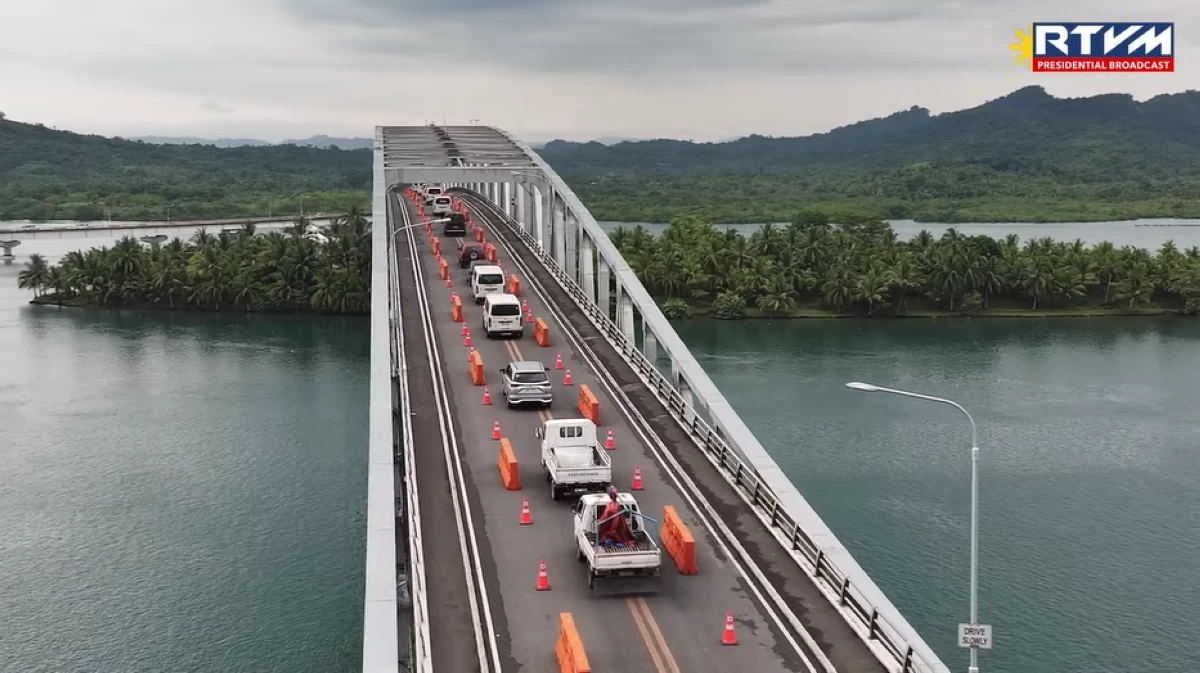
San Juanico Bridge (RTVM)
During an inspection of the 52-year-old bridge on Wednesday, June 11, Marcos said the structure may look good but it has actually reached a critical state.
"Yung tulay maganda pang tingnan if you look at it from outside, pero ito yung ilalim kalawang na lahat (If you look at the bridge from the outside, it still looks good, but it's all rusty now)," Marcos said in an interview.
The President said an inspection made by the Department of Public Works and Highways (DPWH) revealed that the bridge was already in a state where it can already collapse.
He then stressed that the maintenance and inspection of the bridge should be undertaken every three years, but the President suspected that it was not done in the past.
"Ika nila delikado na itong tulay na ito, hindi namin akalain na ganito kasama (They said this bridge is now dangerous, we did not think it would be this bad)," Marcos said.
"Dahi siguro, hindi namin malaman, hindi ginawa nang mabuti ang maintenance ng tulay. Dapat 'yan every three years, binabalik-balikan (Perhaps, we cannot pinpoint, it was not maintained properly. It should be inspected every three years)," Marcos added.
"Tinanong ko sa mga locals, sa ating mga kababayan kung talaga bang nagagawa noon every three years, mukhang hindi kaya ganito, kaya yung inabot namin talagang sira sira na. Kaya napilitan kami isara, kaya't biglaan (We asked the locals, the people, if it was done every three years, it looks like it was not, that is why it has reached such a bad state. So, we were compelled to close this, that is why it was this sudden)," Marcos further said.
The President assured the public that while the structure is undergoing rehabilitation, they will come up with a system so as not to disrupt the movement of essential goods and traffic in Eastern Visayas.
While traffic will be limited along the bridge, Marcos said cargo ships will be deployed to transport around 500 trucks a day across Samar and Leyte.
The Amandayehan Port in Basey, Samar is one of the ports in Eastern Visayas identified as an alternative route due to its strategic location and proximity to Tacloban Port.
"Ang ginagawa namin, ang kapalit ay itong RORO (roll on, roll off) na ganito. Ito pang tatlumpu na truck, may darating na pang 40 trucks, merong pang 50 trucks. Tapos itong rampang ito, dodoblehin natin, lalagay pa tayo dun ng isa pa, para double, mga 500 trucks a day. Tapos mag-uumpisa na tayo ng night navigation, ibig sabihin kahit gabi pwedeng tumawid (What we are doing, we are deploying RORO. We have ship that can carry 30 trucks, ships that can carry 40 to 50 trucks will also be coming in. We will also double the ramps. And we will start night navigation, meaning the ships can cross even at night)," Marcos said.
"So, that's our way of trying to mitigate the problem," he added.
Marcos' visit came less than a month after the DPWH announced a three-ton weight limit on the San Juanico Bridge following assessments that the bridge is in critical condition, which has halted the passage of heavy cargo vehicles, including the delivery of basic commodities in Eastern Visayas.
According to the Philippine Ports Authority (PPA), it has already allocated a budget of P400 million from its Corporate Operating Budget to expand and modernize key ports in Samar that will serve as alternate transport routes going to the Province of Leyte.
Earlier, Marcos issued Proclamation No. 920 declaring a state of calamity in Eastern Visayas to expedite the repair and rehabilitation of the San Juanico Bridge and mitigate the impact on the residents of Samar and Leyte.