






When it comes to fashion, certain silhouettes do more than just flatter—they can tell the story of a people, its culture, and even touch on its history. And on a warm spring afternoon at the Philippine Ambassador’s residence in Tokyo, the terno took center stage as both cultural artifact and contemporary statement piece.
Manila Bulletin
 Embassies & Foreign Affairs
The terno reimagined: A heritage icon finds its fashion moment in Tokyo
Embassies & Foreign Affairs
The terno reimagined: A heritage icon finds its fashion moment in Tokyo
Embassies & Foreign Affairs
The terno reimagined: A heritage icon finds its fashion moment in Tokyo
The terno reimagined: A heritage icon finds its fashion moment in Tokyo
Published Jun 9, 2025 12:54 pm
|
Updated Jun 9, 2025 05:04 pm


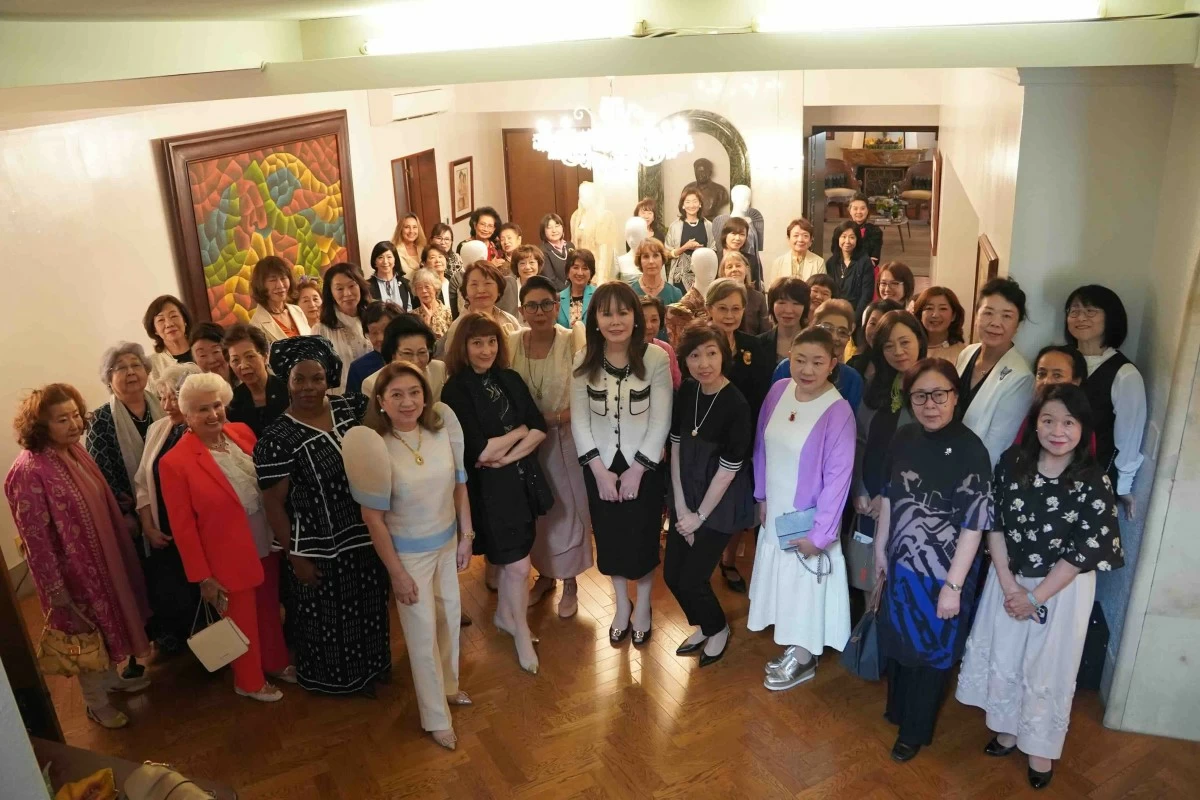
Hosted by Philippine Ambassador to Japan Mylene J. Garcia-Albano, the special gathering of the Tokyo Women’s Club on May 23 celebrated the terno—the Philippines’ most iconic dress form—through a captivating lecture and exhibition, offering guests a rare look at the evolution of heritage through fabric, form, and craftsmanship. The event was held in conjunction with National Heritage Month and unfolded within the walls of a historic landmark: the official residence in Kudan, a building that has itself witnessed decades of diplomatic and cultural milestones.
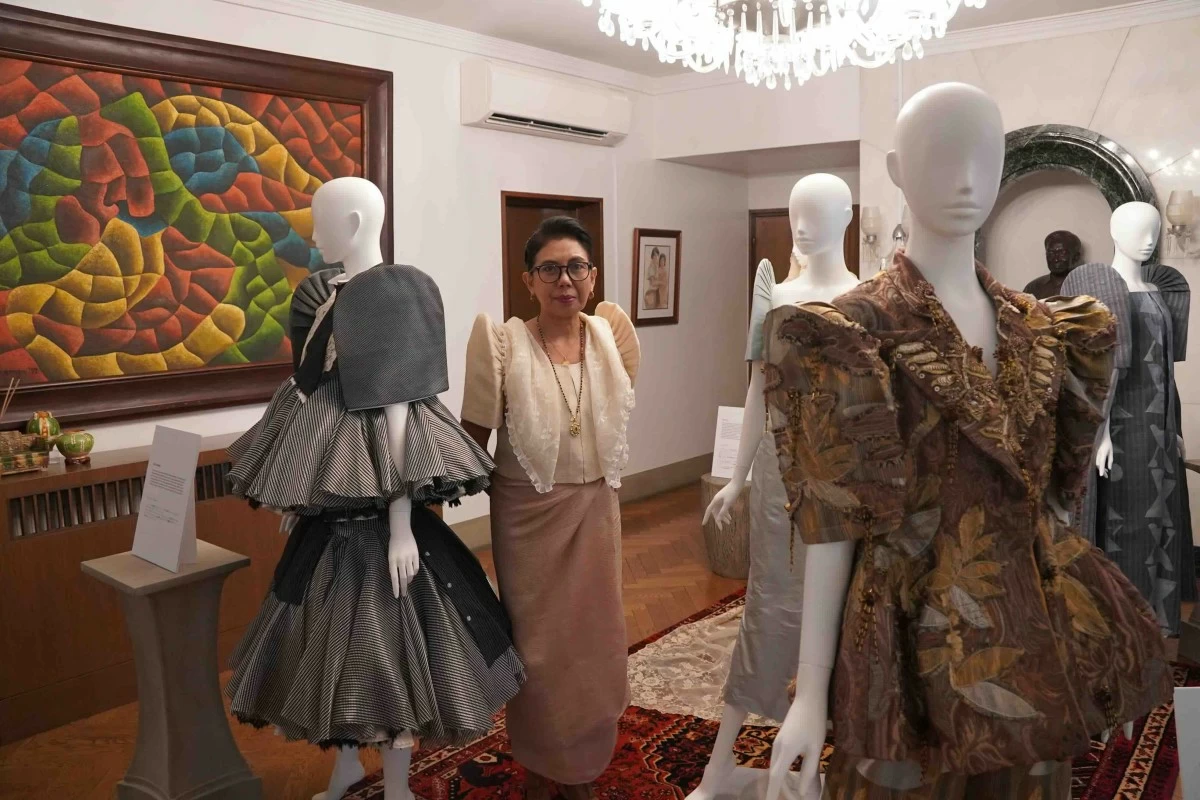
Leonora Luisa “Len” Cabili
Clad in a modern terno-inspired top, Ambassador Garcia-Albano welcomed sixty guests from the Tokyo Women’s Club and the diplomatic corps, opening the afternoon with remarks that framed the terno not as a relic of the past, but as a continuing conversation between identity, artistry, and national pride.
“It is only fitting,” she said, “that we celebrate the terno in a space that honors our history. This residence is a declared National Historical Landmark, and today it also becomes a gallery for one of the most enduring icons of Philippine design.”
At the heart of the afternoon was a lecture by fashion and textile advocate Len Cabili, founder and creative director of Filip+Inna. Known for her tireless work in reviving traditional craftsmanship, Cabili walked guests through the terno’s transformation—from its Spanish-influenced beginnings to its modern interpretations by a new wave of Filipino designers. She also emphasized how the garment serves as a canvas for indigenous textiles, many of which are woven by artisans from the 22 local communities her brand collaborates with.

Philippine Ambassador to Japan Mylene J. Garcia-Albano (right) with Valerie Moschetti, president of the Tokyo Women’s Club (TWC) (left) during the TWC Meeting featuring a Philippine cultural presentation on the 'terno' held on May 23, 2025 at the official residence of the Philippine Ambassador in Kudan, Tokyo, Japan.
Cabili’s message was central to the afternoon’s purpose: the terno is not simply a national costume to be admired from a distance—it is wearable heritage. “When we use our hands, when we take our time, when we respect the traditions of the communities behind the fabric—that is when the terno becomes powerful,” she said.
Adding visual context to the talk was a curated exhibition featuring five standout terno pieces by celebrated Filipino designers: Lulu Tan Gan, Joey Samson, Renz Reyes, Filip+Inna, and Pepito Albert. Each creation was on loan from the personal collection of Ms. Irene Marcos Araneta and represented a different chapter in the dress’s evolution—from romantic nostalgia to edgy reinterpretation.
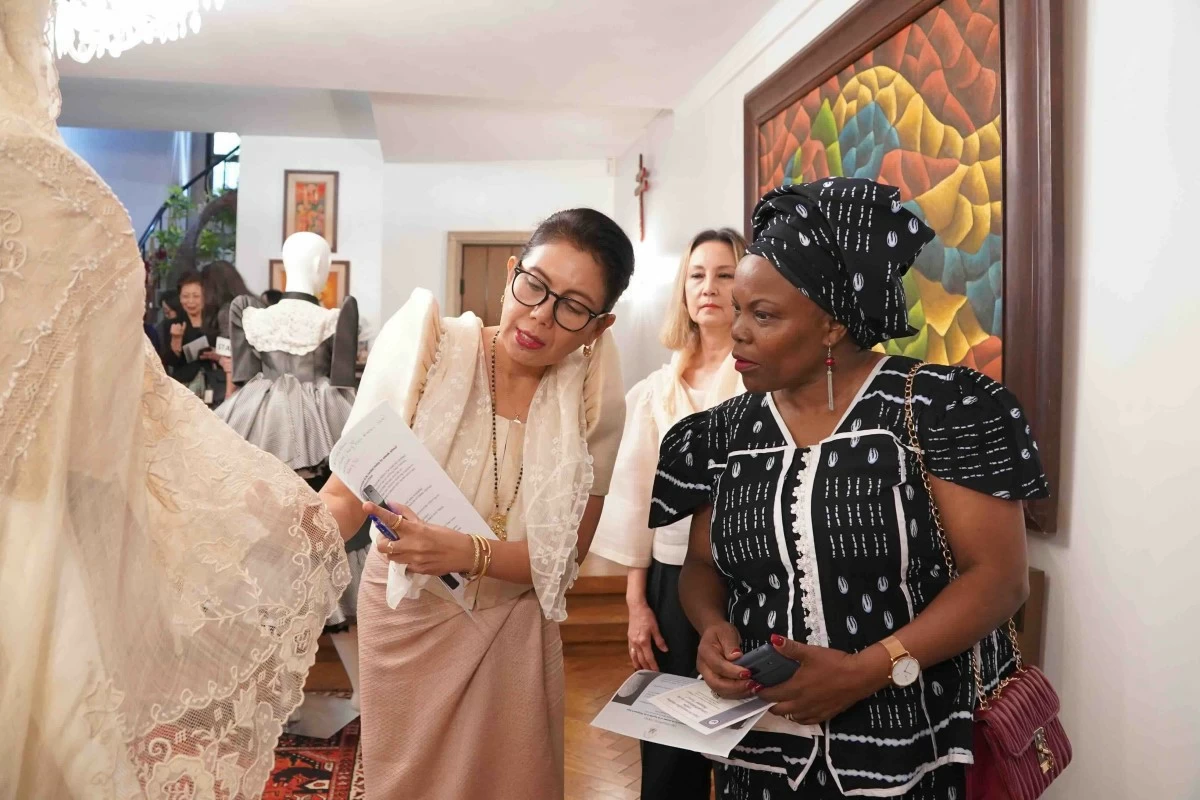
Leonora Luisa “Len” Cabili, founder and creative director of the Filipino clothing and accessories brand Filip Inna, and guest lecturer during the Philippine cultural presentation on the "terno" (left) showing an interpretation of the iconic traditional Philippine dress to Madame Theresa Mutale Chisiza, spouse of the Ambassador of Malawi (right), during the event.
The styling was sublime. Samson’s clean lines sat alongside Albert’s sculptural flair, while Reyes delivered drama with innovative draping. Tan Gan, long known for integrating knit into heritage wear, presented a refreshing blend of texture and tradition. Cabili’s own piece anchored the exhibit with its intricate embroidery and rooted elegance.
Fashion, of course, is never just about clothes—it’s about context. The residence’s museum-like interiors, filled with touches of Filipino heritage and craftsmanship, formed the ideal backdrop. The garden, in full bloom, offered a serene moment for guests to take photographs—some of them proudly donning terno-inspired pieces themselves.
Following the cultural program, guests were treated to a spread of Filipino comfort food with elevated touches. Prepared by Japan-based chefs Jane Magat-Kemmochi and Marlyn Okawa, the buffet included pancit guisado, pork adobo, and even a charming taho station that brought a smile to many faces. The hospitality was as warm as the late May sunlight streaming through the residence’s wide windows.
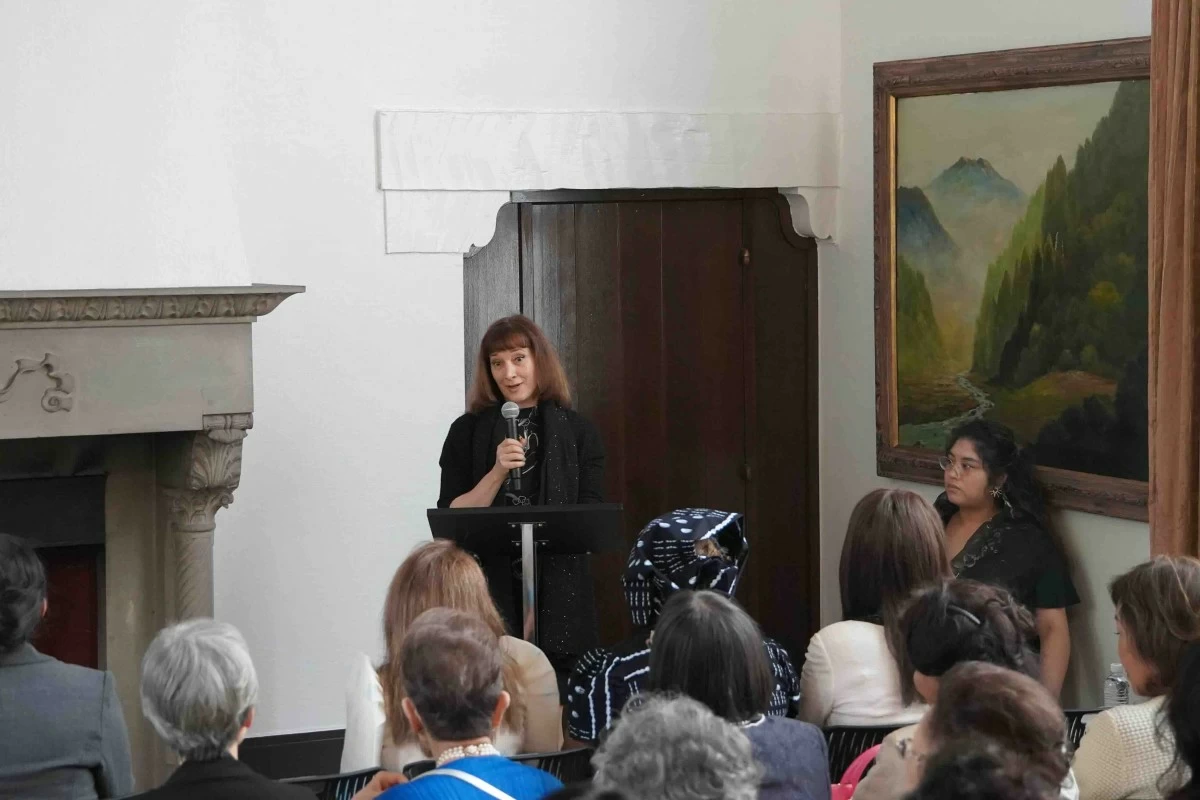
Valerie Moschetti

Ambassador Mylene J. Garcia-Albano
To close the afternoon, guests were shown a tourism video that captured the richness of the Philippines—its vibrant cities, serene beaches, cultural tours, and wellness offerings in Tagaytay and Batangas. A sneak preview of the upcoming Philippine Pavilion at Expo 2025 Osaka was also included, tying the country’s forward-looking ambitions to its storied past.
In her closing remarks, Tokyo Women’s Club President Valerie Moschetti noted how the afternoon was more than a cultural exchange—it was a celebration of craftsmanship in an age of fast fashion. “It is better to wait for a while for a beautiful dress to be made, like the Philippine terno, and be able to keep it your whole life,” she said. Her words struck a chord: in an era of disposability, garments that hold memory and meaning are becoming ever more rare—and precious.
Founded in 1908, the Tokyo Women’s Club has long been a bridge between cultures. Originally created as a debating society, it has since evolved into a platform for charitable work and cultural diplomacy. Events like these remind us of the unique power fashion holds: not just to adorn, but to connect, to preserve, and to speak—in style and in substance.
At a time when cultural identity is increasingly being reclaimed through personal expression, the terno stands tall—structured sleeves and all—as both symbol and statement. And in Tokyo, it had its moment to shine.