







When President Ferdinand Marcos Jr. assumed office in June 2022, he inherited not only the reins of government but also a formidable fiscal burden — a national debt stock that had ballooned to over 60 percent of GDP under the Duterte administration. The sharp rise from just 39 percent of GDP during the Aquino III administration to over 13 trillion pesos by mid-2022 was largely driven by massive pandemic spending and an ambitious “Build, Build, Build” infrastructure program. By 2025, total indebtedness is projected to reach ₱16.75 trillion — a staggering increase of ₱6.84 trillion over a 15-year period.
Resolving debt dilemma, attaining development goals
Published Jun 9, 2025 12:05 am
|
Updated Jun 8, 2025 03:33 pm


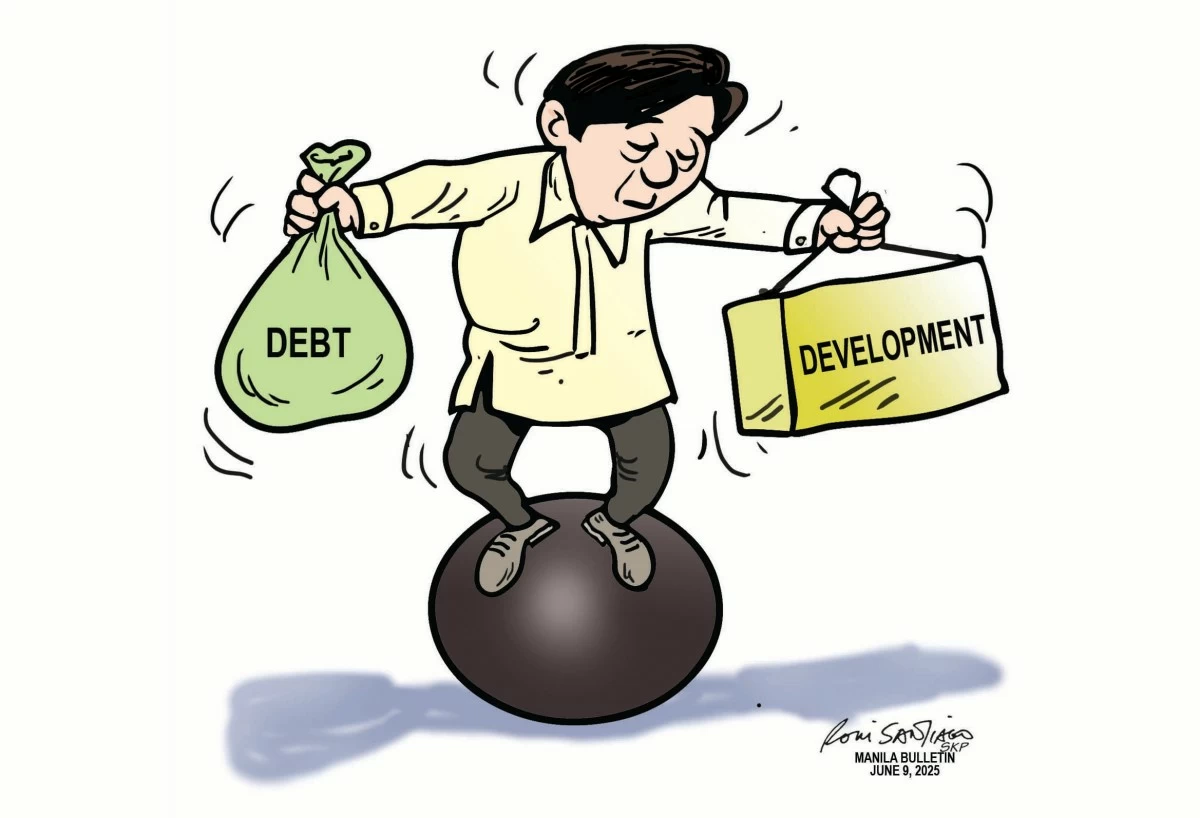
Three years into his term, President Marcos Jr. has articulated a goal of reducing the debt-to-GDP ratio below the 60 percent threshold. This is not merely an accounting target; it is a fundamental step toward ensuring long-term fiscal sustainability and preserving the country’s creditworthiness. Simultaneously, the government also seeks to reduce poverty to a single-digit level by the end of its term in 2028. The challenge lies in doing so without derailing economic growth or neglecting the social safety nets that protect the most vulnerable Filipinos.
The Marcos administration has signaled a commitment to fiscal discipline through improved tax administration, enhanced revenue mobilization, and a more strategic allocation of public resources. The push for digitalization in tax collection, rationalization of government expenditures, and the pursuit of public-private partnerships are all key tools in this strategy.
However, there is an inherent tension: reducing debt typically entails controlling spending or raising taxes — both of which can dampen aggregate demand and, in turn, GDP growth. The government’s challenge is to calibrate fiscal consolidation in a way that supports, rather than stifles, its growth target of 6-7 percent annually. Infrastructure spending must remain robust, but efficiency and transparency in project implementation will be critical.
Equally crucial is the need to maintain — and even expand — investments in education, health, and social protection. For millions of low-income families, government support is their lifeline. Amid high inflation and global uncertainty, austerity measures must not come at the expense of social cohesion. Programs like the Pantawid Pamilyang Pilipino Program (4Ps), universal healthcare, and targeted subsidies must be preserved to prevent deepening inequality.
The administration must also address the quality of spending: rather than just injecting funds, it must ensure that public money delivers measurable improvements in human capital and livelihood opportunities. The long-term payoff is a healthier, more productive workforce that can fuel inclusive growth.
The World Bank classifies the Philippines as a lower-middle-income economy. To graduate to upper-middle-income status — a goal the Marcos government has revived — the country must raise its gross national income (GNI) per capita beyond the current threshold of around $4,500. Sustained GDP growth, job creation, and poverty reduction are all preconditions.
But this requires more than debt management; it calls for structural reforms. These include improving the ease of doing business, enhancing education and skills training, upgrading infrastructure logistics, and addressing bureaucratic inefficiencies. The administration’s focus on digital transformation and regional development, if fully realized, could help unlock this potential.
Navigating a path toward lower debt and higher development is a tightrope act. The Marcos administration must strike a delicate balance — restoring fiscal health without undermining growth or sacrificing the welfare of the poor. In doing so, it not only secures economic stability but also lays the foundation for the Philippines to fulfill its promise as an emerging middle-income power in Southeast Asia.