






The Philippines will receive a $500-million loan, or about ₱27.9 billion, from the Asian Development Bank (ADB) to support efforts to make the local agriculture sector more sustainable through 2030.
Manila Bulletin
 Business
The Economy
Philippines gets $500-million ADB loan to improve agriculture sustainability
Business
The Economy
Philippines gets $500-million ADB loan to improve agriculture sustainability
Business
The Economy
Philippines gets $500-million ADB loan to improve agriculture sustainability
Philippines gets $500-million ADB loan to improve agriculture sustainability
Published Jun 9, 2025 02:56 pm


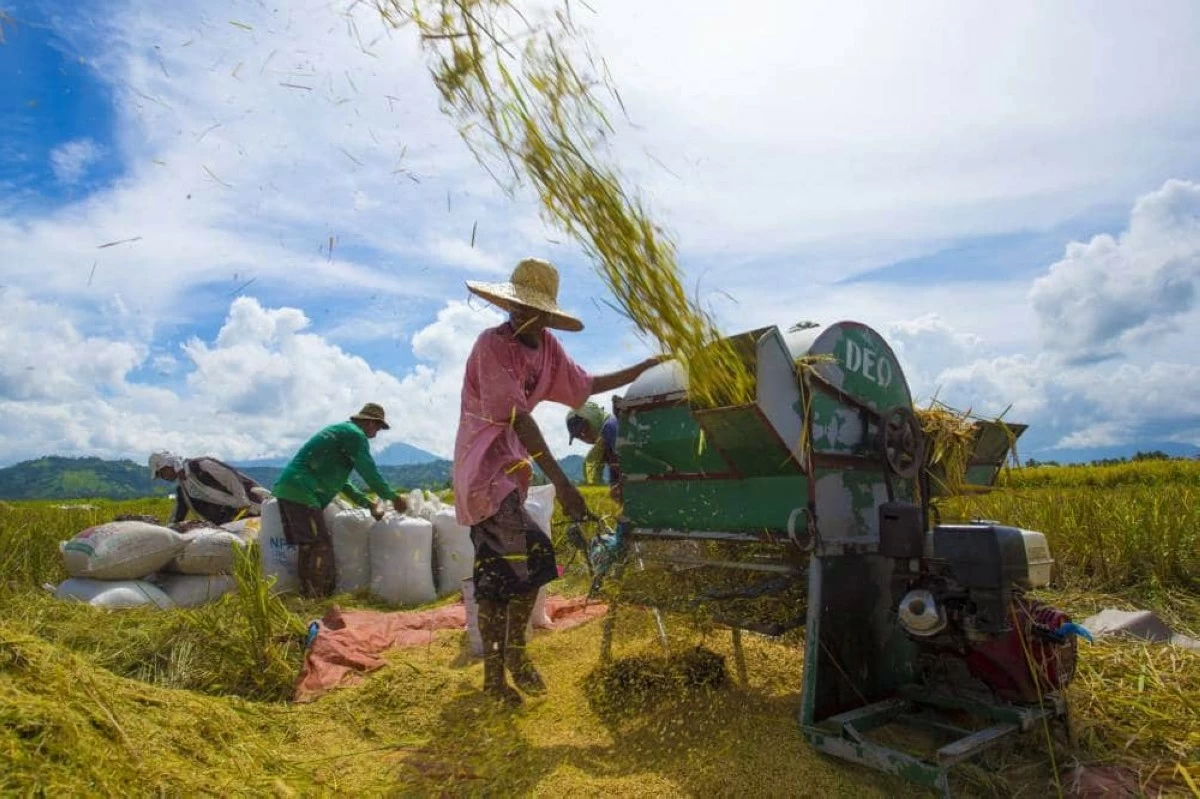
ADB agriculture, food, nature, and rural development sector office senior director Qingfeng Zhang said the loan agreement is part of the Manila-based multilateral lender’s plan to invest $1.5 billion for its program to build clearinghouse facilities across Asia and the Pacific.
These facilities will be developed by the bank alongside global research organization Consultative Group for International Agricultural Research (CGIAR), with financing support from Gates Foundation.
The ADB said the program aims to improve the agriculture sector’s productivity sustainably, while enabling it to adapt to harsher climate conditions and reducing water and carbon footprints.
This is envisioned to boost investments in sustainable and low-carbon rice production, with the intent of improving the lives of millions of vulnerable smalltime farmers.
"Rice is essential to food security in Asia, supplying over a quarter of the region's calorie intake, and half in Southeast Asia. For hundreds of millions of smallholder farmers, rice is not just food, it is their livelihood,” said ADB vice-president for sectors and themes Fatima Yasmin in a statement.
“Today, that livelihood is increasingly threatened by extreme weather and environmental degradation," she added.
On its website, the ADB emphasized that rice farming continues to face “mounting pressure” over declining productivity and shrinking water supplies as climate change heats up.
Left unaddressed, the bank said this threatens food security and the well-being of the poorest and most vulnerable communities, particularly in Asia and the Pacific.
International Rice Research Institute (IRRI) Director General Yvonne Pinto said establishing the clearinghouse facilities will not only help improving these dire conditions but could also drive further innovations.
"We can drive sustainable and resilient transformation of the rice sector in Asia and transform the lives of millions of smallholder farmers now and in the future,” Pinto said.
For the Philippines, Zhang told reporters that the $500-million funding will mostly be utilized for rice farming, irrigation, and agricultural and logistics development.
The aforementioned facilities are also being developed for Bangladesh, Cambodia, China, and Pakistan.
The $1.5-billion funding for the program is part of the ADB’s broader $40-billion commitment to food systems transformation by 2030.
Last month, the bank said this assistance will enable Asia-Pacific produce diverse and nutritious food, create jobs, reduce environmental impacts, and strengthen agricultural supply chains.
To support this goal, the funding seeks to modernize agricultural value chains to improve access to affordable and healthy food for vulnerable populations.
It will also invest in soil quality, biodiversity conservation, and digital technologies to improve decision-making for farmers, agribusinesses, and policymakers.