







President Marcos announced that the government will launch a unified national 911 emergency hotline by July, calling it a major step in his administration’s efforts to keep Filipinos safe from crime.
Marcos: 911 emergency hotline to launch nationwide in July
Published Jun 9, 2025 03:07 pm
|
Updated Jun 10, 2025 01:29 am


At A Glance
- Marcos said the launch of a state-of-the-art national emergency hotline is an integral part of his administration's campaign against criminality.
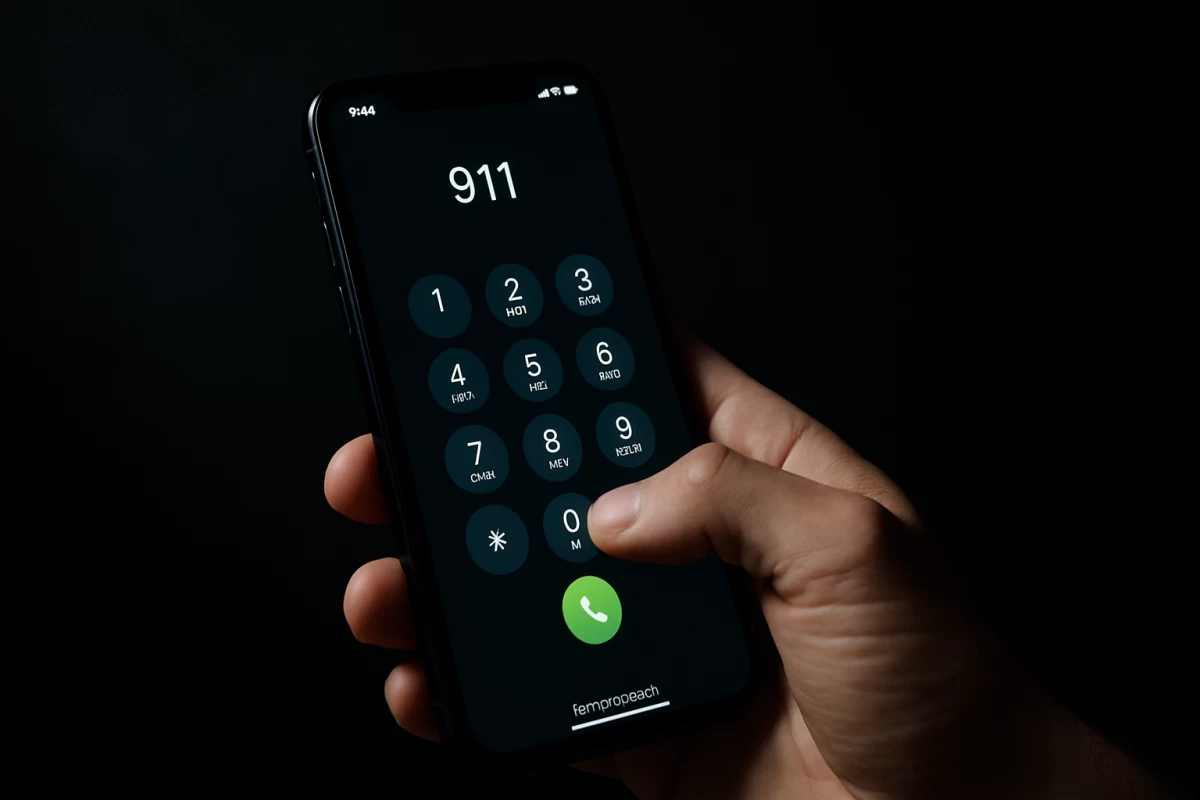
In his latest vlog, the President said the launch of a state-of-the-art national emergency hotline is an integral part of his administration’s campaign against criminality.
“Ginagawa na rin itong emergency hotline natin at sigurado ako in just a few weeks—baka sa Hulyo—ay ma-launch na namin ito (We’re already working on this emergency hotline, and I’m confident that in just a few weeks—possibly by July—we’ll be able to launch it),” he said.
According ot the Department of the Interior and Local Government (DILG), the system will initially go live in Metro Manila, the Ilocos Region, Central Visayas, and the Bangsamoro Autonomous Region in Muslim Mindanao.
The DILG added that the 911 system utilizes advanced technology to connect emergency calls directly to frontline responders, such as the Philippine National Police (PNP) and the Bureau of Fire Protection (BFP), while minimizing prank or nuisance calls through enhanced screening mechanisms.
More police, faster response
The emergency hotline rollout complements the administration’s “Cops on the Beat” initiative, which aims to increase police visibility in public spaces and cut emergency response time to five minutes.
President Marcos said the program reflects his marching orders to PNP Chief Gen. Nicolas Torre III to deploy more officers and improve immediate police assistance.
“Sinimulan natin ang pagde-deploy ng mas maraming pulis o ‘yung tinatawag nating ‘Cops on the Beat’ (We’ve started deploying more officers under what we call ‘Cops on the Beat’),” he said.
‘Public feels safer’
In his vlog, the President also shared public feedback highlighting the impact of visible police patrols on people’s sense of safety.
A college student shared that people feel more comfortable walking alone, knowing there are police nearby, while another resident said they feel secure when they approach police officers for help.
President Marcos said these safety measures are part of his broader governance goal of making everyday life more bearable and dignified for ordinary citizens.
“Iyan naman ang pangunahing direksyon na inilatag natin sa ating Gabinete: paano ba natin pagiginhawain ang buhay ng bawat Pilipino (That has always been the main direction I’ve given to my Cabinet: how to make life easier for every Filipino),” he said.
The national emergency hotline initiative follows the recent appointment of Gen. Torre as PNP chief and is among a series of measures aimed at modernizing law enforcement, improving public trust, and promoting a more responsive government.
The 911 emergency hotline was officially launched in the Philippines on Aug. 1, 2016, during the administration of former president Rodrigo Duterte, making it the first country in Asia to adopt 911 as a nationwide emergency number, similar to the system used in the United States.
Before this, the national emergency hotline was 117, operated under the Department of the Interior and Local Government (DILG) and the PNP. The 117 hotline was introduced in the early 2000s but faced challenges such as limited scope, slower response times, and inconsistent operations across regions.