

ADVERTISEMENT

Why were so many Thai farmers among the hostages held by Hamas?

Published Jun 8, 2025 07:57 am

At A Glance

  • The ministry has said 46 Thais have been killed during the war. Thais were the largest group of foreigners held captive by Hamas.

BANGKOK (AP) — Israel says it has retrieved the body of a 35-year-old Thai hostage who was abducted into Gaza during the Oct. 7, 2023, attack that sparked the war.
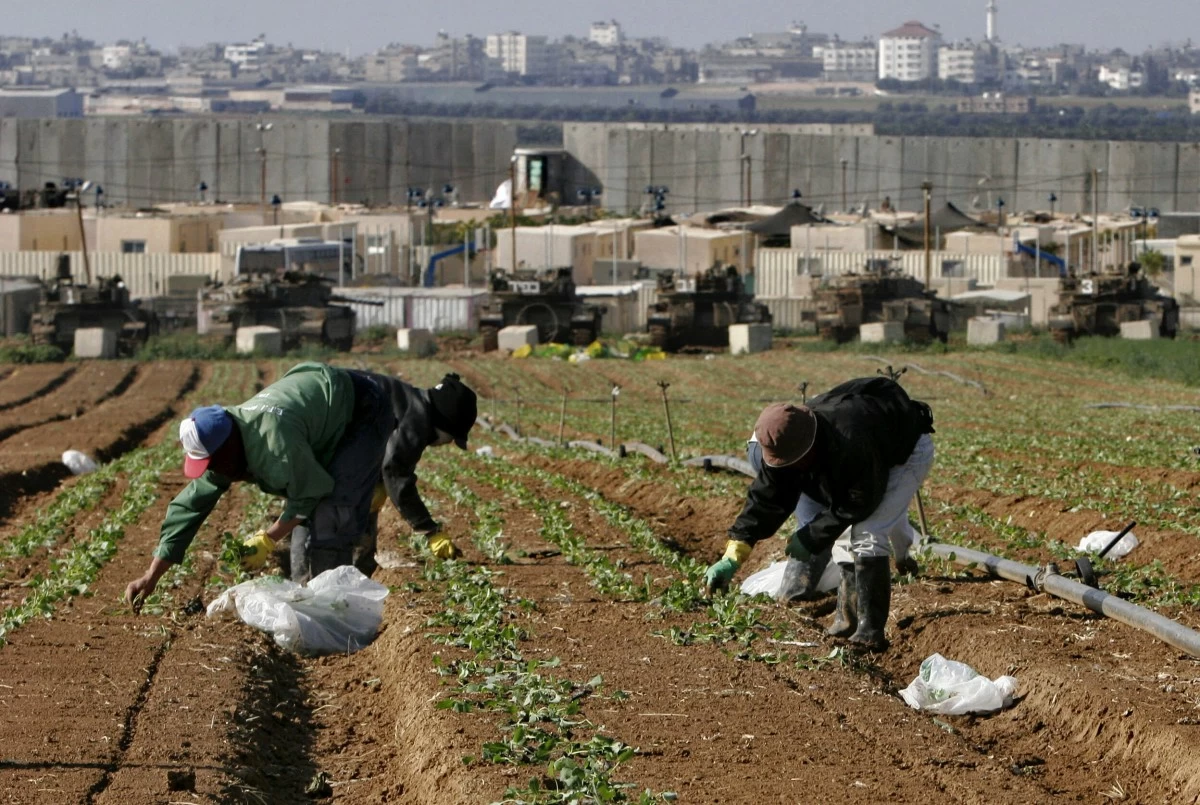
FILE - Thai workers work in a field next to an Israeli army base outside the Gaza Strip, near the southern Israeli Kibbutz of Nahal Oz. Thursday, Nov. 30, 2006. (AP Photo/Tsafrir Abayov, File)

Nattapong Pinta was among 31 Thais taken by the Hamas militant group. Thailand’s foreign ministry in a statement Saturday confirmed that Pinta, the last Thai hostage in Gaza, was confirmed dead. It said the bodies of two others have yet to be retrieved.

The ministry has said 46 Thais have been killed during the war. Thais were the largest group of foreigners held captive by Hamas. They were among tens of thousands of Thai workers in Israel. Here’s a look at what they were doing.

Why are there so many Thais in Israel?

Israel once relied heavily on Palestinian workers, but it started bringing in large numbers of migrant workers after the 1987-93 Palestinian revolt, known as the first Intifada.

Most came from Thailand, and Thais remain the largest group of foreign agricultural laborers in Israel today, earning considerably more than they can at home.

Thailand and Israel implemented a bilateral agreement a decade ago to ease the way for workers in the agriculture sector.

Israel has come under criticism for the conditions under which the Thai farm laborers work. A Human Rights Watch report in 2015 said they often were housed in makeshift and inadequate accommodation and “were paid salaries significantly below the legal minimum wage, forced to work long hours in excess of the legal maximum, subjected to unsafe working conditions and denied their right to change employers.”

A watchdog group found more recently that most were still paid below the legal minimum wage.

How many Thai nationals work in Israel?

There were about 30,000 Thai workers, primarily working on farms, in Israel prior to the attack by Hamas.

In the wake of the attack, some 7,000 returned home, primarily on government evacuation flights, but higher wages than those available at home have continued to attract new arrivals.

The Thai ambassador to Israel, Pannabha Chandraramya, recently said there are now more than 38,000 Thai workers in the country.

What happened after some left?

Faced with a labor shortage in the wake of the exodus, Israel’s Agriculture Ministry announced incentives to try to attract foreign workers back to evacuated areas.

Among other things, it offered to extend work visas and to pay bonuses of about $500 a month.

Thailand’s Labor Ministry granted 3,966 Thai workers permission to work in Israel in 2024, keeping Israel in the top four destinations for Thais working abroad last year.

Thai migrant workers generally come from poorer regions of the country, especially the northeast, and even before the bonuses, the jobs in Israel paid many times what they could make at home.

Related Tags

WORLDNEWS
ADVERTISEMENT
.most-popular .layout-ratio{ padding-bottom: 79.13%; } @media (min-width: 768px) and (max-width: 1024px) { .widget-title { font-size: 15px !important; } }

{{ articles_filter_1561_widget.title }}

.most-popular .layout-ratio{ padding-bottom: 79.13%; } @media (min-width: 768px) and (max-width: 1024px) { .widget-title { font-size: 15px !important; } }

{{ articles_filter_1562_widget.title }}

.most-popular .layout-ratio{ padding-bottom: 79.13%; } @media (min-width: 768px) and (max-width: 1024px) { .widget-title { font-size: 15px !important; } }

{{ articles_filter_1563_widget.title }}

{{ articles_filter_1564_widget.title }}

.mb-article-details { position: relative; } .mb-article-details .article-body-preview, .mb-article-details .article-body-summary{ font-size: 17px; line-height: 30px; font-family: "Libre Caslon Text", serif; color: #000; } .mb-article-details .article-body-preview iframe , .mb-article-details .article-body-summary iframe{ width: 100%; margin: auto; } .read-more-background { background: linear-gradient(180deg, color(display-p3 1.000 1.000 1.000 / 0) 13.75%, color(display-p3 1.000 1.000 1.000 / 0.8) 30.79%, color(display-p3 1.000 1.000 1.000) 72.5%); position: absolute; height: 200px; width: 100%; bottom: 0; display: flex; justify-content: center; align-items: center; padding: 0; } .read-more-background a{ color: #000; } .read-more-btn { padding: 17px 45px; font-family: Inter; font-weight: 700; font-size: 18px; line-height: 16px; text-align: center; vertical-align: middle; border: 1px solid black; background-color: white; } .hidden { display: none; }
function initializeAllSwipers() { // Get all hidden inputs with cms_article_id document.querySelectorAll('[id^="cms_article_id_"]').forEach(function (input) { const cmsArticleId = input.value; const articleSelector = '#article-' + cmsArticleId + ' .body_images'; const swiperElement = document.querySelector(articleSelector); if (swiperElement && !swiperElement.classList.contains('swiper-initialized')) { new Swiper(articleSelector, { loop: true, pagination: false, navigation: { nextEl: '#article-' + cmsArticleId + ' .swiper-button-next', prevEl: '#article-' + cmsArticleId + ' .swiper-button-prev', }, }); } }); } setTimeout(initializeAllSwipers, 3000); const intersectionObserver = new IntersectionObserver( (entries) => { entries.forEach((entry) => { if (entry.isIntersecting) { const newUrl = entry.target.getAttribute("data-url"); if (newUrl) { history.pushState(null, null, newUrl); let article = entry.target; // Extract metadata const author = article.querySelector('.author-section').textContent.replace('By', '').trim(); const section = article.querySelector('.section-info ').textContent.replace(' ', ' '); const title = article.querySelector('.article-title h1').textContent; // Parse URL for Chartbeat path format const parsedUrl = new URL(newUrl, window.location.origin); const cleanUrl = parsedUrl.host + parsedUrl.pathname; // Update Chartbeat configuration if (typeof window._sf_async_config !== 'undefined') { window._sf_async_config.path = cleanUrl; window._sf_async_config.sections = section; window._sf_async_config.authors = author; } // Track virtual page view with Chartbeat if (typeof pSUPERFLY !== 'undefined' && typeof pSUPERFLY.virtualPage === 'function') { try { pSUPERFLY.virtualPage({ path: cleanUrl, title: title, sections: section, authors: author }); } catch (error) { console.error('ping error', error); } } // Optional: Update document title if (title && title !== document.title) { document.title = title; } } } }); }, { threshold: 0.1 } ); function showArticleBody(button) { const article = button.closest("article"); const summary = article.querySelector(".article-body-summary"); const body = article.querySelector(".article-body-preview"); const readMoreSection = article.querySelector(".read-more-background"); // Hide summary and read-more section summary.style.display = "none"; readMoreSection.style.display = "none"; // Show the full article body body.classList.remove("hidden"); } document.addEventListener("DOMContentLoaded", () => { let loadCount = 0; // Track how many times articles are loaded const offset = [1, 2, 3, 4, 5, 6, 7, 8, 9, 10]; // Offset values const currentUrl = window.location.pathname.substring(1); let isLoading = false; // Prevent multiple calls if (!currentUrl) { console.log("Current URL is invalid."); return; } const sentinel = document.getElementById("load-more-sentinel"); if (!sentinel) { console.log("Sentinel element not found."); return; } function isSentinelVisible() { const rect = sentinel.getBoundingClientRect(); return ( rect.top < window.innerHeight && rect.bottom >= 0 ); } function onScroll() { if (isLoading) return; if (isSentinelVisible()) { if (loadCount >= offset.length) { console.log("Maximum load attempts reached."); window.removeEventListener("scroll", onScroll); return; } isLoading = true; const currentOffset = offset[loadCount]; window.loadMoreItems().then(() => { let article = document.querySelector('#widget_1690 > div:nth-last-of-type(2) article'); intersectionObserver.observe(article) loadCount++; }).catch(error => { console.error("Error loading more items:", error); }).finally(() => { isLoading = false; }); } } window.addEventListener("scroll", onScroll); });

Sign up by email to receive news.