






The Presidential Communications Office (PCO) reiterated its support for stronger social media and online content regulation, echoing President Marcos' directive to address the growing threat of fake news.
Manila Bulletin
 Philippines
National
PCO backs anti-fake news legislation, cites online platforms' role in curbing disinformation
Philippines
National
PCO backs anti-fake news legislation, cites online platforms' role in curbing disinformation
Philippines
National
PCO backs anti-fake news legislation, cites online platforms' role in curbing disinformation
PCO backs anti-fake news legislation, cites online platforms' role in curbing disinformation
Published Jun 7, 2025 07:18 am


At A Glance
- Ruiz warned that if left unchecked, online disinformation would erode citizens' ability to make informed decisions and jeopardize the integrity of democratic processes.
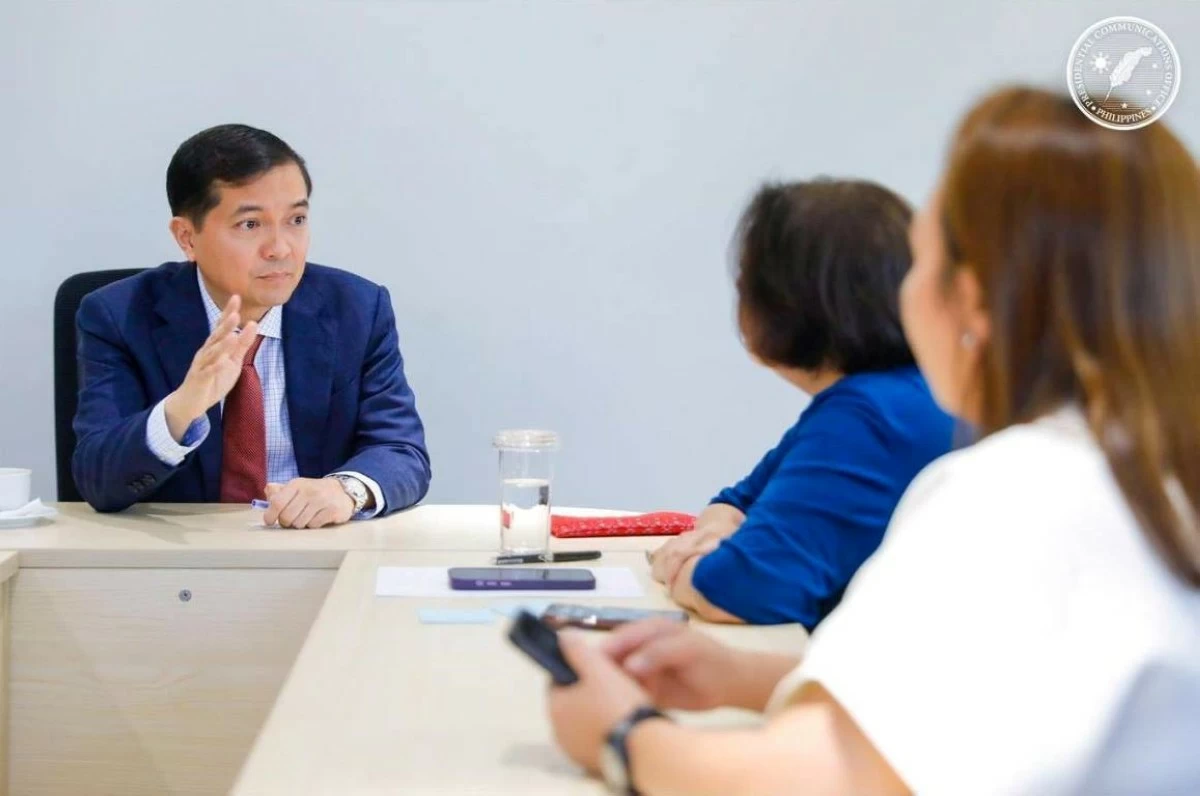
Communication Secretary Jay Ruiz (PCO/File Photo)
During a House tri-committee hearing, PCO Secretary Jay Ruiz told lawmakers that there is an urgent need to define “fake news” in law and impose penalties for its deliberate spread, especially during critical periods such as elections.
“Papaano kung ang tao bine-base niya ang mga desisyon niya sa mga fake news o kasinungalingan (What if people make decisions based on fake news or lies)?," he said.
"Isipin mo kung ang mga botante natin boboto sa impormasyon na kasinungalingan, anong klaseng democracy ang meron tayo (Imagine if our voters are casting their votes based on false information—what kind of democracy do we have)?," he added.
Ruiz warned that if left unchecked, online disinformation would erode citizens' ability to make informed decisions and jeopardize the integrity of democratic processes.
“If you do not stop fake news, eventually our people will no longer decide based on informed decisions but based on lies,” he said, citing how some candidates in the May 12 elections attributed their loss to coordinated fake news campaigns.
“We agree that there is a right to information, but that right should be for accurate information,” he added.
Meta refused to remove fake memo
Ruiz also revealed that Meta declined a request from the PCO and the Department of Information and Communications Technology (DICT) to take down a fake memorandum falsely attributed to Executive Secretary Lucas Bersamin that had circulated on Facebook and Instagram.
“Alam mo sir, hindi nila tinanggal (They did not remove it)," he said.
"Ang reason ng mga platforms is that ito is freedom of expression, may community standards kami, ang bawat isang user, siya ang (The reason of these platforms is freedom of expression and they have community standards. They say that each user is) accountable to his or her account," he added.
He questioned the influence of foreign-based social media companies not registered or taxed in the Philippines.
"With the absence of a law for defining what fake news is, (for) setting penalties… wala tayong panghahawakan (we have nothing to hold on to)," Ruiz said, noting that other countries such as Singapore and several in Europe already have laws addressing online disinformation.
Ruiz noted that platforms like Meta must act responsibly and proactively to curb fake content that misleads the public.
He said that in Singapore, online platforms may be subject to penalties of up to six percent of their revenue should they be found responsible for disseminating disinformation, an approach that underscores the country’s firm stance on digital accountability.
Only current remedy: Anti-Cybercrime Law
At present, Ruiz said those targeted by malicious disinformation campaigns can only seek remedies under the Anti-Cybercrime Law, which does not specifically cover fake news.
He added that the PCO and DICT are currently exploring the possibility of entering into a memorandum of agreement with social media platforms to boost cooperation on fact-checking and curbing disinformation.
The Marcos administration has previously stressed the importance of responsible digital citizenship, especially amid rapid technological changes that continue to reshape public discourse.