ADVERTISEMENT

Newly ratified PH-Japan military access pact a testament to friendship—embassy

Published Jun 7, 2025 11:25 am  |  Updated Jun 7, 2025 01:30 pm
Philippine Ambassador to Japan Mylene Garcia-Albano welcomed the approval of the Japan-Philippines Reciprocal Access Agreement (RAA) by Japan’s House of Councillors, the final step in the approval process under the Japanese Diet, the country’s congressional body.

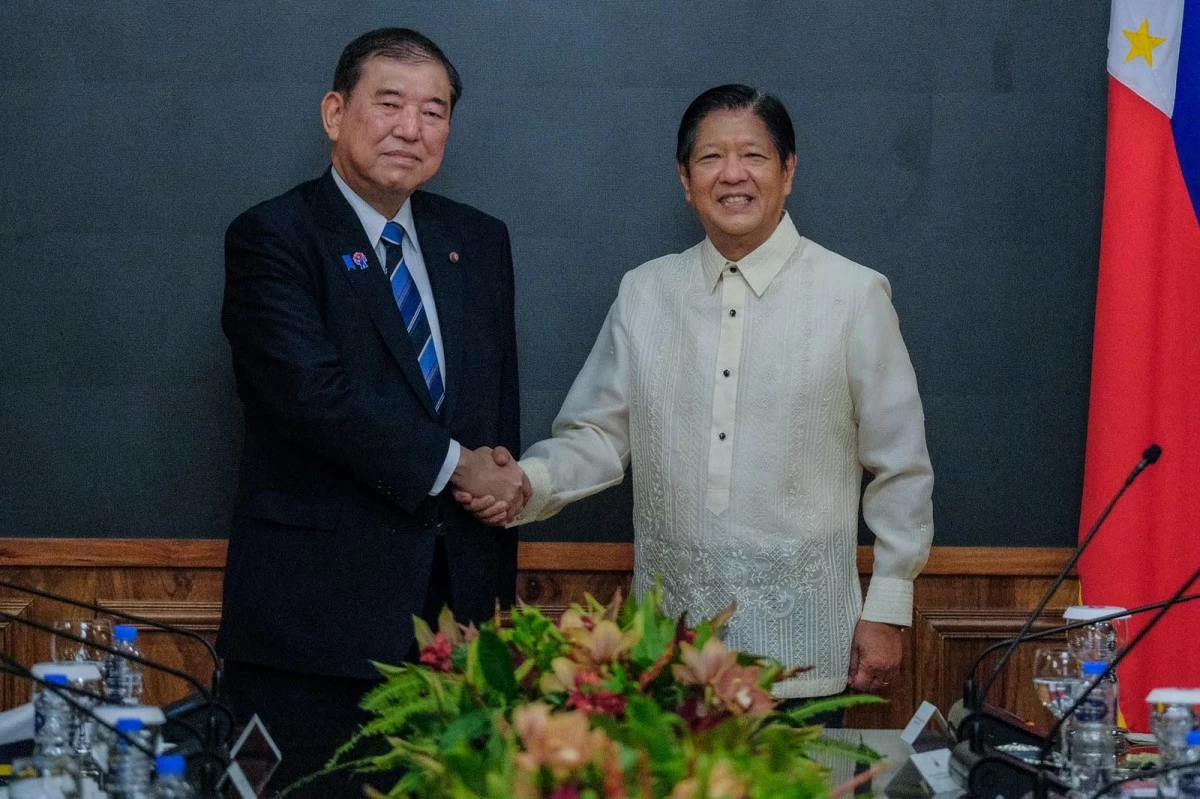
President Ferdinand 'Bongbong" Marcos Jr. and Japanese Prime Minister Ishiba Shigeru hold a bilateral meeting at Malacañang Palace on April 29, 2025 to strengthen economic, defense, and diplomatic ties under the Philippines-Japan Strengthened Strategic Partnership. (PPA Pool)


“The RAA is a testament to the trust and enduring friendship between the Philippines and Japan,” the envoy said in a statement on Friday, June 6.

“It will enhance our ability to work closely together in promoting a rules-based order governed by international law,” she added.

She expressed gratitude to the Japanese government and people “for their steadfast support and continued collaboration.”
|
“We look forward to the full implementation of this agreement and to building an even more resilient and forward-looking partnership in the years ahead,” Garcia-Albano said.

The RAA is a pact that would allow the military troops from both countries to enter each other’s territory for military exercises, which also include disaster response and logistics.

The military pact was negotiated under the context of increasing security and maritime concerns in the Indo-Pacific region in the face of China’s relentless actions in the South China Sea that threaten the territorial integrity of its neighbors.

It was signed in Tokyo in 2023, with President Marcos ratifying it on Nov. 5, 2024 and the Senate approving it in the following month on Dec. 16.

The RAA will not only pave the way for Filipino soldiers to undergo combat training with their Japanese counterparts, it will also push for the strengthened trilateral cooperation between the Philippines, the United States, and Japan.

While the 1987 Philippine Constitution prohibits foreign troops from establishing permanent military bases in the country, through agreements like the RAA and the Visiting Forces Agreement (VFA) with the US, foreign militaries may be allowed to enter the countries for activities.

Aside from agreements with the US and Japan, the Philippines signed the visiting forces agreement with New Zealand last April to boost defense ties. It also has an existing deal with Australia.

These increased maritime and defense alliances came on the heels of China’s aggressive actions in the region, which it continues to claim almost in its entirety despite the 2016 arbitral tribunal win that invalidated the basis of these claims.

Related Tags

japan RAA military access pact Philippine Embassy in Japan
ADVERTISEMENT
.most-popular .layout-ratio{ padding-bottom: 79.13%; } @media (min-width: 768px) and (max-width: 1024px) { .widget-title { font-size: 15px !important; } }

{{ articles_filter_1561_widget.title }}

.most-popular .layout-ratio{ padding-bottom: 79.13%; } @media (min-width: 768px) and (max-width: 1024px) { .widget-title { font-size: 15px !important; } }

{{ articles_filter_1562_widget.title }}

.most-popular .layout-ratio{ padding-bottom: 79.13%; } @media (min-width: 768px) and (max-width: 1024px) { .widget-title { font-size: 15px !important; } }

{{ articles_filter_1563_widget.title }}

{{ articles_filter_1564_widget.title }}

.mb-article-details { position: relative; } .mb-article-details .article-body-preview, .mb-article-details .article-body-summary{ font-size: 17px; line-height: 30px; font-family: "Libre Caslon Text", serif; color: #000; } .mb-article-details .article-body-preview iframe , .mb-article-details .article-body-summary iframe{ width: 100%; margin: auto; } .read-more-background { background: linear-gradient(180deg, color(display-p3 1.000 1.000 1.000 / 0) 13.75%, color(display-p3 1.000 1.000 1.000 / 0.8) 30.79%, color(display-p3 1.000 1.000 1.000) 72.5%); position: absolute; height: 200px; width: 100%; bottom: 0; display: flex; justify-content: center; align-items: center; padding: 0; } .read-more-background a{ color: #000; } .read-more-btn { padding: 17px 45px; font-family: Inter; font-weight: 700; font-size: 18px; line-height: 16px; text-align: center; vertical-align: middle; border: 1px solid black; background-color: white; } .hidden { display: none; }
function initializeAllSwipers() { // Get all hidden inputs with cms_article_id document.querySelectorAll('[id^="cms_article_id_"]').forEach(function (input) { const cmsArticleId = input.value; const articleSelector = '#article-' + cmsArticleId + ' .body_images'; const swiperElement = document.querySelector(articleSelector); if (swiperElement && !swiperElement.classList.contains('swiper-initialized')) { new Swiper(articleSelector, { loop: true, pagination: false, navigation: { nextEl: '#article-' + cmsArticleId + ' .swiper-button-next', prevEl: '#article-' + cmsArticleId + ' .swiper-button-prev', }, }); } }); } setTimeout(initializeAllSwipers, 3000); const intersectionObserver = new IntersectionObserver( (entries) => { entries.forEach((entry) => { if (entry.isIntersecting) { const newUrl = entry.target.getAttribute("data-url"); if (newUrl) { history.pushState(null, null, newUrl); let article = entry.target; // Extract metadata const author = article.querySelector('.author-section').textContent.replace('By', '').trim(); const section = article.querySelector('.section-info ').textContent.replace(' ', ' '); const title = article.querySelector('.article-title h1').textContent; // Parse URL for Chartbeat path format const parsedUrl = new URL(newUrl, window.location.origin); const cleanUrl = parsedUrl.host + parsedUrl.pathname; // Update Chartbeat configuration if (typeof window._sf_async_config !== 'undefined') { window._sf_async_config.path = cleanUrl; window._sf_async_config.sections = section; window._sf_async_config.authors = author; } // Track virtual page view with Chartbeat if (typeof pSUPERFLY !== 'undefined' && typeof pSUPERFLY.virtualPage === 'function') { try { pSUPERFLY.virtualPage({ path: cleanUrl, title: title, sections: section, authors: author }); } catch (error) { console.error('ping error', error); } } // Optional: Update document title if (title && title !== document.title) { document.title = title; } } } }); }, { threshold: 0.1 } ); function showArticleBody(button) { const article = button.closest("article"); const summary = article.querySelector(".article-body-summary"); const body = article.querySelector(".article-body-preview"); const readMoreSection = article.querySelector(".read-more-background"); // Hide summary and read-more section summary.style.display = "none"; readMoreSection.style.display = "none"; // Show the full article body body.classList.remove("hidden"); } document.addEventListener("DOMContentLoaded", () => { let loadCount = 0; // Track how many times articles are loaded const offset = [1, 2, 3, 4, 5, 6, 7, 8, 9, 10]; // Offset values const currentUrl = window.location.pathname.substring(1); let isLoading = false; // Prevent multiple calls if (!currentUrl) { console.log("Current URL is invalid."); return; } const sentinel = document.getElementById("load-more-sentinel"); if (!sentinel) { console.log("Sentinel element not found."); return; } function isSentinelVisible() { const rect = sentinel.getBoundingClientRect(); return ( rect.top < window.innerHeight && rect.bottom >= 0 ); } function onScroll() { if (isLoading) return; if (isSentinelVisible()) { if (loadCount >= offset.length) { console.log("Maximum load attempts reached."); window.removeEventListener("scroll", onScroll); return; } isLoading = true; const currentOffset = offset[loadCount]; window.loadMoreItems().then(() => { let article = document.querySelector('#widget_1690 > div:nth-last-of-type(2) article'); intersectionObserver.observe(article) loadCount++; }).catch(error => { console.error("Error loading more items:", error); }).finally(() => { isLoading = false; }); } } window.addEventListener("scroll", onScroll); });

Sign up by email to receive news.