

ADVERTISEMENT

SEED, Okada Manila empower students with agri education, training

Published Jun 6, 2025 02:30 pm
In a survey by Pulse Asia, 83 percent of Filipinos prefer brands with eco-friendly operations. While this reflects an interest in environment-safe businesses, all of us must be sustainability changemakers.
Sounds heavy? Being one may even require a bit, if not much, of inventiveness. But Filipino ingenuity needs no sliver of it, for we appear to be born with one or to have developed such from dire circumstances.
Once underserved communities, they are now learning to profit from their passion. The students at Gawad Kalinga Bayanihan Village in Cavite have received scholarships for agri education and training under the partnership of Okada Manila and School for Experiential and Entrepreneurial Development (SEED), helping mainstream local agriculture.
This move appears not new nor highly innovative. But it challenges business owners to teach people to pick their own fruits from trees, rather than giving them the fruits per se, typically to tick SDG boxes.
Through the resort’s initiative "Okada Green Heart," scholars can have access to basics of agriculture, its entrepreneurial aspect, and community organization and communication. Here’s how they are empowered to boost local farming and promote sustainability.

Mark Lawrence Cruz, director at SEED PH; Kenji Sugiyama, managing director at Okada Manila; and Daniel Bercasio, executive director at Gawad Kalinga
Pathway to progress
For a poor person to get out of poverty, Mark Lawrence Cruz, director at SEED, said they need the help of their community. In agriculture, this could mean groups making idle lands productive. 
Cruz pointed out that 82 percent of their 800 graduates from the program, which has the courses organic agriculture production and agro entrepreneurship, are “actively engaged.” He said 20 percent have stayed in agriculture; the rest went to teaching, entrepreneurship, and others.
“Right now, our food is being traded all over the country. What we want is to strengthen food productions, and one key component are the food producers,” he added, stating that the graduates qualify as such.
The program follows the Technical Education and Skills Development Authority (TESDA) curriculum. In SEED’s case, it’s called “TESDA plus” as it has added months.
“TESDA curriculum is just for 20 to 30 days, but they [scholars] stay with us for three months because of the plus. This teaches them community organizing, communication, basics of agri entrepreneurship, and how to make money from agriculture. After they have trained with us for two months, they do a one-month OJT,” he explained.
Six campuses that have integrated the program and, in turn, are required to manage at least a hectare of land, are found in Bulacan, Camarines Norte, Bacolod, Leyte, Bukidnon, and Davao City.
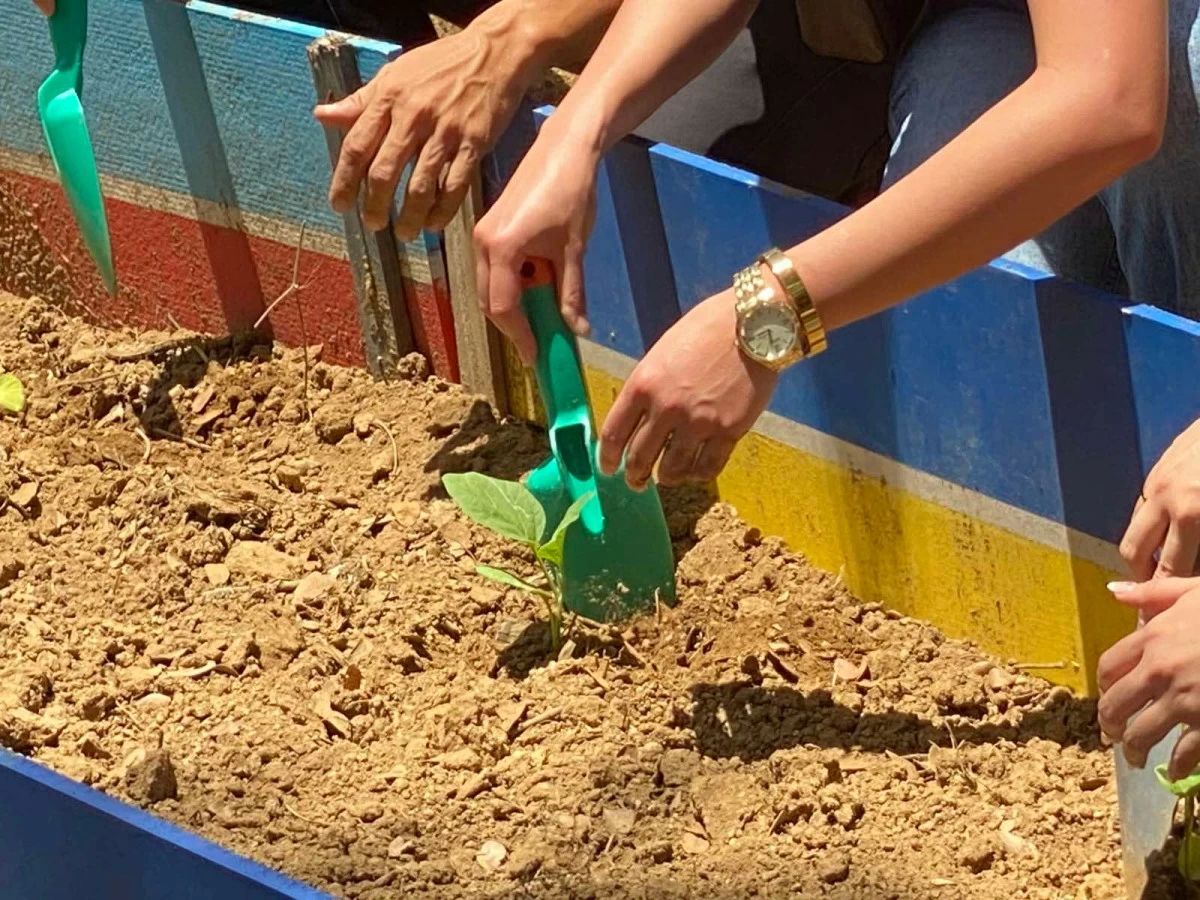
Participants plant eggplant seedlings in Barangay Hugo Perez, Cavite.
Lettuce, pechay, and kangkong sell the most because they are grown and harvested quickly, he said, adding that if he has a 500-sqm farm, he can produce half a ton of vegetable monthly.
SEED produces one and half to two kilos of vegetable every square meter on average. 
One farm at a time
Having supported the first SEED graduates from Bacolod and Leyte who built around six farms, Okada Manila believes real impact begins when its efforts extend to the communities it said it serves.
According to the resort, these scholars have since joined local government agriculture offices, worked with nonprofit organizations, and pursued college degrees independently.
“We support young people in pursuing agri education and hands-on training, investing in future leaders who will help transform their communities through sustainable farming, innovation, and social entrepreneurship,” said Kenji Sugiyama, managing director and CSR committee member of Okada Manila.
Sugiyama said vegetables, rice, and other food prices are getting higher, so it’s an opportunity for them to partner with someone who has experience educating people and can be among the leaders of agriculture in the future. 
Meanwhile, in its 2024 ESG report, Okada Manila is said to have recycled over 1.32 million plastic bottles by shifting to Nordaq's in-house water bottling system. 
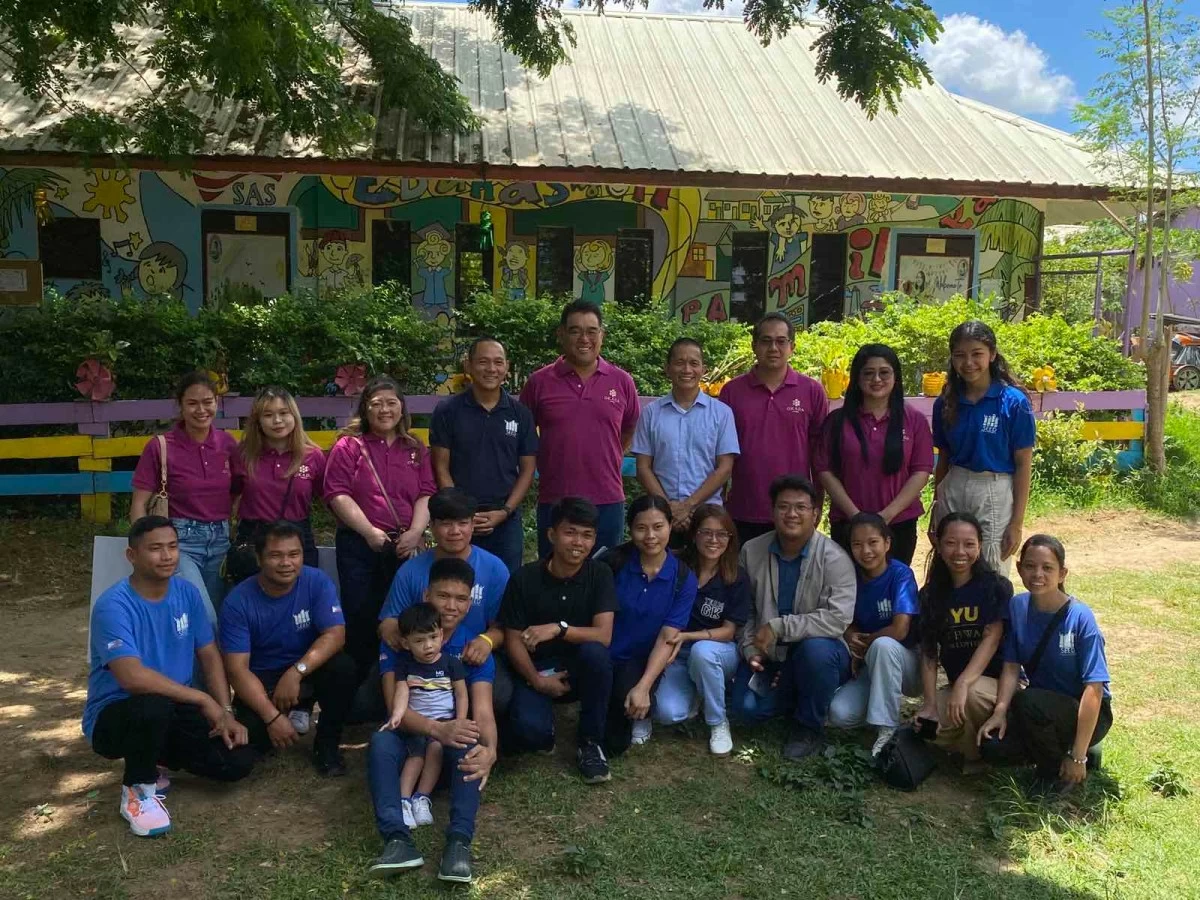
Executives and attendees pose for a photo.
It also offers electric vehicle charging stations and has achieved "zero wastewater discharge into Manila Bay," according to the report.
“In the Philippines, we have so many lands which are still vacant, and which are not used for a while. If we can develop such a land as the farmer's land, we can monetize it. The people can monetize it. So, it's one of the hopes which [people] can escape from poverty,” Sugiyama concluded.

Related Tags

Kenjie Sugiyama Okada Manila Mark Lawrence Cruz School for Experiential and Entrepreneurial Development TESDA Sustainability Agriculture
ADVERTISEMENT
.most-popular .layout-ratio{ padding-bottom: 79.13%; } @media (min-width: 768px) and (max-width: 1024px) { .widget-title { font-size: 15px !important; } }

{{ articles_filter_1561_widget.title }}

.most-popular .layout-ratio{ padding-bottom: 79.13%; } @media (min-width: 768px) and (max-width: 1024px) { .widget-title { font-size: 15px !important; } }

{{ articles_filter_1562_widget.title }}

.most-popular .layout-ratio{ padding-bottom: 79.13%; } @media (min-width: 768px) and (max-width: 1024px) { .widget-title { font-size: 15px !important; } }

{{ articles_filter_1563_widget.title }}

{{ articles_filter_1564_widget.title }}

.mb-article-details { position: relative; } .mb-article-details .article-body-preview, .mb-article-details .article-body-summary{ font-size: 17px; line-height: 30px; font-family: "Libre Caslon Text", serif; color: #000; } .mb-article-details .article-body-preview iframe , .mb-article-details .article-body-summary iframe{ width: 100%; margin: auto; } .read-more-background { background: linear-gradient(180deg, color(display-p3 1.000 1.000 1.000 / 0) 13.75%, color(display-p3 1.000 1.000 1.000 / 0.8) 30.79%, color(display-p3 1.000 1.000 1.000) 72.5%); position: absolute; height: 200px; width: 100%; bottom: 0; display: flex; justify-content: center; align-items: center; padding: 0; } .read-more-background a{ color: #000; } .read-more-btn { padding: 17px 45px; font-family: Inter; font-weight: 700; font-size: 18px; line-height: 16px; text-align: center; vertical-align: middle; border: 1px solid black; background-color: white; } .hidden { display: none; }
function initializeAllSwipers() { // Get all hidden inputs with cms_article_id document.querySelectorAll('[id^="cms_article_id_"]').forEach(function (input) { const cmsArticleId = input.value; const articleSelector = '#article-' + cmsArticleId + ' .body_images'; const swiperElement = document.querySelector(articleSelector); if (swiperElement && !swiperElement.classList.contains('swiper-initialized')) { new Swiper(articleSelector, { loop: true, pagination: false, navigation: { nextEl: '#article-' + cmsArticleId + ' .swiper-button-next', prevEl: '#article-' + cmsArticleId + ' .swiper-button-prev', }, }); } }); } setTimeout(initializeAllSwipers, 3000); const intersectionObserver = new IntersectionObserver( (entries) => { entries.forEach((entry) => { if (entry.isIntersecting) { const newUrl = entry.target.getAttribute("data-url"); if (newUrl) { history.pushState(null, null, newUrl); let article = entry.target; // Extract metadata const author = article.querySelector('.author-section').textContent.replace('By', '').trim(); const section = article.querySelector('.section-info ').textContent.replace(' ', ' '); const title = article.querySelector('.article-title h1').textContent; // Parse URL for Chartbeat path format const parsedUrl = new URL(newUrl, window.location.origin); const cleanUrl = parsedUrl.host + parsedUrl.pathname; // Update Chartbeat configuration if (typeof window._sf_async_config !== 'undefined') { window._sf_async_config.path = cleanUrl; window._sf_async_config.sections = section; window._sf_async_config.authors = author; } // Track virtual page view with Chartbeat if (typeof pSUPERFLY !== 'undefined' && typeof pSUPERFLY.virtualPage === 'function') { try { pSUPERFLY.virtualPage({ path: cleanUrl, title: title, sections: section, authors: author }); } catch (error) { console.error('ping error', error); } } // Optional: Update document title if (title && title !== document.title) { document.title = title; } } } }); }, { threshold: 0.1 } ); function showArticleBody(button) { const article = button.closest("article"); const summary = article.querySelector(".article-body-summary"); const body = article.querySelector(".article-body-preview"); const readMoreSection = article.querySelector(".read-more-background"); // Hide summary and read-more section summary.style.display = "none"; readMoreSection.style.display = "none"; // Show the full article body body.classList.remove("hidden"); } document.addEventListener("DOMContentLoaded", () => { let loadCount = 0; // Track how many times articles are loaded const offset = [1, 2, 3, 4, 5, 6, 7, 8, 9, 10]; // Offset values const currentUrl = window.location.pathname.substring(1); let isLoading = false; // Prevent multiple calls if (!currentUrl) { console.log("Current URL is invalid."); return; } const sentinel = document.getElementById("load-more-sentinel"); if (!sentinel) { console.log("Sentinel element not found."); return; } function isSentinelVisible() { const rect = sentinel.getBoundingClientRect(); return ( rect.top < window.innerHeight && rect.bottom >= 0 ); } function onScroll() { if (isLoading) return; if (isSentinelVisible()) { if (loadCount >= offset.length) { console.log("Maximum load attempts reached."); window.removeEventListener("scroll", onScroll); return; } isLoading = true; const currentOffset = offset[loadCount]; window.loadMoreItems().then(() => { let article = document.querySelector('#widget_1690 > div:nth-last-of-type(2) article'); intersectionObserver.observe(article) loadCount++; }).catch(error => { console.error("Error loading more items:", error); }).finally(() => { isLoading = false; }); } } window.addEventListener("scroll", onScroll); });

Sign up by email to receive news.