

ADVERTISEMENT

Paradox on a page

Speculative fiction finds a bold new home

Published Jun 6, 2025 07:22 pm

At A Glance

  • The three books are proof that Filipino speculative fiction is stepping into the spotlight with confidence.
FAMILY THREE From left: Nikki Alfar, Ryo Alfar, and Dean Francis Alfar.
In a country known for realist literature, social dramas, and poetic musings, speculative fiction has long been on the fringes as it quietly thrived in anthologies, literary events, and niche bookstores. But no longer.
A new literary imprint named Paradox, under Vibal Foundation, is putting the spotlight on speculative fiction. It’s giving space to the “multiverse of Filipino imagination” by changing the narrative one magical, mythical, or monstrous page at a time.
Speculative fiction encompasses fantasy, science fiction, horror, alternate histories, dystopian futures, and more. It is the genre that dares to ask, “What if?” What if magic exists in modern Manila, what if the apocalypse comes with a karaoke soundtrack, what if the past never ended?
The genre has thrived thanks to writers who believed in its power to enchant readers. Chief among them is Dean Francis Alfar, a Palanca-winning author and Filipino Critics Circle chair who has tirelessly pushed speculative fiction into the literary mainstream. He now leads the editorial team behind Paradox.
Alfar emphasized Paradox’s mission, to welcome all kinds of speculative fiction. From high fantasy and space opera to post-apocalyptic narratives and speculative memoirs, no idea is too far-fetched. The goal? “To showcase Filipino imagination in its most unbridled form.”
Aside from having published some noteworthy titles in recent months, there are ambitious projects in the pipeline, including a 100,000-word speculative novel in English. Paradox, it seems, is not just dreaming—it’s publishing.
ARTIST IN DEPTH Author Ryo Alfar speaks about the book, 'Fragile Magics.'
ARTIST IN DEPTH  Author Nikki Alfar shares her journey in writing 'Doomsday Dance Party.'
ARTIST IN DEPTH Author Nikki Alfar shares her journey in writing 'Doomsday Dance Party.'
ARTIST IN DEPTH Author Dean Francis Alfar talks about his latest book, 'Moon Sun Stars.'
Family goal
Paradox has recently unveiled three noteworthy titles penned by the Alfar family, a trio of voices united not just by blood, but by a shared love of myth, metaphor, and magic.
Dean Francis Alfar returns with “Moon Sun Stars,” a selection of his best stories from the past two decades. Whether retelling Filipino folklore with a cosmic twist or weaving lyrical tales of longing, Alfar proves once again why he is a leading voice in Philippine speculative fiction.
His wife, Nikki Alfar, delivers “Doomsday Dance Party,” a delightfully offbeat collection that explores personal and planetary endings with humor and poignancy. The apocalypse, in her hands, is less about destruction and more about reckoning, resilience, and sometimes… dancing.
Their son, Ryo Alfar, makes a stunning debut with “Fragile Magics,” a sweeping 432-page fantasy novel centered on three young spell-wielders navigating a world of folded-paper enchantments and aerial duels. With this work, Ryo establishes himself as a bold new voice and the torchbearer of the next generation.
Doomsday Dance Party
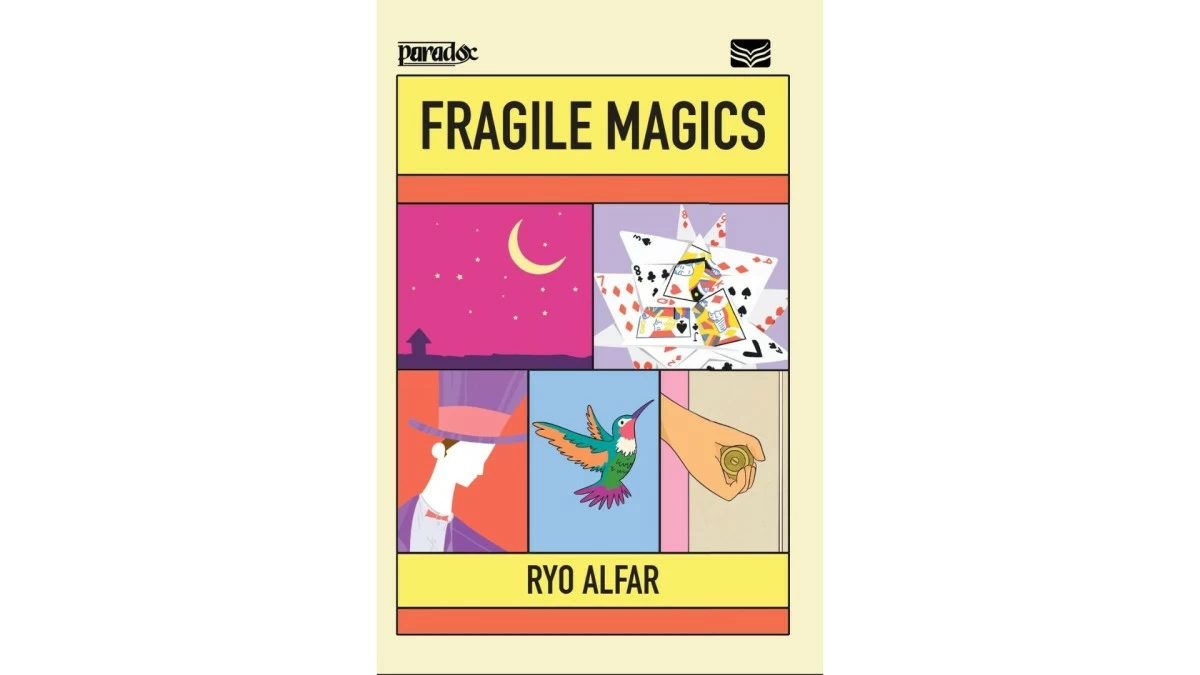
Fragile Magics
Fragile Magics
Moon Sun Stars
Moon Sun Stars
Page turner
The three books are proof that Filipino speculative fiction is stepping into the spotlight with confidence. In fact, just last April, Paradox hosted its first speculative fiction writing workshop, led by Dean and Nikki, drawing aspiring writers from across the country.
The workshop is part of the imprint’s broader commitment to nurturing fresh talent and building a strong, inclusive community of storytellers who dare to imagine beyond the ordinary. As Gelo Lopez, Vibal’s Chief Product Officer, noted during the launch: “We invite readers to explore the boundless creativity of the Alfars as their books showcase the breadth and depth of speculative fiction.”
In a publishing landscape often rooted in the familiar, Paradox dares to be different. It champions the strange, the surreal, and the speculative not as a niche, but as a vital expression of the Filipino creative spirit. With the Alfars at the helm and a new generation of writers rising, the future of local speculative fiction looks anything but ordinary.

Related Tags

Arts and Culture
ADVERTISEMENT
.most-popular .layout-ratio{ padding-bottom: 79.13%; } @media (min-width: 768px) and (max-width: 1024px) { .widget-title { font-size: 15px !important; } }

{{ articles_filter_1561_widget.title }}

.most-popular .layout-ratio{ padding-bottom: 79.13%; } @media (min-width: 768px) and (max-width: 1024px) { .widget-title { font-size: 15px !important; } }

{{ articles_filter_1562_widget.title }}

.most-popular .layout-ratio{ padding-bottom: 79.13%; } @media (min-width: 768px) and (max-width: 1024px) { .widget-title { font-size: 15px !important; } }

{{ articles_filter_1563_widget.title }}

{{ articles_filter_1564_widget.title }}

.mb-article-details { position: relative; } .mb-article-details .article-body-preview, .mb-article-details .article-body-summary{ font-size: 17px; line-height: 30px; font-family: "Libre Caslon Text", serif; color: #000; } .mb-article-details .article-body-preview iframe , .mb-article-details .article-body-summary iframe{ width: 100%; margin: auto; } .read-more-background { background: linear-gradient(180deg, color(display-p3 1.000 1.000 1.000 / 0) 13.75%, color(display-p3 1.000 1.000 1.000 / 0.8) 30.79%, color(display-p3 1.000 1.000 1.000) 72.5%); position: absolute; height: 200px; width: 100%; bottom: 0; display: flex; justify-content: center; align-items: center; padding: 0; } .read-more-background a{ color: #000; } .read-more-btn { padding: 17px 45px; font-family: Inter; font-weight: 700; font-size: 18px; line-height: 16px; text-align: center; vertical-align: middle; border: 1px solid black; background-color: white; } .hidden { display: none; }
function initializeAllSwipers() { // Get all hidden inputs with cms_article_id document.querySelectorAll('[id^="cms_article_id_"]').forEach(function (input) { const cmsArticleId = input.value; const articleSelector = '#article-' + cmsArticleId + ' .body_images'; const swiperElement = document.querySelector(articleSelector); if (swiperElement && !swiperElement.classList.contains('swiper-initialized')) { new Swiper(articleSelector, { loop: true, pagination: false, navigation: { nextEl: '#article-' + cmsArticleId + ' .swiper-button-next', prevEl: '#article-' + cmsArticleId + ' .swiper-button-prev', }, }); } }); } setTimeout(initializeAllSwipers, 3000); const intersectionObserver = new IntersectionObserver( (entries) => { entries.forEach((entry) => { if (entry.isIntersecting) { const newUrl = entry.target.getAttribute("data-url"); if (newUrl) { history.pushState(null, null, newUrl); let article = entry.target; // Extract metadata const author = article.querySelector('.author-section').textContent.replace('By', '').trim(); const section = article.querySelector('.section-info ').textContent.replace(' ', ' '); const title = article.querySelector('.article-title h1').textContent; // Parse URL for Chartbeat path format const parsedUrl = new URL(newUrl, window.location.origin); const cleanUrl = parsedUrl.host + parsedUrl.pathname; // Update Chartbeat configuration if (typeof window._sf_async_config !== 'undefined') { window._sf_async_config.path = cleanUrl; window._sf_async_config.sections = section; window._sf_async_config.authors = author; } // Track virtual page view with Chartbeat if (typeof pSUPERFLY !== 'undefined' && typeof pSUPERFLY.virtualPage === 'function') { try { pSUPERFLY.virtualPage({ path: cleanUrl, title: title, sections: section, authors: author }); } catch (error) { console.error('ping error', error); } } // Optional: Update document title if (title && title !== document.title) { document.title = title; } } } }); }, { threshold: 0.1 } ); function showArticleBody(button) { const article = button.closest("article"); const summary = article.querySelector(".article-body-summary"); const body = article.querySelector(".article-body-preview"); const readMoreSection = article.querySelector(".read-more-background"); // Hide summary and read-more section summary.style.display = "none"; readMoreSection.style.display = "none"; // Show the full article body body.classList.remove("hidden"); } document.addEventListener("DOMContentLoaded", () => { let loadCount = 0; // Track how many times articles are loaded const offset = [1, 2, 3, 4, 5, 6, 7, 8, 9, 10]; // Offset values const currentUrl = window.location.pathname.substring(1); let isLoading = false; // Prevent multiple calls if (!currentUrl) { console.log("Current URL is invalid."); return; } const sentinel = document.getElementById("load-more-sentinel"); if (!sentinel) { console.log("Sentinel element not found."); return; } function isSentinelVisible() { const rect = sentinel.getBoundingClientRect(); return ( rect.top < window.innerHeight && rect.bottom >= 0 ); } function onScroll() { if (isLoading) return; if (isSentinelVisible()) { if (loadCount >= offset.length) { console.log("Maximum load attempts reached."); window.removeEventListener("scroll", onScroll); return; } isLoading = true; const currentOffset = offset[loadCount]; window.loadMoreItems().then(() => { let article = document.querySelector('#widget_1690 > div:nth-last-of-type(2) article'); intersectionObserver.observe(article) loadCount++; }).catch(error => { console.error("Error loading more items:", error); }).finally(() => { isLoading = false; }); } } window.addEventListener("scroll", onScroll); });

Sign up by email to receive news.