






On May 21, The Climate Reality Project Philippines held its first leg of Klima Eskwela at Caraga State University in Butuan City, Agusan del Norte.
Manila Bulletin
 Environment and Sustainability
Klima Eskwela 2025 kickstarts in Butuan, empowers youth to find climate action niche
Environment and Sustainability
Klima Eskwela 2025 kickstarts in Butuan, empowers youth to find climate action niche
Environment and Sustainability
Klima Eskwela 2025 kickstarts in Butuan, empowers youth to find climate action niche
Klima Eskwela 2025 kickstarts in Butuan, empowers youth to find climate action niche
Published Jun 5, 2025 01:14 am


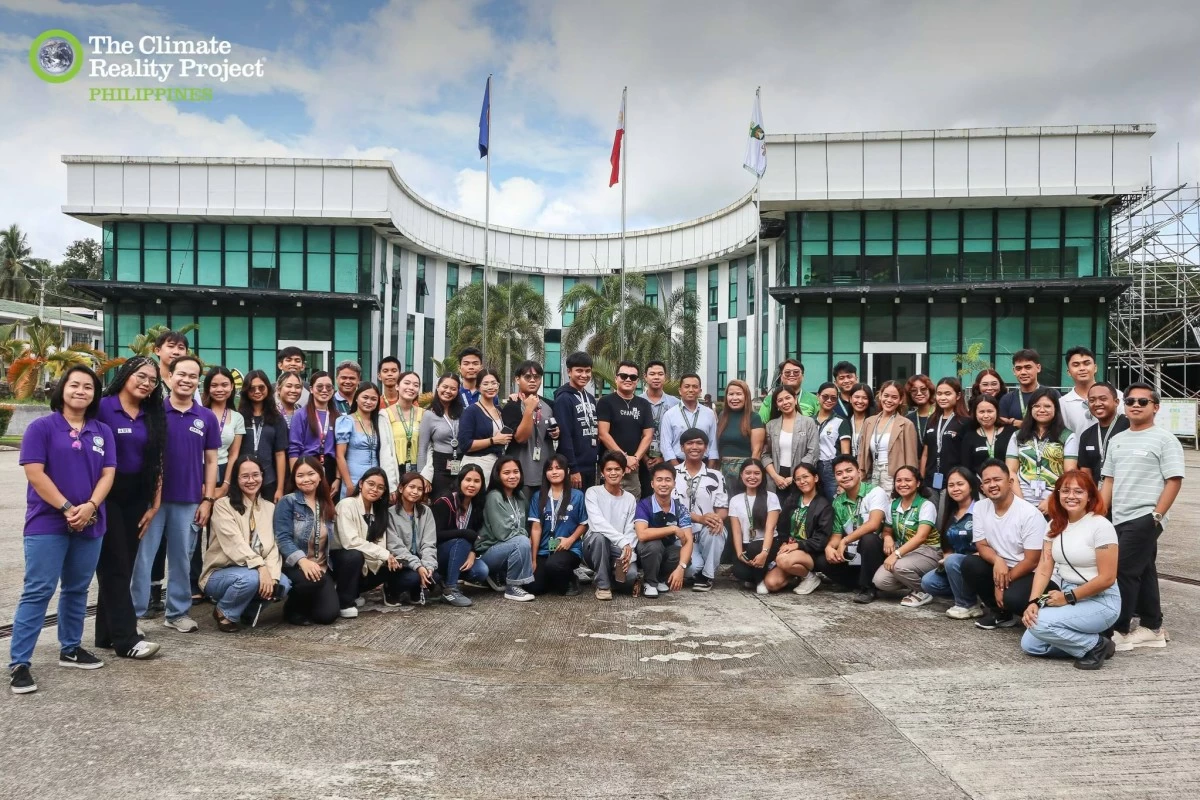
The Climate Reality Project Philippines, in partnership with the Climate Change Commission (CCC), the City Government of Butuan, and the Caraga State University (CSU) hold this year’s first Klima Eskwela in Butuan City.
Designed to engage students in addressing the climate and plastic crises, Klima Eskwela is an offshoot project of the Climate Reality Philippines’ Plastic-Free Reality Program. Every year, the organization takes Klima Eskwela to different provinces, training student leaders in movement-building for climate action.
This year, Klima Eskwela also serves as a launching pad for Project Niche, an incubator program that empowers the youth to solve their communities’ problems with plastic waste.
“Klima Eskwela harnesses the Filipino youth’s potential as leaders in climate action. After all, no one is more suited to build a sustainable future than those inheriting it. Klima Eskwela prepares them for that goal,” said Joseph Pilapil, current Engagement and Plastic-Free Reality program lead of Climate Reality Philippines.
Supporting school-based climate action
One of the consistent “topnotchers” in heat index lists, Butuan City is no stranger to the adverse impacts of global warming, one of the many facets of climate change. These impacts are worsened by the widespread deforestation around Butuan, which increases its flooding risk.
Butuan City’s familiarity with the many faces of climate change is the reason why the organization chose it as the host city for its first Klima Eskwela this year. Leveraging that familiarity, Klima Eskwela deepened the discussion of climate change by tracing its connection to the plastic crisis.
“[Before Klima Eskwela], I knew plastic was a problem, especially in oceans and landfills— but I didn’t really connect it to global warming until the discussion. Learning that plastic production and disposal release greenhouse gases was eye-opening,” said Jon Patoñal, secretary of the CSU College of Mathematics and Natural Sciences Local Student Government.
Patoñal is one of the student leaders who joined Klima Eskwela, whose organization stands at the forefront of environmental advocacy at CSU.
Harnessing its network of local Climate Reality Leaders, the organization partnered with the Climate Change Commission (CCC), the City Government of Butuan, and Caraga State University (CSU) to make Klima Eskwela happen.
At the forefront of this partnership are key officials from CSU, headed by their University president, Dr. Rolyn C. Daguil. Meanwhile, Climate Reality Leader Vincent Cotoron, who sits as director for the Office of the Planning and Quality Management Services, will be overseeing the development, implementation, and monitoring of the project.
“The main reason that [the university officials] are here supporting this event is because we really want to hone students to become responsible stewards of the planet. Ayaw namin ng masyadong magaling, masyadong matalino— pero walang puso (We don’t want students that are too good and smart but lack heart),” said Dr. Michelle Japitana, vice president for Executive Operations at CSU.
Also in attendance to guide the students were representatives of the City Government of Butuan from the City Planning and Development Department, as well as the City Environment and Natural Resources Department. They talked about the local government’s efforts to address climate change and plastic pollution through policies and projects implemented across the city.
“We value the partnership with the youth of CSU [in achieving our local climate action goals]. The youth’s understanding about current technological trends is deep and that aligns with our long-term vision for Butuan City as a smart and sustainable city in the future,” said Engr. Iris Joy Cañete-Galaura, Acting City Planning and Development coordinator of the city government.
Representatives from the CCC were also present, providing the much needed perspective of the national government in leading climate action.
“Empowering our youth is critical. Climate solutions will spring from many fields, science, technology, legislation or policy making, and even the arts. Yet the foundation of long term climate action is always rooted in education, not only to sustain expertise and research, but also to gradually shift our culture and norms,” said Atty. Rachel Anne Herrera, commissioner of the CCC in her pre-recorded opening remarks.

Student leaders like Jon Patoñal stand at the forefront of community engagement, making them well-suited to lead on climate action.

Climate Reality Leader and Project Niche grantee Juniel Rey Gigaquit shares how initiatives like Klima Eskwela empower the youth to take climate action.

Equipped with the knowledge on the climate and plastic crises, students learn project management with campaigning to develop effective campus-based solutions.

Environmental advocate Bea Rosales is one of the many student leaders already forwarding zero-waste policies in CSU.

CSU students create sensory maps illustrating their unique experience of climate change in their communities.
Helping students find their niche
This particular leg of Klima Eskwela targeted mostly student leaders as participants, recognizing their potential as climate leaders. Beyond their role as learners, these university students can also be capable advocates of the planet when equipped with skills in movement-building.
“The climate action movement is a huge space with a lot of people already doing their part to solve the crisis. As youth, it’s easy to be overwhelmed when you think about what space you should take and what stories you should tell,” said Aimee Oliveros, Interim branch manager of Climate Reality Philippines, in an introduction to Project Niche.
“We know how many voices there are speaking for the planet, but it’s never enough until we’re all heard. Project Niche helps the youth find their voice— their niche— in fighting for our future,” added Oliveros.
To jumpstart the students’ journey as climate advocates, Climate Reality Philippines chose to focus on a problem close to their heart, which is also an issue in the university: single-use plastics all over their campuses.
“Having strong campaigning skills enables us— science majors— to engage with diverse audiences, raise awareness, and influence stakeholders, and with project management skill, it enables us to plan, execute, and evaluate research initiatives efficiently,” said Bea Rosales, vice president of the Caraga Environmental Advocates Society and an Environmental Science Major.
Despite the existing policies in CSU regarding plastic use, a sustained policy implementation in their campuses has always been a challenge, according to the students.
To help the students come up with effective campaigns for their campus, they were trained in the basics of project management, campaigning, and policy writing. From these mini-workshop sessions, the students learned how to break down the plastic problem of their campus into specific issues, craft possible goals and objectives, map stakeholders, and plan their strategies and tactics.
“There are a lot of students in CSU with great ideas. Project Niche will help in empowering these students to manifest these ideas— and Klima Eskwela paved the way with a burst of energy for these students. With proper guidance and nurturing, we should be able to witness more impactful projects coming from CSU students,” shared Juniel Rey Gigaquit, a CSU student and a Project Niche grantee, with his startup project Cheaper AF: Alternative Feeds, Alternative Fertilizer.
Currently, Gigaquit is the regional president of the Caraga Young Agripreneurs Club, a youth organization focused on addressing issues of food security, where he combines his climate and sustainable agriculture advocacies.
By the end of the two-day Klima Eskwela, participants were empowered to craft student-led solutions to the plastic problem in CSU.
CSU is one of the three Klima Eskwela partner schools for this year, with upcoming legs in Visayas and Luzon. Once formalized to be a Project Niche grantee, partner schools will receive up to P100,000 seed money to plan, implement and monitor campus-based initiatives on plastic and waste management.
Aside from the seed money, partner schools and participants will also have access to learning opportunities with Climate Reality Philippines and a membership to the Klima Eskwela Network, a community of all Klima Eskwela partners, campuses, and students nationwide.