

ADVERTISEMENT

Meta's nuclear deal signals AI's growing energy needs

Published Jun 4, 2025 07:03 am

At A Glance

  • Meta's 20-year deal with Constellation Energy follows similar maneuvers from Amazon, Google and Microsoft, but it will take years before nuclear energy can meet the tech industry's insatiable demand for new sources of electricity.
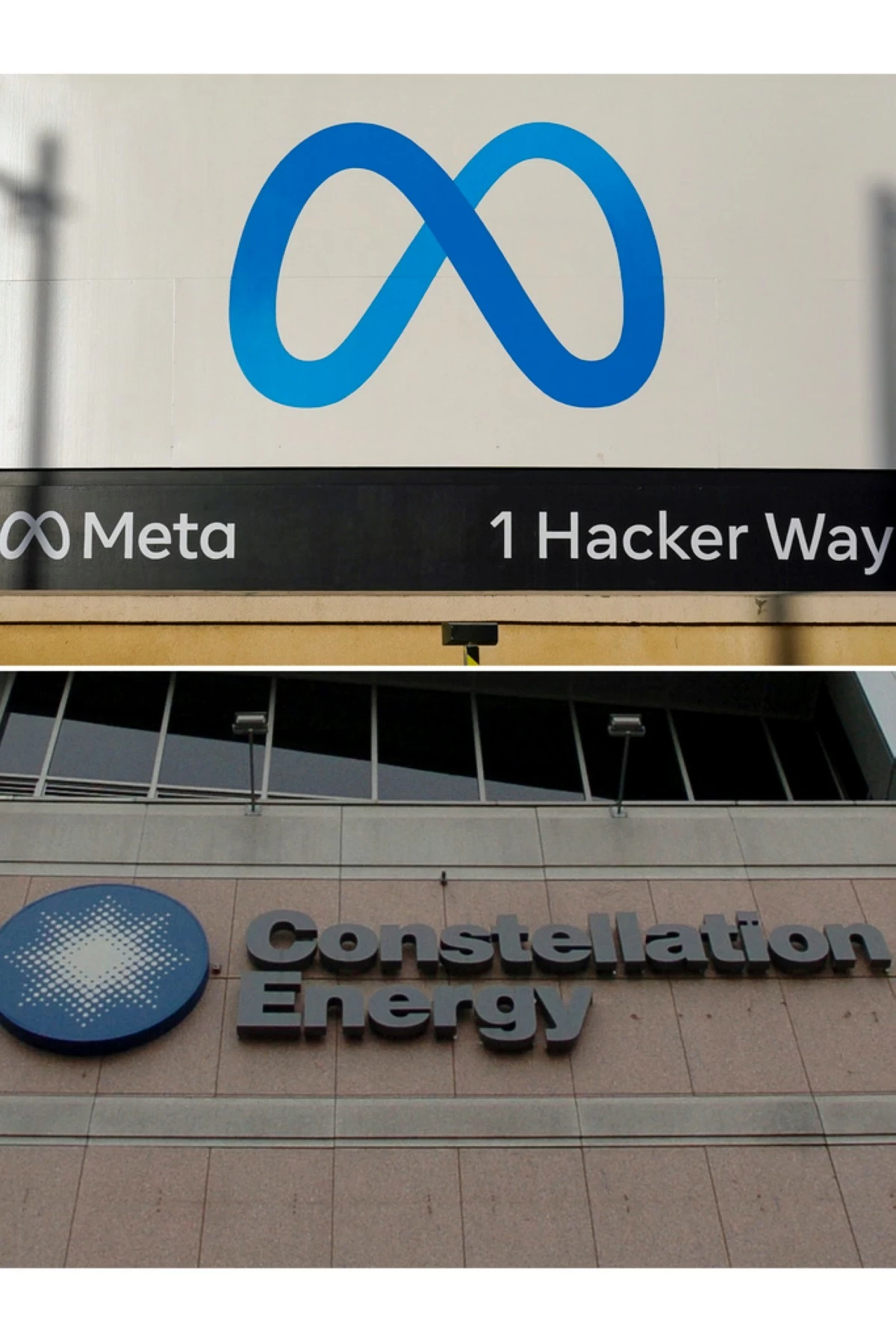
FILE - This combo image shows Meta's logo, top, at the company's headquarters in Menlo Park, Calif., Nov. 9, 2022 and The Constellation Energy building, Dec. 19, 2005 in a Baltimore. (AP Photo/Godofredo A. Vásquez, Gail Burton, File)

Meta's deal to help revive an Illinois nuclear power plant was one way of signaling that the parent company of Facebook and Instagram is preparing for a future built with artificial intelligence.

Meta's 20-year deal with Constellation Energy follows similar maneuvers from Amazon, Google and Microsoft, but it will take years before nuclear energy can meet the tech industry's insatiable demand for new sources of electricity.

AI uses vast amounts of energy, much of which comes from burning fossil fuels, which causes climate change. The unexpected popularity of generative AI products over the past few years has disrupted many tech companies' carefully laid plans to supply their technology with energy sources that don't contribute to climate change.

Even as Meta anticipates more nuclear in the future, its more immediate plans rely on natural gas. Entergy, one of the nation’s largest utility providers, has been fast-tracking plans to build gas-fired power plants in Louisiana to prepare for a massive Meta data center complex.

Is the U.S. ready for nuclear-powered AI?

France has touted its ample nuclear power — which produces about 75% of the nation's electricity, the highest level in the world — as a key element in its pitch to be an AI leader. Hosting an AI summit in Paris earlier this year, French President Emmanuel Macron cited President Donald Trump’s “drill baby drill” slogan and offered another: “Here there’s no need to drill, it’s just plug baby plug.”

In the U.S., however, most of the electricity consumed by data centers relies on fossil fuels — burning natural gas and sometimes coal — according to an April report from the International Energy Agency. As AI demand rises, the main source of new supply over the coming years is expected to be from gas-fired plants, a cheap and reliable source of power but one that produces planet-warming emissions.

Renewable energy sources such as solar and wind account for about 24% of data center power in the U.S., while nuclear comprises about 15%, according to the IEA. It will take years before enough climate-friendlier power sources, including nuclear, could start slowing the expansion of fossil fuel power generation.

A report released by the U.S. Department of Energy late last year estimated that the electricity needed for data centers in the U.S. tripled over the past decade and is projected to double or triple again by 2028 when it could consume up to 12% of the nation’s electricity.

Why does AI need so much energy?

It takes a lot of computing power to make an AI chatbot and the systems they're built on, such as Meta's Llama. It starts with a process called training or pretraining — the “P” in ChatGPT — that involves AI systems “learning” from the patterns of huge troves of data. To do that, they need specialized computer chips — usually graphics processors, or GPUs — that can run many calculations at a time on a network of devices in communication with each other.

Once trained, a generative AI tool still needs electricity to do the work, such as when you ask a chatbot to compose a document or generate an image. That process is called inferencing. A trained AI model must take in new information and make inferences from what it already knows to produce a response.

All of that computing takes a lot of electricity and generates a lot of heat. To keep it cool enough to work properly, data centers need air conditioning. That can require even more electricity, so most data center operators look for other cooling techniques that usually involve pumping in water.

Related Tags

WORLDNEWS
ADVERTISEMENT
.most-popular .layout-ratio{ padding-bottom: 79.13%; } @media (min-width: 768px) and (max-width: 1024px) { .widget-title { font-size: 15px !important; } }

{{ articles_filter_1561_widget.title }}

.most-popular .layout-ratio{ padding-bottom: 79.13%; } @media (min-width: 768px) and (max-width: 1024px) { .widget-title { font-size: 15px !important; } }

{{ articles_filter_1562_widget.title }}

.most-popular .layout-ratio{ padding-bottom: 79.13%; } @media (min-width: 768px) and (max-width: 1024px) { .widget-title { font-size: 15px !important; } }

{{ articles_filter_1563_widget.title }}

{{ articles_filter_1564_widget.title }}

.mb-article-details { position: relative; } .mb-article-details .article-body-preview, .mb-article-details .article-body-summary{ font-size: 17px; line-height: 30px; font-family: "Libre Caslon Text", serif; color: #000; } .mb-article-details .article-body-preview iframe , .mb-article-details .article-body-summary iframe{ width: 100%; margin: auto; } .read-more-background { background: linear-gradient(180deg, color(display-p3 1.000 1.000 1.000 / 0) 13.75%, color(display-p3 1.000 1.000 1.000 / 0.8) 30.79%, color(display-p3 1.000 1.000 1.000) 72.5%); position: absolute; height: 200px; width: 100%; bottom: 0; display: flex; justify-content: center; align-items: center; padding: 0; } .read-more-background a{ color: #000; } .read-more-btn { padding: 17px 45px; font-family: Inter; font-weight: 700; font-size: 18px; line-height: 16px; text-align: center; vertical-align: middle; border: 1px solid black; background-color: white; } .hidden { display: none; }
function initializeAllSwipers() { // Get all hidden inputs with cms_article_id document.querySelectorAll('[id^="cms_article_id_"]').forEach(function (input) { const cmsArticleId = input.value; const articleSelector = '#article-' + cmsArticleId + ' .body_images'; const swiperElement = document.querySelector(articleSelector); if (swiperElement && !swiperElement.classList.contains('swiper-initialized')) { new Swiper(articleSelector, { loop: true, pagination: false, navigation: { nextEl: '#article-' + cmsArticleId + ' .swiper-button-next', prevEl: '#article-' + cmsArticleId + ' .swiper-button-prev', }, }); } }); } setTimeout(initializeAllSwipers, 3000); const intersectionObserver = new IntersectionObserver( (entries) => { entries.forEach((entry) => { if (entry.isIntersecting) { const newUrl = entry.target.getAttribute("data-url"); if (newUrl) { history.pushState(null, null, newUrl); let article = entry.target; // Extract metadata const author = article.querySelector('.author-section').textContent.replace('By', '').trim(); const section = article.querySelector('.section-info ').textContent.replace(' ', ' '); const title = article.querySelector('.article-title h1').textContent; // Parse URL for Chartbeat path format const parsedUrl = new URL(newUrl, window.location.origin); const cleanUrl = parsedUrl.host + parsedUrl.pathname; // Update Chartbeat configuration if (typeof window._sf_async_config !== 'undefined') { window._sf_async_config.path = cleanUrl; window._sf_async_config.sections = section; window._sf_async_config.authors = author; } // Track virtual page view with Chartbeat if (typeof pSUPERFLY !== 'undefined' && typeof pSUPERFLY.virtualPage === 'function') { try { pSUPERFLY.virtualPage({ path: cleanUrl, title: title, sections: section, authors: author }); } catch (error) { console.error('ping error', error); } } // Optional: Update document title if (title && title !== document.title) { document.title = title; } } } }); }, { threshold: 0.1 } ); function showArticleBody(button) { const article = button.closest("article"); const summary = article.querySelector(".article-body-summary"); const body = article.querySelector(".article-body-preview"); const readMoreSection = article.querySelector(".read-more-background"); // Hide summary and read-more section summary.style.display = "none"; readMoreSection.style.display = "none"; // Show the full article body body.classList.remove("hidden"); } document.addEventListener("DOMContentLoaded", () => { let loadCount = 0; // Track how many times articles are loaded const offset = [1, 2, 3, 4, 5, 6, 7, 8, 9, 10]; // Offset values const currentUrl = window.location.pathname.substring(1); let isLoading = false; // Prevent multiple calls if (!currentUrl) { console.log("Current URL is invalid."); return; } const sentinel = document.getElementById("load-more-sentinel"); if (!sentinel) { console.log("Sentinel element not found."); return; } function isSentinelVisible() { const rect = sentinel.getBoundingClientRect(); return ( rect.top < window.innerHeight && rect.bottom >= 0 ); } function onScroll() { if (isLoading) return; if (isSentinelVisible()) { if (loadCount >= offset.length) { console.log("Maximum load attempts reached."); window.removeEventListener("scroll", onScroll); return; } isLoading = true; const currentOffset = offset[loadCount]; window.loadMoreItems().then(() => { let article = document.querySelector('#widget_1690 > div:nth-last-of-type(2) article'); intersectionObserver.observe(article) loadCount++; }).catch(error => { console.error("Error loading more items:", error); }).finally(() => { isLoading = false; }); } } window.addEventListener("scroll", onScroll); });

Sign up by email to receive news.