






The Marcos Jr. administration's chief economic manager has allayed concerns about the rising public debt level, claiming that the national government maintains prudent fiscal management.
Manila Bulletin
 Business
Banking & Finance
High debt? Not a problem! DOF chief Recto says credit rating agencies 'not worried' about Philippine debt levels
Business
Banking & Finance
High debt? Not a problem! DOF chief Recto says credit rating agencies 'not worried' about Philippine debt levels
Business
Banking & Finance
High debt? Not a problem! DOF chief Recto says credit rating agencies 'not worried' about Philippine debt levels
High debt? Not a problem! DOF chief Recto says credit rating agencies 'not worried' about Philippine debt levels
Published Jun 4, 2025 06:54 am
|
Updated Jun 4, 2025 04:40 pm


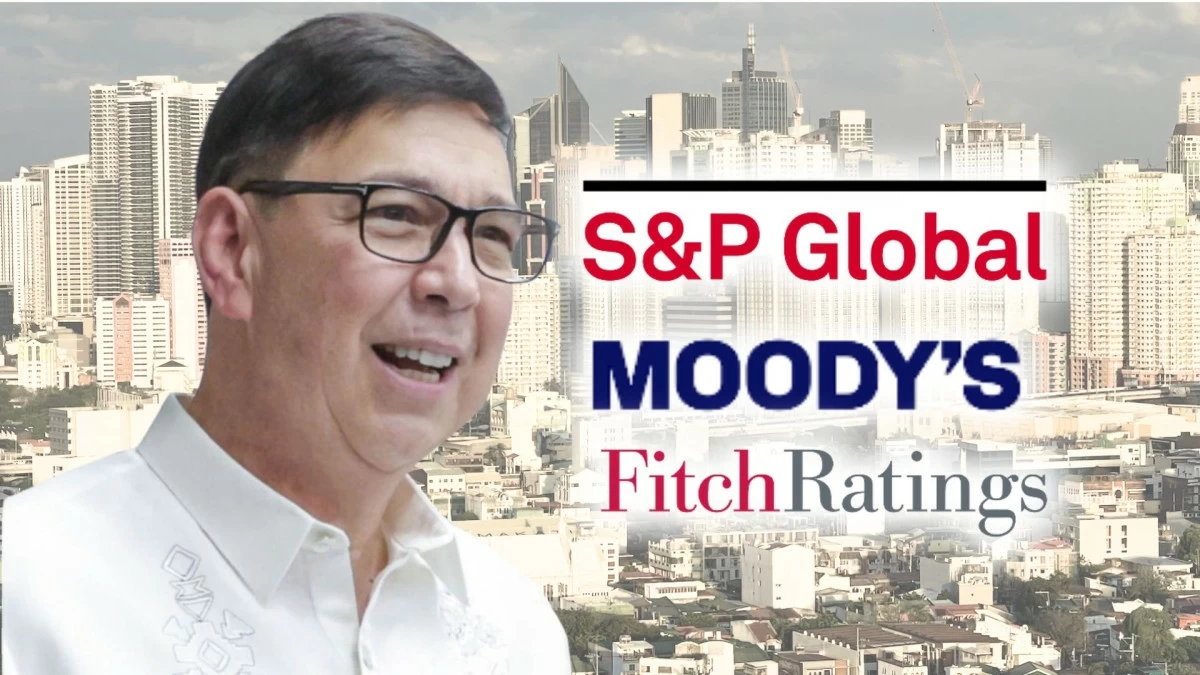
Asked on Tuesday, June 3, if there's anything to worry about regarding debt accumulation, especially as the nominal amount breaches new highs, Department of Finance (DOF) Secretary Ralph G. Recto told Manila Bulletin: "Credit rating agencies have upgraded us. They're not worried."
The Philippines enjoys investment-grade credit ratings from the so-called Big Three debt watchers: Fitch Ratings, Moody's Ratings, and S&P Global Ratings. S&P has currently assigned the Philippines its highest rating—one notch below "A-"—while Moody's and Fitch have given the country the minimum investment grade.
In November last year, S&P upgraded the Philippines' credit outlook to "positive," indicating a growing likelihood of a further rating upgrade in the near term. The government is aiming for an "A" rating before the current administration's term ends in 2028.
Also, Recto said that "economic growth is faster than the debt."
Based on the latest Bureau of the Treasury (BTr) data, the national government's outstanding debt as of April 2025 increased 4.4 percent year-to-date from the end-2024 level. But the end-April level jumped 11.6 percent year-on-year, a faster pace than the dismal 5.4-percent gross domestic product (GDP) growth posted in the first quarter of 2025.
As Manila Bulletin reported earlier, Moody's recently flagged expectations that the Philippines' debt as a share to economic output would stay elevated in the coming years. "Debt-to-GDP will remain higher than pre-pandemic levels, and debt affordability, measured by general government (GG) interest payments to revenue ratio, will continue to weaken over the next two years," Moody's said last March 1, following its periodic review of the Philippines' credit rating—currently at "Baa2," one notch above investment grade, with a "stable" outlook.
At the end of the first quarter of 2025, the debt-to-GDP ratio climbed to 62 percent—the highest since the previous Duterte administration ramped up borrowings at the height of the pandemic to fight the health and socioeconomic crises wrought by Covid-19.
The Marcos Jr. administration aims to reduce debt-to-GDP to below 60 percent by the time the President steps down in 2028. Before the Covid-19 pandemic struck, the public debt ratio fell to a record low of 39.6 percent in 2019.
As for GG debt—the metric that credit rating agencies monitor for their ratings actions, as it excludes intragovernmental debt holdings—the latest Department of Finance (DOF) data showed its ratio slightly improved to 53.6 percent in 2023 from a high of 54.2 percent in 2022.
Credit ratings assess a government's creditworthiness and reflect financial stability, serving as a proxy indicator of economic health. An investment-grade rating enables the government to borrow at lower interest rates, which can translate into reduced borrowing costs for businesses and consumers.
The latest BTr report on the national government's outstanding debt, released on June 3, showed that the pile inched up to a new high of ₱16.75 trillion as of the end of April.
It was in April that the BTr raised ₱300 billion from its new 10-year, fixed-rate benchmark bonds offering, but overall debt accumulation was tempered by the relatively stronger peso against the soft United States (US) dollar, limiting the month-on-month increase to only 0.41 percent.
By end-2025, the government's outstanding debt is projected to climb to a record ₱17.35 trillion.
Beyond the BTr press release, the latest updated data on its website showed that its claims of a "disciplined debt strategy" by the national government may be true, after all.
Also posted on the BTr website at the same time as the press statement was released, debt indicators as of April 2025 showed that the majority of the record-high debts, amounting to ₱11.49 trillion, were denominated in peso—up 1.9 percent month-on-month.
Meanwhile, foreign currency-denominated debt declined by 2.7 percent month-on-month to $94.17 billion, equivalent to ₱5.27 trillion, at end-April.
The Philippines borrows more from the liquid domestic debt market—and in the local currency—mainly through the weekly issuance of treasury bills and bonds not only to take advantage of domestic creditors who are awash in cash, but also to temper foreign exchange (forex) risks for future repayments.
More than two-thirds of the outstanding debt had been locally sourced.
Back in April, National Treasurer Sharon P. Almanza told Manila Bulletin that the government is unlikely to issue more global bonds, unless the budget deficit ceiling is raised. Of the $3.5 billion programmed for global bond issuances in 2025, $3.3 billion was already raised last January. As such, any further issuance may amount to only $200 million, Almanza had said.
The government plans to borrow a gross amount of ₱2.55 trillion this year, with only ₱507.4 billion of the programmed 2025 financing from external sources.
This also shows in the profile of end-April 2025 outstanding debt by type of instrument: debt securities issued by the BTr here and abroad accounted for ₱14.27 trillion, while the remainder amounting to ₱2.48 trillion were concessional loans extended by bilateral development partners as well as multilateral lenders.
A closer look at the end-April BTr debt data showed that while the value of outstanding loans has been quite stable since the end of 2024 and even declined month-on-month from end-March levels, the Philippines has been relying more on debt securities for its financing requirements, at least during the past four months.
Breaking down debt by maturity, long-term borrowings that will be repaid in 10 or more years accounted for over 82 percent of total, amounting to ₱13.74 trillion. The share of long-term debt to total has also been rising these past few years and months.
Short-term debts payable in a year or less reached ₱820.3 billion as of April, accounting for 4.9 percent of total; while medium-term obligations amounted to ₱2.19 trillion, or 13.1 percent of the outstanding public debt pile.