ADVERTISEMENT

AI weather forecasting to empower Filipino farmers against climate shifts

Published Jun 4, 2025 03:58 pm
(Tomorrow.io photo)
(Tomorrow.io photo)
United States-based global weather intelligence firm Tomorrow.io is set to bring its artificial intelligence (AI) technology in the Philippines to help farmers to rapidly shifting climate conditions that often hamper productivity.
Tomorrow.io, a known technology provider for American government agencies, said it has solidified a collaboration with the National Irrigation Administration (NIA) and the Department of Agriculture (DA).
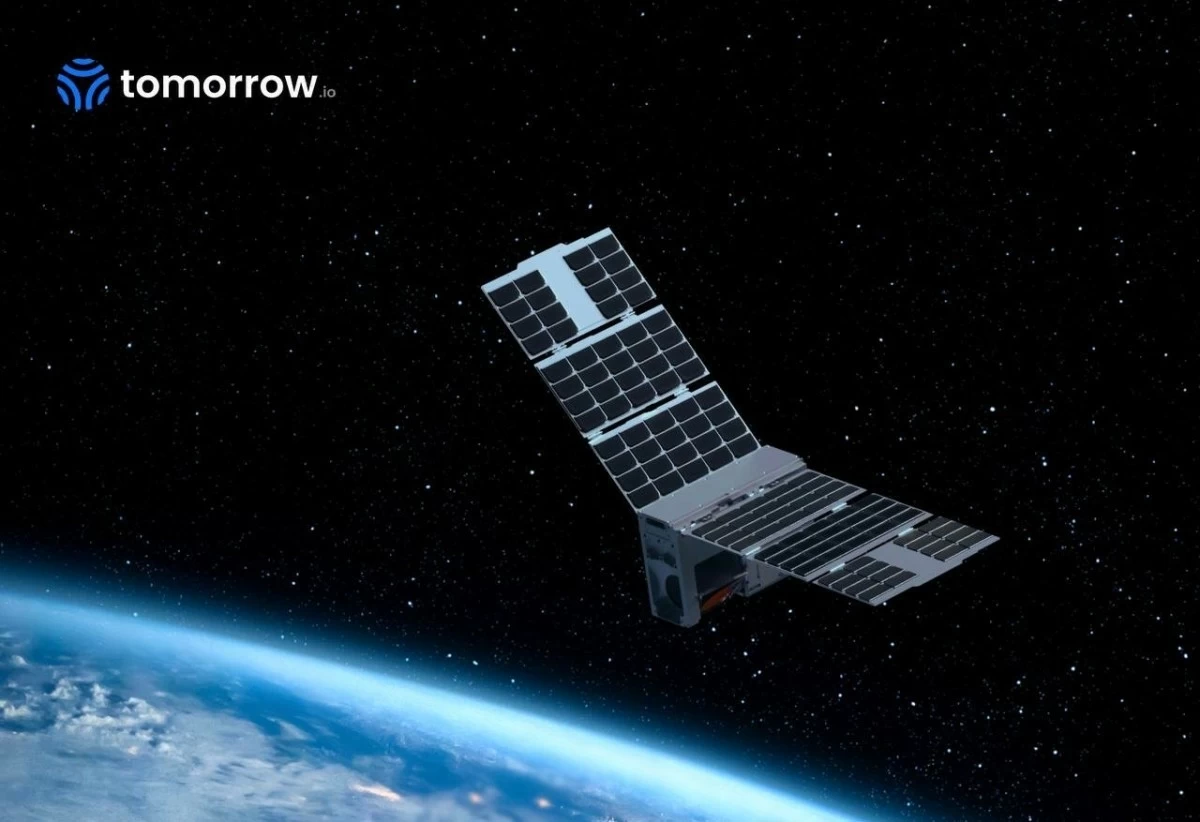
The company said the partnership is expected to transform farming through the use of weather forecasting, harnessing its AI models and proprietary network of low-orbit satellites.
Essentially, the satellites collects high-resolution atmospheric data, which physics-based and AI-powered models then process to deliver highly accurate forecasts.
These forecasts are then translated into predictive insights through a scalable software platform, enabling proactive risk management across industries.
In agriculture, the technology will enable micro-weather at the plot level, bringing precise and timely agronomy advice, such as when to delay irrigation based on incoming rainfall.
Tomorrow.io Chief Executive Officer (CEO) Shimon Elkabetz said its technology is uniquely positioned to serve the Philippines’ diverse archipelago and remote farming communities.
“Our proprietary space-based satellite constellation was purpose-built to fill those coverage gaps and provide  high-resolution, real-time weather intelligence across the country, even in the most hard-to-reach and underserved areas,” said Elkabetz.
The company said introducing its technology comes at a critical time for the country with the arrival of the rainy season, with habagat or southwest monsoon already affecting various parts of the country.
Based on data from the DA, the agriculture sector suffered ₱57.78 billion in damages due to weather disturbances last year.
This affected over 1.4 million farmers and fishers, as well as the loss of 2.19 million metric tons (MT) of production across nearly one million hectares.
Elkabetz is optimistic that the company’s weather technology will help farmers in the country brace for adverse climate conditions.
“Tomorrow.io ensures truly national coverage. This allows for faster, more accurate early warnings, empowering farmers and local industries to make informed decisions during severe weather events” he added.
Elkabetz said the weather data it will gather should enable farmers to make informed decisions, especially in managing inputs, mitigating weather-related losses, and enhancing yields.
Aside from agriculture, he noted that the company may soon extend its services to other industries such as shipping and aviation, where accurate weather data is critical.
Globally, Tomorrow.io is being utilized in several development efforts, including the programs of the Bill and Melinda Gates Foundation programs in Africa.

Related Tags

Tomorrow.io artificial intelligence (AI) National Irrigation Administration (NIA) Department of Agriculture (DA)
ADVERTISEMENT
.most-popular .layout-ratio{ padding-bottom: 79.13%; } @media (min-width: 768px) and (max-width: 1024px) { .widget-title { font-size: 15px !important; } }

{{ articles_filter_1561_widget.title }}

.most-popular .layout-ratio{ padding-bottom: 79.13%; } @media (min-width: 768px) and (max-width: 1024px) { .widget-title { font-size: 15px !important; } }

{{ articles_filter_1562_widget.title }}

.most-popular .layout-ratio{ padding-bottom: 79.13%; } @media (min-width: 768px) and (max-width: 1024px) { .widget-title { font-size: 15px !important; } }

{{ articles_filter_1563_widget.title }}

{{ articles_filter_1564_widget.title }}

.mb-article-details { position: relative; } .mb-article-details .article-body-preview, .mb-article-details .article-body-summary{ font-size: 17px; line-height: 30px; font-family: "Libre Caslon Text", serif; color: #000; } .mb-article-details .article-body-preview iframe , .mb-article-details .article-body-summary iframe{ width: 100%; margin: auto; } .read-more-background { background: linear-gradient(180deg, color(display-p3 1.000 1.000 1.000 / 0) 13.75%, color(display-p3 1.000 1.000 1.000 / 0.8) 30.79%, color(display-p3 1.000 1.000 1.000) 72.5%); position: absolute; height: 200px; width: 100%; bottom: 0; display: flex; justify-content: center; align-items: center; padding: 0; } .read-more-background a{ color: #000; } .read-more-btn { padding: 17px 45px; font-family: Inter; font-weight: 700; font-size: 18px; line-height: 16px; text-align: center; vertical-align: middle; border: 1px solid black; background-color: white; } .hidden { display: none; }
function initializeAllSwipers() { // Get all hidden inputs with cms_article_id document.querySelectorAll('[id^="cms_article_id_"]').forEach(function (input) { const cmsArticleId = input.value; const articleSelector = '#article-' + cmsArticleId + ' .body_images'; const swiperElement = document.querySelector(articleSelector); if (swiperElement && !swiperElement.classList.contains('swiper-initialized')) { new Swiper(articleSelector, { loop: true, pagination: false, navigation: { nextEl: '#article-' + cmsArticleId + ' .swiper-button-next', prevEl: '#article-' + cmsArticleId + ' .swiper-button-prev', }, }); } }); } setTimeout(initializeAllSwipers, 3000); const intersectionObserver = new IntersectionObserver( (entries) => { entries.forEach((entry) => { if (entry.isIntersecting) { const newUrl = entry.target.getAttribute("data-url"); if (newUrl) { history.pushState(null, null, newUrl); let article = entry.target; // Extract metadata const author = article.querySelector('.author-section').textContent.replace('By', '').trim(); const section = article.querySelector('.section-info ').textContent.replace(' ', ' '); const title = article.querySelector('.article-title h1').textContent; // Parse URL for Chartbeat path format const parsedUrl = new URL(newUrl, window.location.origin); const cleanUrl = parsedUrl.host + parsedUrl.pathname; // Update Chartbeat configuration if (typeof window._sf_async_config !== 'undefined') { window._sf_async_config.path = cleanUrl; window._sf_async_config.sections = section; window._sf_async_config.authors = author; } // Track virtual page view with Chartbeat if (typeof pSUPERFLY !== 'undefined' && typeof pSUPERFLY.virtualPage === 'function') { try { pSUPERFLY.virtualPage({ path: cleanUrl, title: title, sections: section, authors: author }); } catch (error) { console.error('ping error', error); } } // Optional: Update document title if (title && title !== document.title) { document.title = title; } } } }); }, { threshold: 0.1 } ); function showArticleBody(button) { const article = button.closest("article"); const summary = article.querySelector(".article-body-summary"); const body = article.querySelector(".article-body-preview"); const readMoreSection = article.querySelector(".read-more-background"); // Hide summary and read-more section summary.style.display = "none"; readMoreSection.style.display = "none"; // Show the full article body body.classList.remove("hidden"); } document.addEventListener("DOMContentLoaded", () => { let loadCount = 0; // Track how many times articles are loaded const offset = [1, 2, 3, 4, 5, 6, 7, 8, 9, 10]; // Offset values const currentUrl = window.location.pathname.substring(1); let isLoading = false; // Prevent multiple calls if (!currentUrl) { console.log("Current URL is invalid."); return; } const sentinel = document.getElementById("load-more-sentinel"); if (!sentinel) { console.log("Sentinel element not found."); return; } function isSentinelVisible() { const rect = sentinel.getBoundingClientRect(); return ( rect.top < window.innerHeight && rect.bottom >= 0 ); } function onScroll() { if (isLoading) return; if (isSentinelVisible()) { if (loadCount >= offset.length) { console.log("Maximum load attempts reached."); window.removeEventListener("scroll", onScroll); return; } isLoading = true; const currentOffset = offset[loadCount]; window.loadMoreItems().then(() => { let article = document.querySelector('#widget_1690 > div:nth-last-of-type(2) article'); intersectionObserver.observe(article) loadCount++; }).catch(error => { console.error("Error loading more items:", error); }).finally(() => { isLoading = false; }); } } window.addEventListener("scroll", onScroll); });

Sign up by email to receive news.