






BACOLOD CITY – As the opening of classes on June 16 approaches, the lack of available classrooms remains a major challenge in schools being used as evacuation centers for individuals displaced by the Kanlaon Volcano eruption in Negros Occidental, particularly in La Castellana town.
Manila Bulletin
 Philippines
Visayas
2,448 families remain in evacuation centers 1 year after June 3 Kanlaon eruption
Philippines
Visayas
2,448 families remain in evacuation centers 1 year after June 3 Kanlaon eruption
Philippines
Visayas
2,448 families remain in evacuation centers 1 year after June 3 Kanlaon eruption
2,448 families remain in evacuation centers 1 year after June 3 Kanlaon eruption
Published Jun 4, 2025 02:57 pm


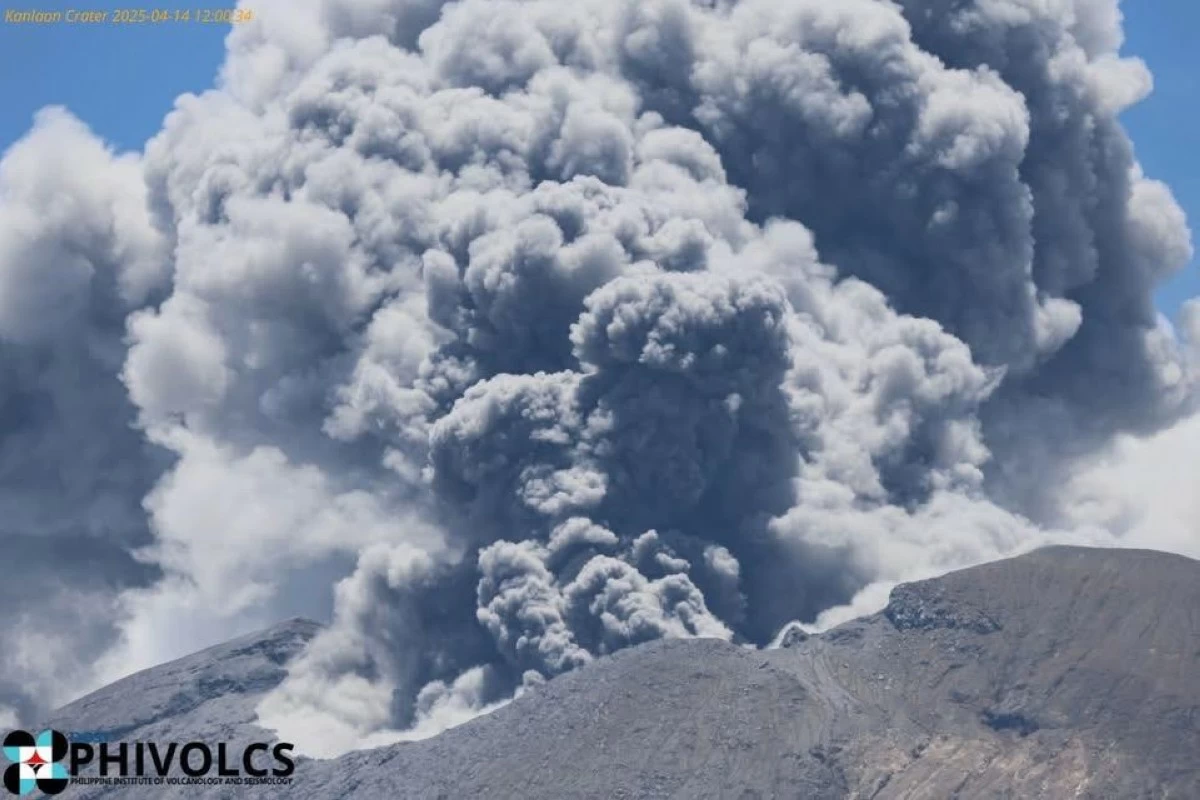
KANLAON Volcano
Around 2,448 displaced families are currently staying in various evacuation centers, more than a year after the volcano erupted on June 3, 2024, according to the Office of Civil Defense-Negros Island Region (NIR).
Ian Arnold Arnaez, spokesperson for the Department of Education (DepEd)-Negros Occidental, said that the law mandates that schools used as evacuation centers can only be occupied for a maximum of 15 days. Beyond that, local government units (LGUs) have to present a concrete plan for relocating evacuees.
However, he noted that implementing this policy is challenging.
Arnaez said that the municipal government of La Castellana has suggested three options for relocation and schools are closely monitoring to determine how to adjust their class schedules.
However, if the relocation plan does not push through ahead of the class opening, he said that temporary classrooms or learning spaces will again be used in evacuation centers for the students this academic year.
Arnaez said that for humanitarian reasons, authorities cannot just evict people without anywhere to go.
As a result, schools become temporary homes longer than intended, sacrificing the educational needs of students.
The projected number of affected students for this academic year in schools utilized as evacuation centers in the town – La Castellana Elementary School with 1,495 students, Don Felix Robles Elementary School with 1,768, and La Castellana National High School with 5,660 students, for a total of 8,923 students.
Schools in La Castellana with displaced pupils are Cabagna-an Elementary School with 296, Mananawin Elementary School with 145, Old Fabrica Elementary School with 286, Sag-ang Integrated School with 757, and Biak na Bato Elementary School with 474.
Arnaez said that there are not enough classrooms to accommodate students from schools in danger zones and those being used as evacuation centers have even fewer rooms left for holding classes.
To address this, schools implement scheduling or shifting, mostly resorting to distance learning with only once-a-week face-to-face sessions. However, this is not ideal for ensuring quality education, Arnaez said.
Some partners and the OCD have stepped in, providing temporary learning spaces made of canopies for the affected students.
These are not conducive to learning due to heat and exposure to dust and wind and are only temporary fixes, Arnaez said.
Last year, canopy-type learning spaces were provided, but each could only accommodate 14 students per session, far from the typical 30 to 40 students per class in La Castellana Elementary School.
This often requires splitting the teacher’s time and attention.
Until the local government implements an alternative relocation plan, Arnaez said that they will have to manage the current arrangement.
“In the end, we have no choice. We have to embrace reality and work our way according to that reality,” he said, adding that this is not something that they want to happen, but they have to do something to fulfill their mandate.
“This is a big challenge for the LGU. It’s a pressure for them, too,” said OCD-NIR Regional Director Donato Sermeno III.
He said that the municipal government of La Castellana has requested 30 sets of family tents to address the situation.
Sermeno said they can explore other ways, including setting up learning spaces made of bamboo or native materials as temporary classrooms.
He said that the number of displaced families staying in various evacuation centers decreased to around 2,400.
Arnaez attributed the decrease to families living outside the six-kilometer Extended Danger Zone (EDZ) who have been allowed to return to their homes.
Sermeno said that families outside the six-kilometer EDZ initially took shelter in evacuation centers due to fear after series of seismic activities of the volcano the past months.
Around 2,600 families or 8,300 individuals were recorded in evacuation centers under Alert Level 3 last month, according to the OCD.
Sermeno said that currently there are 23 evacuation centers, 10 in Canlaon City, Negros Oriental, eight in La Castellana, and four in La Carlota City, both in Negros Occidental.
He admitted that IDPs staying in evacuation centers are still affected by their situation, considering that they have been out of their houses for a year now.
A 29-minute ash emission was recorded by the Philippine Institute of Volcanology and Seismology from the volcano, with 38 volcanic earthquakes, and 1,460 tons of sulfur dioxide on Monday, June 2, a day before the first anniversary of last year’s eruption.
Sermeno said that thin ashfall was reported in Barangays Ilijan, Binubuhan, and Mailum in Bago City, Negros Occidental on Monday.
Sermeno said that the Regional Incident Management Team is patrolling the EDZ to ensure residents leaving and entering the danger zone are monitored.
“The danger of an eruption is still there,” Sermeno said, stressing that the number of volcanic earthquakes recorded on Monday can be considered somehow alarming.
The June 3, 2024 eruption was followed by another eruption on Dec. 9, 2024, and the volcano also erupted this year.
The OCD-NIR said they are in the process of reviewing the selected sites for permanent evacuation centers and resettlement areas for displaced residents in four LGUs in Negros Occidental – La Castellana, La Carlota City, Bago City, and San Carlos City.