







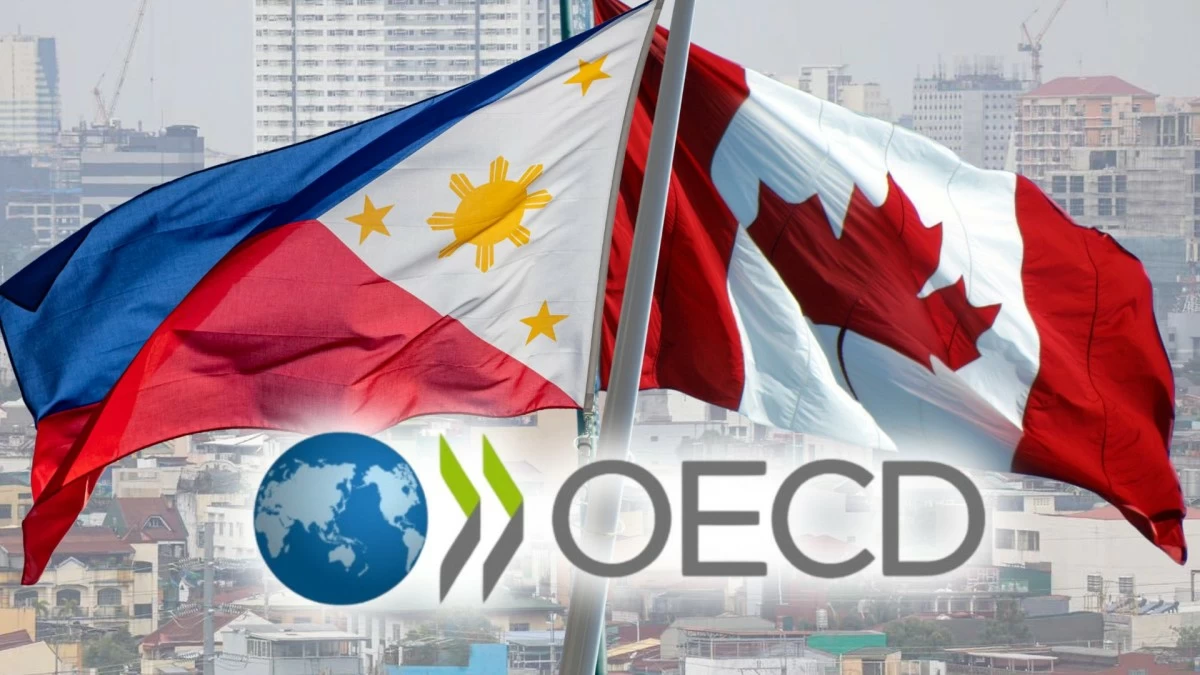
The Philippines and Canada have officially assumed co-chairmanship of the Organization for Economic Cooperation and Development’s (OECD) Southeast Asia Regional Program (SEARP), succeeding Vietnam and Australia during the OECD ministerial council meeting held in Paris, France.
Philippines, Canada take helm of OECD Southeast Asia program
Published Jun 3, 2025 05:37 pm


In a statement on Tuesday, June 3, the OECD said the program has served as a vital platform for connecting OECD member countries with Southeast Asia—an economic powerhouse with a combined gross domestic product (GDP) exceeding $3 trillion—since its launch in 2014.
“The economic dynamism of Southeast Asia makes the region a center for global growth and supply chains,” said OECD secretary-general Mathias Cormann, highlighting continued efforts to deepen engagement through the OECD strategic framework for the Indo-Pacific and its implementation plan.
“Our work with the Association of Southeast Asian Nations (ASEAN) on regional economic co-operation and integration, and tailored support for countries on aligning with OECD standards and best practices, aim to help the region unlock its full potential,” Cormann said.
For over a decade now, “Southeast Asian countries have more than doubled their adherence to OECD instruments and their participation in OECD bodies” as well as completed 67 legal adherences to OECD instruments, it said.
Earlier this year, the Philippines also signed a memorandum of understanding (MOU) with the OECD, pledging enhanced cooperation on macroeconomic policy, infrastructure, and corporate governance, it noted.
Both the Philippines and Singapore recently joined the OECD’s inclusive forum on carbon mitigation approaches (IFCMA), further deepening regional collaboration on climate action, it added.
The region’s relationship with the OECD entered a new chapter in 2024, with accession discussions launched for Thailand and Indonesia, aimed at catalyzing domestic reforms and supporting their goal of achieving high-income status, the statement said.