

ADVERTISEMENT

Philippines' biggest ecozone rising at Iwahig prison in Palawan

Published Jun 3, 2025 12:23 pm
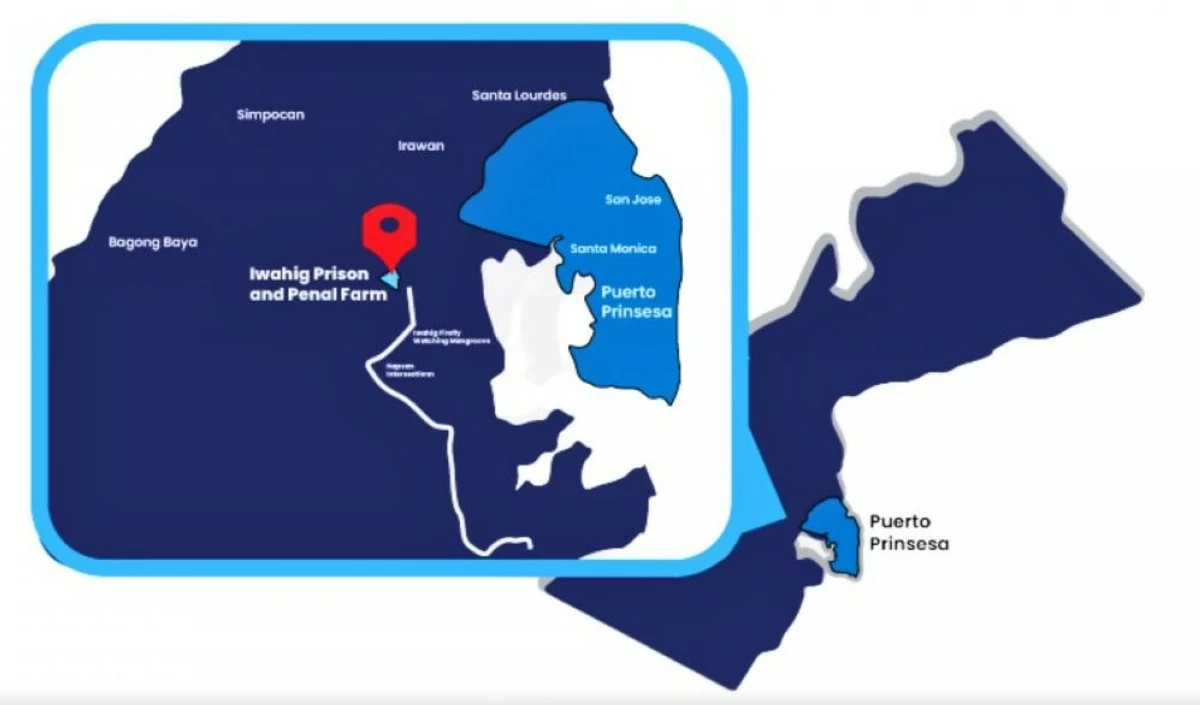
The Philippine Economic Zone Authority (PEZA) has officially approved the country’s largest economic zone (ecozone) to date, which will rise within Iwahig Prison and Penal Farm in Puerto Princesa City, Palawan.
In a statement, PEZA said its board of directors gave the greenlight to the Palawan Mega Ecozone project on May 21.
Considered as the first of its kind, the development is a joint undertaking of PEZA and the Bureau of Corrections (BuCor), which oversees the penal farm.
PEZA and BuCor formed a partnership in January 2024 to pursue the establishment of mega ecozones in the country.
A year later, both agencies signed a memorandum of understanding (MOU) to formally initiate the process of developing Palawan Mega Ecozone.
Based on the agreement, 28,000 hectares (ha) of the Iwahig property will be developed as the ecozone.
PEZA said it has affirmed its contract with BuCor to facilitate the necessary land transfer.
An initial 4,000 ha has already been transferred to PEZA for conversion purposes as part of the development’s first phase.
The investment promotion agency (IPA) said this is the first step towards the process of presidential proclamation.
Ecozones—and the benefits enshrined therein—are only established once proclaimed by the President.
The PEZA board has created a technical working group (TWG) composed of government agencies to facilitate the issuance of documents necessary to fast-track the proclamation of Palawan Mega Ecozone.
The agency is targeting the completion of regulatory requirements by the second quarter of the year, prior to its submission to the Office of the President (OP).
According to PEZA, Palawan Mega Ecozone will help strengthen the country’s trade activities within Brunei Darussalam, Indonesia, Malaysia, Philippines-East ASEAN Growth Area (BIMP-EAGA).
The agency said this is especially relevant as the country moves to diversify its trade ties with other countries in view of the new tariff policy of the United States (US).
The ecozone has been envisioned by the government to attract green and sustainable industries such as agro-industrial processing, renewable energy, eco-tourism, and marine biotechnology.
“This will not only preserve Palawan’s rich biodiversity but will also uplift the livelihood of local communities through jobs and infrastructure development,” said PEZA Director General Tereso Panga.
Panga said Palawan Mega Ecozone is expected to create over 480,000 direct jobs, benefiting local communities, persons deprived of liberty (PDLs), as well as nearby regions.

Related Tags

Philippine Economic Zone Authority (PEZA) Iwahig Prison and Penal Farm Palawan Mega Ecozone
ADVERTISEMENT
.most-popular .layout-ratio{ padding-bottom: 79.13%; } @media (min-width: 768px) and (max-width: 1024px) { .widget-title { font-size: 15px !important; } }

{{ articles_filter_1561_widget.title }}

.most-popular .layout-ratio{ padding-bottom: 79.13%; } @media (min-width: 768px) and (max-width: 1024px) { .widget-title { font-size: 15px !important; } }

{{ articles_filter_1562_widget.title }}

.most-popular .layout-ratio{ padding-bottom: 79.13%; } @media (min-width: 768px) and (max-width: 1024px) { .widget-title { font-size: 15px !important; } }

{{ articles_filter_1563_widget.title }}

{{ articles_filter_1564_widget.title }}

.mb-article-details { position: relative; } .mb-article-details .article-body-preview, .mb-article-details .article-body-summary{ font-size: 17px; line-height: 30px; font-family: "Libre Caslon Text", serif; color: #000; } .mb-article-details .article-body-preview iframe , .mb-article-details .article-body-summary iframe{ width: 100%; margin: auto; } .read-more-background { background: linear-gradient(180deg, color(display-p3 1.000 1.000 1.000 / 0) 13.75%, color(display-p3 1.000 1.000 1.000 / 0.8) 30.79%, color(display-p3 1.000 1.000 1.000) 72.5%); position: absolute; height: 200px; width: 100%; bottom: 0; display: flex; justify-content: center; align-items: center; padding: 0; } .read-more-background a{ color: #000; } .read-more-btn { padding: 17px 45px; font-family: Inter; font-weight: 700; font-size: 18px; line-height: 16px; text-align: center; vertical-align: middle; border: 1px solid black; background-color: white; } .hidden { display: none; }
function initializeAllSwipers() { // Get all hidden inputs with cms_article_id document.querySelectorAll('[id^="cms_article_id_"]').forEach(function (input) { const cmsArticleId = input.value; const articleSelector = '#article-' + cmsArticleId + ' .body_images'; const swiperElement = document.querySelector(articleSelector); if (swiperElement && !swiperElement.classList.contains('swiper-initialized')) { new Swiper(articleSelector, { loop: true, pagination: false, navigation: { nextEl: '#article-' + cmsArticleId + ' .swiper-button-next', prevEl: '#article-' + cmsArticleId + ' .swiper-button-prev', }, }); } }); } setTimeout(initializeAllSwipers, 3000); const intersectionObserver = new IntersectionObserver( (entries) => { entries.forEach((entry) => { if (entry.isIntersecting) { const newUrl = entry.target.getAttribute("data-url"); if (newUrl) { history.pushState(null, null, newUrl); let article = entry.target; // Extract metadata const author = article.querySelector('.author-section').textContent.replace('By', '').trim(); const section = article.querySelector('.section-info ').textContent.replace(' ', ' '); const title = article.querySelector('.article-title h1').textContent; // Parse URL for Chartbeat path format const parsedUrl = new URL(newUrl, window.location.origin); const cleanUrl = parsedUrl.host + parsedUrl.pathname; // Update Chartbeat configuration if (typeof window._sf_async_config !== 'undefined') { window._sf_async_config.path = cleanUrl; window._sf_async_config.sections = section; window._sf_async_config.authors = author; } // Track virtual page view with Chartbeat if (typeof pSUPERFLY !== 'undefined' && typeof pSUPERFLY.virtualPage === 'function') { try { pSUPERFLY.virtualPage({ path: cleanUrl, title: title, sections: section, authors: author }); } catch (error) { console.error('ping error', error); } } // Optional: Update document title if (title && title !== document.title) { document.title = title; } } } }); }, { threshold: 0.1 } ); function showArticleBody(button) { const article = button.closest("article"); const summary = article.querySelector(".article-body-summary"); const body = article.querySelector(".article-body-preview"); const readMoreSection = article.querySelector(".read-more-background"); // Hide summary and read-more section summary.style.display = "none"; readMoreSection.style.display = "none"; // Show the full article body body.classList.remove("hidden"); } document.addEventListener("DOMContentLoaded", () => { let loadCount = 0; // Track how many times articles are loaded const offset = [1, 2, 3, 4, 5, 6, 7, 8, 9, 10]; // Offset values const currentUrl = window.location.pathname.substring(1); let isLoading = false; // Prevent multiple calls if (!currentUrl) { console.log("Current URL is invalid."); return; } const sentinel = document.getElementById("load-more-sentinel"); if (!sentinel) { console.log("Sentinel element not found."); return; } function isSentinelVisible() { const rect = sentinel.getBoundingClientRect(); return ( rect.top < window.innerHeight && rect.bottom >= 0 ); } function onScroll() { if (isLoading) return; if (isSentinelVisible()) { if (loadCount >= offset.length) { console.log("Maximum load attempts reached."); window.removeEventListener("scroll", onScroll); return; } isLoading = true; const currentOffset = offset[loadCount]; window.loadMoreItems().then(() => { let article = document.querySelector('#widget_1690 > div:nth-last-of-type(2) article'); intersectionObserver.observe(article) loadCount++; }).catch(error => { console.error("Error loading more items:", error); }).finally(() => { isLoading = false; }); } } window.addEventListener("scroll", onScroll); });

Sign up by email to receive news.