ADVERTISEMENT

P705M 'PAMANA' projects to support rebels' transformation in Bicol, says OPAPRU

Published Jun 3, 2025 01:07 pm
(Photo: OPAPRU)
(Photo: OPAPRU)

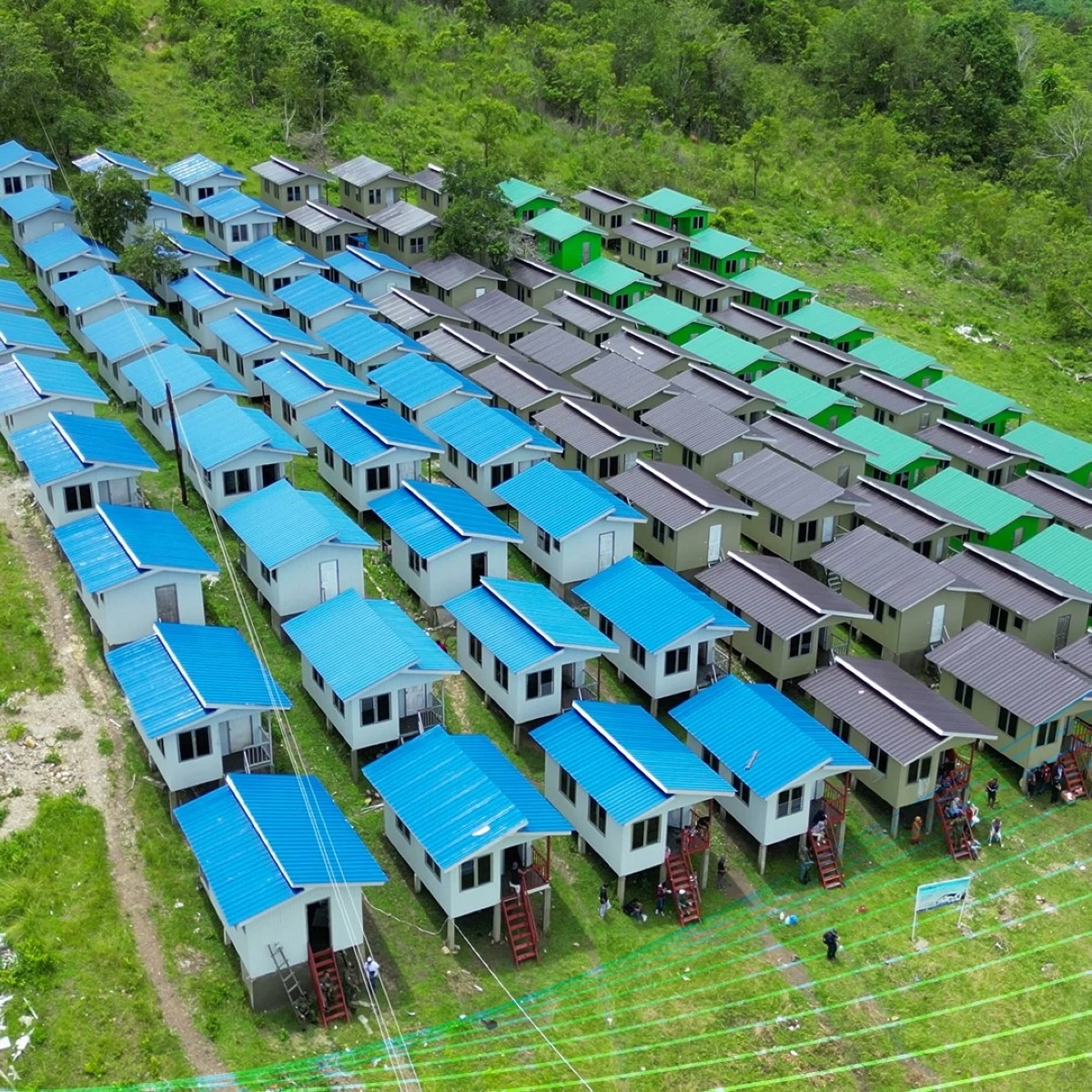
The Office of the Presidential Adviser on Peace, Reconciliation and Unity (OPAPRU) has allocated P705 million to implement “high-impact” and “community-driven” projects in Bicol (Region 5) through its “Payapa at Masaganang Pamayanan” (PAMANA) program.

The fund will be used to construct bridges, water supply systems, and roads among others, serving as a timely response to the growing number of former rebels who have reintegrated into society, according to the OPAPRU.

“We actively engage governors and provincial agencies to work together in addressing the concerns of rebel returnees, helping them rebuild their lives and support their families,” OPAPRU Secretary Carlito Galvez Jr. said.

Launched in 2011, the PAMANA Program is the national government’s flagship peace and development convergence initiative that provides community-driven interventions, particularly in areas affected by decades of armed conflict and underdevelopment. It is being jointly implemented by the OPAPRU and the Department of Social Welfare and Development (DSWD).

Brig. Gen. Randolph Cabangbang, acting commander of the Philippine Army’s 9th Infantry Division based at Camp Elias Angeles in Camarines Sur, said PAMANA serves as among the most effective developmental programs for former rebels who have surrendered to the military in Bicol.

“It is very timely that we sustain these programs. These are needed in securing the peace and sustaining the gains, and that is what PAMANA is all about,” he said.

From January to May 2025, the 9ID reported that 238 former rebels have laid down their arms and returned to the folds of the law.

Aside from infrastructure projects, the OPAPRU has also been working with the Department of Social Welfare and Development (DSWD), Department of Agriculture (DA), and other national line agencies to implement socio-cultural programs to support the transformation of former rebels.

As such, Galvez said the OPAPRU has proposed to increase PAMANA’s budget under the National Expenditure Program (NEP) to boost the program’s implementation in the regions, particularly in critical areas such as Bicol and Samar.

Last week, the OPAPRU lauded the Department of Budget and Management (DBM) for approving the release of over P1.4 billion to fund projects under the PAMANA program.

Of the P1.4 billion, P351 million has been earmarked for the implementation of capacity-building projects in about 200 communities, while P1.049 billion will support sustainable livelihood programs for residents in 981 barangays in peace and development focus areas nationwide.

Related Tags

OPAPRU PAMANA program rebels CPP-NPA-NDF
ADVERTISEMENT
.most-popular .layout-ratio{ padding-bottom: 79.13%; } @media (min-width: 768px) and (max-width: 1024px) { .widget-title { font-size: 15px !important; } }

{{ articles_filter_1561_widget.title }}

.most-popular .layout-ratio{ padding-bottom: 79.13%; } @media (min-width: 768px) and (max-width: 1024px) { .widget-title { font-size: 15px !important; } }

{{ articles_filter_1562_widget.title }}

.most-popular .layout-ratio{ padding-bottom: 79.13%; } @media (min-width: 768px) and (max-width: 1024px) { .widget-title { font-size: 15px !important; } }

{{ articles_filter_1563_widget.title }}

{{ articles_filter_1564_widget.title }}

.mb-article-details { position: relative; } .mb-article-details .article-body-preview, .mb-article-details .article-body-summary{ font-size: 17px; line-height: 30px; font-family: "Libre Caslon Text", serif; color: #000; } .mb-article-details .article-body-preview iframe , .mb-article-details .article-body-summary iframe{ width: 100%; margin: auto; } .read-more-background { background: linear-gradient(180deg, color(display-p3 1.000 1.000 1.000 / 0) 13.75%, color(display-p3 1.000 1.000 1.000 / 0.8) 30.79%, color(display-p3 1.000 1.000 1.000) 72.5%); position: absolute; height: 200px; width: 100%; bottom: 0; display: flex; justify-content: center; align-items: center; padding: 0; } .read-more-background a{ color: #000; } .read-more-btn { padding: 17px 45px; font-family: Inter; font-weight: 700; font-size: 18px; line-height: 16px; text-align: center; vertical-align: middle; border: 1px solid black; background-color: white; } .hidden { display: none; }
function initializeAllSwipers() { // Get all hidden inputs with cms_article_id document.querySelectorAll('[id^="cms_article_id_"]').forEach(function (input) { const cmsArticleId = input.value; const articleSelector = '#article-' + cmsArticleId + ' .body_images'; const swiperElement = document.querySelector(articleSelector); if (swiperElement && !swiperElement.classList.contains('swiper-initialized')) { new Swiper(articleSelector, { loop: true, pagination: false, navigation: { nextEl: '#article-' + cmsArticleId + ' .swiper-button-next', prevEl: '#article-' + cmsArticleId + ' .swiper-button-prev', }, }); } }); } setTimeout(initializeAllSwipers, 3000); const intersectionObserver = new IntersectionObserver( (entries) => { entries.forEach((entry) => { if (entry.isIntersecting) { const newUrl = entry.target.getAttribute("data-url"); if (newUrl) { history.pushState(null, null, newUrl); let article = entry.target; // Extract metadata const author = article.querySelector('.author-section').textContent.replace('By', '').trim(); const section = article.querySelector('.section-info ').textContent.replace(' ', ' '); const title = article.querySelector('.article-title h1').textContent; // Parse URL for Chartbeat path format const parsedUrl = new URL(newUrl, window.location.origin); const cleanUrl = parsedUrl.host + parsedUrl.pathname; // Update Chartbeat configuration if (typeof window._sf_async_config !== 'undefined') { window._sf_async_config.path = cleanUrl; window._sf_async_config.sections = section; window._sf_async_config.authors = author; } // Track virtual page view with Chartbeat if (typeof pSUPERFLY !== 'undefined' && typeof pSUPERFLY.virtualPage === 'function') { try { pSUPERFLY.virtualPage({ path: cleanUrl, title: title, sections: section, authors: author }); } catch (error) { console.error('ping error', error); } } // Optional: Update document title if (title && title !== document.title) { document.title = title; } } } }); }, { threshold: 0.1 } ); function showArticleBody(button) { const article = button.closest("article"); const summary = article.querySelector(".article-body-summary"); const body = article.querySelector(".article-body-preview"); const readMoreSection = article.querySelector(".read-more-background"); // Hide summary and read-more section summary.style.display = "none"; readMoreSection.style.display = "none"; // Show the full article body body.classList.remove("hidden"); } document.addEventListener("DOMContentLoaded", () => { let loadCount = 0; // Track how many times articles are loaded const offset = [1, 2, 3, 4, 5, 6, 7, 8, 9, 10]; // Offset values const currentUrl = window.location.pathname.substring(1); let isLoading = false; // Prevent multiple calls if (!currentUrl) { console.log("Current URL is invalid."); return; } const sentinel = document.getElementById("load-more-sentinel"); if (!sentinel) { console.log("Sentinel element not found."); return; } function isSentinelVisible() { const rect = sentinel.getBoundingClientRect(); return ( rect.top < window.innerHeight && rect.bottom >= 0 ); } function onScroll() { if (isLoading) return; if (isSentinelVisible()) { if (loadCount >= offset.length) { console.log("Maximum load attempts reached."); window.removeEventListener("scroll", onScroll); return; } isLoading = true; const currentOffset = offset[loadCount]; window.loadMoreItems().then(() => { let article = document.querySelector('#widget_1690 > div:nth-last-of-type(2) article'); intersectionObserver.observe(article) loadCount++; }).catch(error => { console.error("Error loading more items:", error); }).finally(() => { isLoading = false; }); } } window.addEventListener("scroll", onScroll); });

Sign up by email to receive news.