ADVERTISEMENT

ASEAN 2026: Showcasing readiness without disruption

Published Jun 3, 2025 12:05 am  |  Updated Jun 2, 2025 06:20 pm
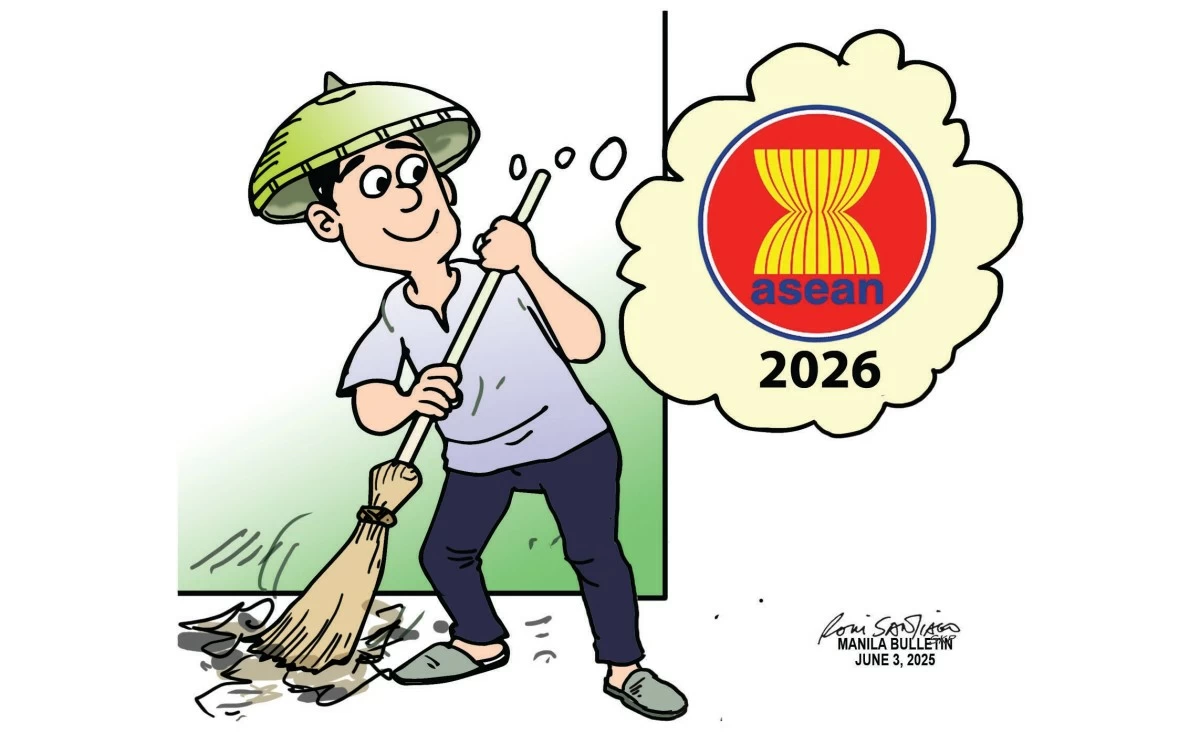
As the Philippines prepares to host the ASEAN Summits in 2026, the nation stands at an important crossroads. The opportunity to welcome regional leaders and showcase our country on the international stage must be met with careful planning, forward-thinking execution, and above all, sensitivity to the daily realities of millions of Filipinos.
President Ferdinand Marcos Jr.’s latest directive to suspend plans for a full-scale rehabilitation or reconstruction of EDSA is a prudent and timely decision. While the iconic thoroughfare is long overdue for structural and aesthetic improvements, embarking on an ambitious overhaul just before a high-stakes international event risks creating more problems than solutions. The President’s decision underscores the need for less disruptive alternatives that still meet the goals of readiness, security, and presentability.
The ASEAN Summits are not merely ceremonial. They are platforms for shaping policies on regional trade, security, climate response, digital transformation, and disaster resilience. As host, the Philippines must ensure logistical efficiency, security coordination, and diplomatic finesse. But this must not come at the expense of paralyzing Metro Manila’s already congested transport system or exacerbating public frustration with daily commutes.
Instead of a full-scale rebuild of EDSA, the government can consider targeted interventions: pavement and sidewalk repairs, lighting upgrades, urban landscaping, and smart traffic management solutions. Aesthetic enhancements, such as consistent signage and roadside greenery, can boost visual appeal without tearing up major infrastructure.
The 2026 hosting also presents an opportunity to decentralize. By holding ASEAN-related ministerial or side meetings in Clark, Cebu, Davao, or Iloilo — cities with expanding conference and hospitality capacities — we can ease pressure on Metro Manila while promoting inclusive regional development.
Moreover, digital readiness must be a core priority. ASEAN 2026 should reflect the Philippines’ ability to leverage technology for paperless coordination, hybrid conferencing, and real-time communication. These investments will have lasting benefits beyond the summit.
In hosting an event of this magnitude, the true measure of success lies not in grand displays but in how seamlessly and gracefully we can welcome the world—without disrupting the lives of our people. After all, the summit’s spirit is about unity and collaboration. Let us not undermine that message by making our citizens pay the price for our preparations.
President Marcos has opened the door to a more balanced approach: one that safeguards both the summit’s prestige and the public’s well-being. It is now up to the relevant agencies and local governments to pursue innovative, coordinated, and cost-effective solutions that embody this vision.
The Philippines is no stranger to hosting global events. The wealth of our national experience in hosting major international events — from our ASEAN chairmanships in 1987, 2007 and 2017; the APEC Summit in 2015; and visits by Pope John Paul II and Pope Francis — shows we can rise to the occasion. What must now evolve is our ability to do so with greater efficiency, empathy, and long-term impact.
ASEAN 2026 is a moment of national pride. Let us prepare for it not by tearing down our roads but by building up our systems, showcasing our people’s resilience, and proving to the region that the Philippines can unite for good — without leaving its citizens behind.
ADVERTISEMENT
.most-popular .layout-ratio{ padding-bottom: 79.13%; } @media (min-width: 768px) and (max-width: 1024px) { .widget-title { font-size: 15px !important; } }

{{ articles_filter_1561_widget.title }}

.most-popular .layout-ratio{ padding-bottom: 79.13%; } @media (min-width: 768px) and (max-width: 1024px) { .widget-title { font-size: 15px !important; } }

{{ articles_filter_1562_widget.title }}

.most-popular .layout-ratio{ padding-bottom: 79.13%; } @media (min-width: 768px) and (max-width: 1024px) { .widget-title { font-size: 15px !important; } }

{{ articles_filter_1563_widget.title }}

{{ articles_filter_1564_widget.title }}

.mb-article-details { position: relative; } .mb-article-details .article-body-preview, .mb-article-details .article-body-summary{ font-size: 17px; line-height: 30px; font-family: "Libre Caslon Text", serif; color: #000; } .mb-article-details .article-body-preview iframe , .mb-article-details .article-body-summary iframe{ width: 100%; margin: auto; } .read-more-background { background: linear-gradient(180deg, color(display-p3 1.000 1.000 1.000 / 0) 13.75%, color(display-p3 1.000 1.000 1.000 / 0.8) 30.79%, color(display-p3 1.000 1.000 1.000) 72.5%); position: absolute; height: 200px; width: 100%; bottom: 0; display: flex; justify-content: center; align-items: center; padding: 0; } .read-more-background a{ color: #000; } .read-more-btn { padding: 17px 45px; font-family: Inter; font-weight: 700; font-size: 18px; line-height: 16px; text-align: center; vertical-align: middle; border: 1px solid black; background-color: white; } .hidden { display: none; }
function initializeAllSwipers() { // Get all hidden inputs with cms_article_id document.querySelectorAll('[id^="cms_article_id_"]').forEach(function (input) { const cmsArticleId = input.value; const articleSelector = '#article-' + cmsArticleId + ' .body_images'; const swiperElement = document.querySelector(articleSelector); if (swiperElement && !swiperElement.classList.contains('swiper-initialized')) { new Swiper(articleSelector, { loop: true, pagination: false, navigation: { nextEl: '#article-' + cmsArticleId + ' .swiper-button-next', prevEl: '#article-' + cmsArticleId + ' .swiper-button-prev', }, }); } }); } setTimeout(initializeAllSwipers, 3000); const intersectionObserver = new IntersectionObserver( (entries) => { entries.forEach((entry) => { if (entry.isIntersecting) { const newUrl = entry.target.getAttribute("data-url"); if (newUrl) { history.pushState(null, null, newUrl); let article = entry.target; // Extract metadata const author = article.querySelector('.author-section').textContent.replace('By', '').trim(); const section = article.querySelector('.section-info ').textContent.replace(' ', ' '); const title = article.querySelector('.article-title h1').textContent; // Parse URL for Chartbeat path format const parsedUrl = new URL(newUrl, window.location.origin); const cleanUrl = parsedUrl.host + parsedUrl.pathname; // Update Chartbeat configuration if (typeof window._sf_async_config !== 'undefined') { window._sf_async_config.path = cleanUrl; window._sf_async_config.sections = section; window._sf_async_config.authors = author; } // Track virtual page view with Chartbeat if (typeof pSUPERFLY !== 'undefined' && typeof pSUPERFLY.virtualPage === 'function') { try { pSUPERFLY.virtualPage({ path: cleanUrl, title: title, sections: section, authors: author }); } catch (error) { console.error('ping error', error); } } // Optional: Update document title if (title && title !== document.title) { document.title = title; } } } }); }, { threshold: 0.1 } ); function showArticleBody(button) { const article = button.closest("article"); const summary = article.querySelector(".article-body-summary"); const body = article.querySelector(".article-body-preview"); const readMoreSection = article.querySelector(".read-more-background"); // Hide summary and read-more section summary.style.display = "none"; readMoreSection.style.display = "none"; // Show the full article body body.classList.remove("hidden"); } document.addEventListener("DOMContentLoaded", () => { let loadCount = 0; // Track how many times articles are loaded const offset = [1, 2, 3, 4, 5, 6, 7, 8, 9, 10]; // Offset values const currentUrl = window.location.pathname.substring(1); let isLoading = false; // Prevent multiple calls if (!currentUrl) { console.log("Current URL is invalid."); return; } const sentinel = document.getElementById("load-more-sentinel"); if (!sentinel) { console.log("Sentinel element not found."); return; } function isSentinelVisible() { const rect = sentinel.getBoundingClientRect(); return ( rect.top < window.innerHeight && rect.bottom >= 0 ); } function onScroll() { if (isLoading) return; if (isSentinelVisible()) { if (loadCount >= offset.length) { console.log("Maximum load attempts reached."); window.removeEventListener("scroll", onScroll); return; } isLoading = true; const currentOffset = offset[loadCount]; window.loadMoreItems().then(() => { let article = document.querySelector('#widget_1690 > div:nth-last-of-type(2) article'); intersectionObserver.observe(article) loadCount++; }).catch(error => { console.error("Error loading more items:", error); }).finally(() => { isLoading = false; }); } } window.addEventListener("scroll", onScroll); });

Sign up by email to receive news.