






 Business
Trade & Industry
2GO integrates EV charging into sea freight to support greener transport
Business
Trade & Industry
2GO integrates EV charging into sea freight to support greener transport
2GO integrates EV charging into sea freight to support greener transport


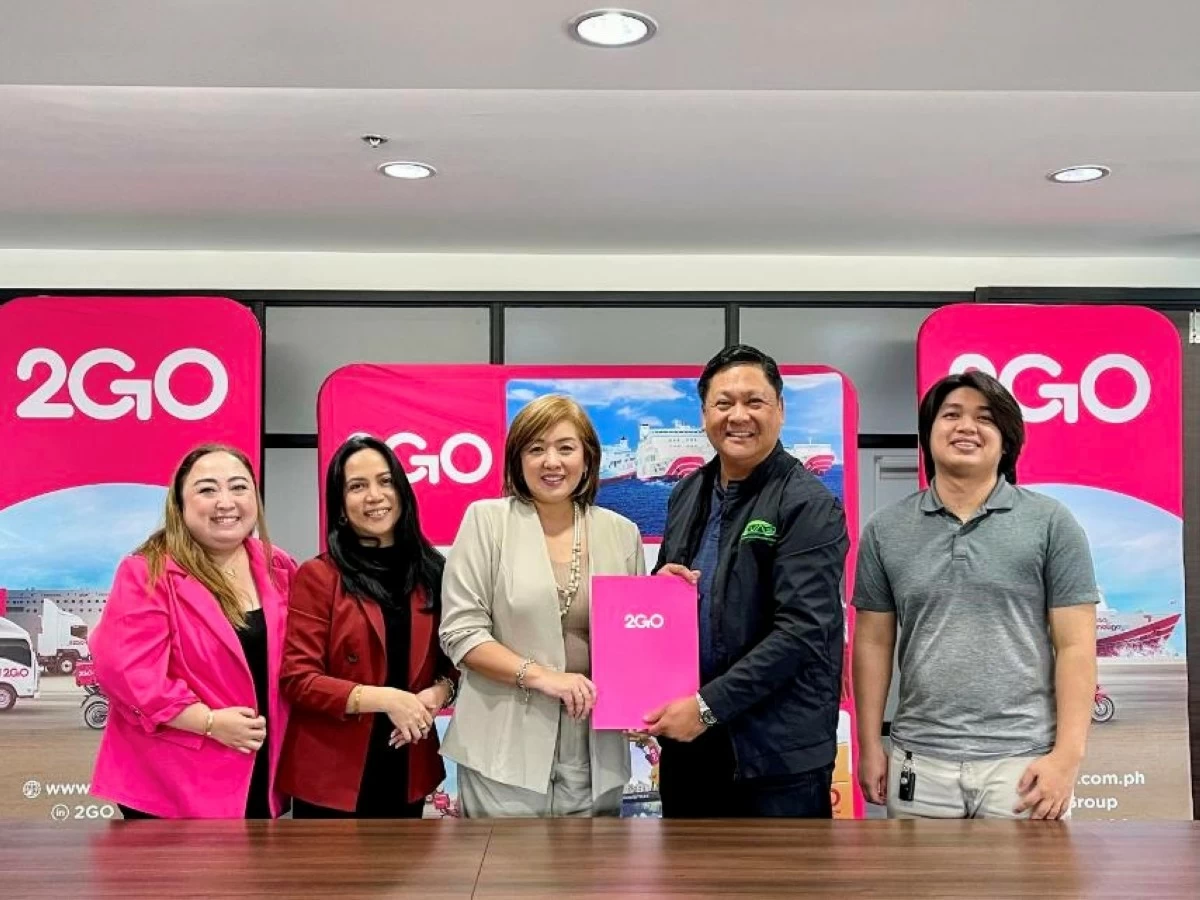
Logistics company 2GO and the Electric Vehicle Association of the Philippines (EVAP) have forged a partnership to enhance the distribution of electric vehicles in the country by leveraging sea freight capabilities and integrating EV charging on its vessels.
In a statement on Tuesday, June 3, 2GO said their collaboration with EVAP aims to support the growing demand for sustainable transportation in key urban centers accross the country.
“We are excited to be EVAP’s official logistics partner in pushing for greener roads. With our reliable capabilities, we ensure the safe and efficient delivery of electric vehicles across the Philippines,” Faye Alonzo, 2GO forwarding business unit head said. “The growing demand for EVs in key cities where we operate—particularly Cebu and Davao—highlights our strategic role in supporting this transition,” she added.
2GO has begun equipping its vessels, starting with MV 2GO Masikap and MV 2GO Masinag, with EV charging capabilities to facilitate the transport of electric vehicles.
The company noted that it is among the few in the Philippine transportation and logistics sector to integrate such infrastructure into its sea freight services. These vessels currently serve vital routes, including Manila–Davao–General Santos–Iloilo and Manila–Cebu–Manila, providing crucial logistical support for EV distribution in these strategic regions.
Edmund Araga, EVAP President, said, “It is crucial for us to embrace electric vehicles to reduce greenhouse gas emissions, especially in urban areas like Metro Manila, Cebu, and Davao. Having a reliable logistics partner like 2GO is essential to ensuring the nationwide availability and support of EVs.”
EVAP, a non-profit organization, is dedicated to promoting the adoption of battery electric vehicles in the Philippines. The partnership is seen by EVAP as a significant step towards increasing the accessibility of EVs throughout the archipelago.
2GO maintains regular shipping schedules, with four weekly sailings from Manila to Cebu and twice-weekly services to Davao and General Santos, ensuring consistent and dependable transportation and distribution of goods, including electric vehicles.
Data indicated a growing infrastructure for EVs, with Metro Manila hosting over 74 EV charging points as of April 2025, and plans for expansion to nearly 100 by the end of the year.