

ADVERTISEMENT

Why Philippine universities are falling behind in global rankings

Local giants stagnate as regional peers surge; CWUR 2025 rankings expose challenges for top Philippine institutions

Published Jun 2, 2025 10:59 pm

At A Glance

  • Two Philippine universities—University of the Philippines Manila and UP Diliman—are included in the 2025 edition of the Global 2000 list by the Center for World University Rankings (CWUR).
  • Philippine schools remain stagnant as Asian universities soar in global rankings, according to CWUR.
  • CWUR described the national picture as a "cause for concern" amid intensified global competition from well-funded institutions.
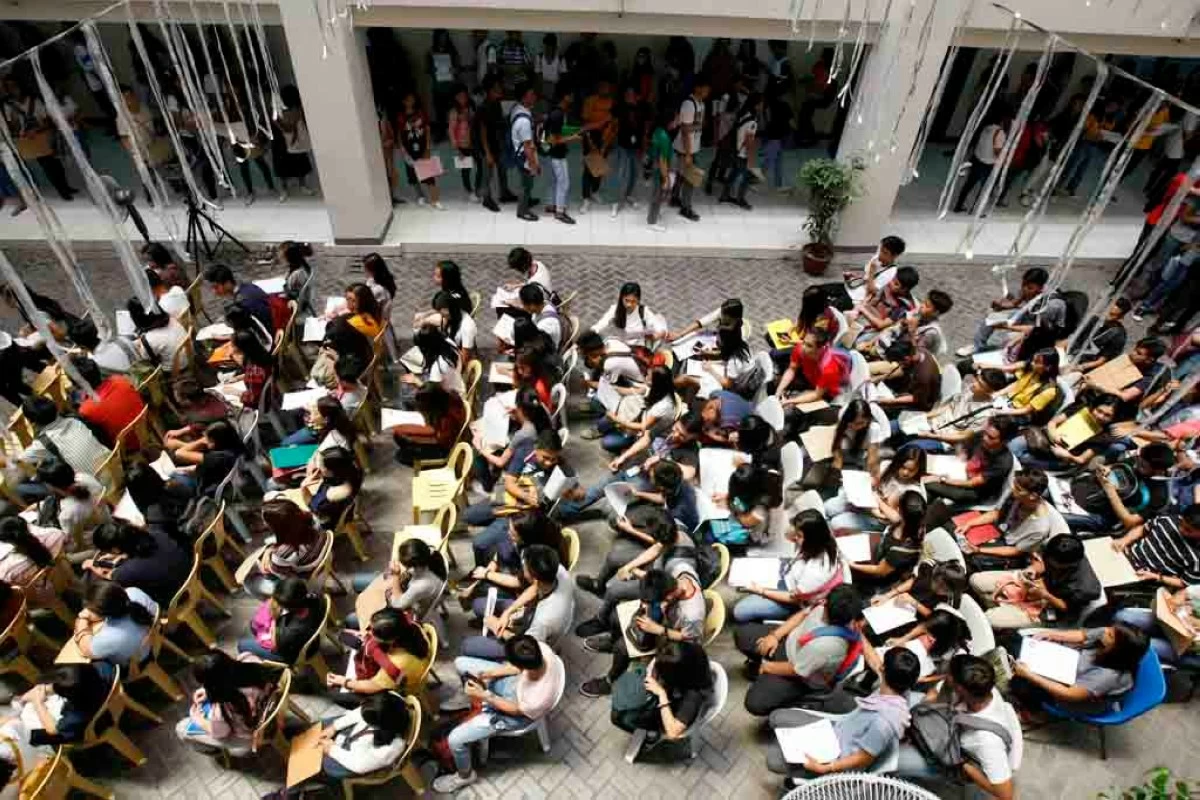
What’s holding the Philippines back? Philippine universities struggle to rise in global rankings, while top Asian institutions continue to climb. (MARK BALMORES / MANILA BULLETIN / FILE)
Philippine universities are facing an uphill battle on the global academic stage, according to the newly released Philippines University Rankings 2025 by the Center for World University Rankings (CWUR), published on Monday, June 2.
Despite the inclusion of two institutions—University of the Philippines Manila and UP Diliman—CWUR noted that the overall outlook for the country’s higher education sector is characterized by stagnation and declining global competitiveness.
“The national picture is a cause for concern amid intensified global competition from well-funded institutions,” CWUR said in a statement.
CWUR pointed out that the Philippines is “struggling to compete against rivals worldwide”—with one university improving from last year and one falling in the rankings.
UP Manila leads nationally but drops in global ranking
CWUR noted that UP Manila remains the top-ranking university in the Philippines; however, its position in the global list dropped 40 spots to 1,677th, compared to last year.
The decline is attributed mainly to drops in employability and research output—two key indicators measured by CWUR.
Meanwhile, UP Diliman showed a modest improvement, climbing 11 places to 1,784th, though this was not enough to shift the narrative of the country’s overall performance.
Philippines lagging in global education race
CWUR President Dr. Nadim Mahassen said the results highlight a troubling reality for the Philippines.
“While the Philippines has two representatives among the world’s top universities, what is concerning is the stagnation of the nation’s academic institutions amid limited financial backing from the government,” Mahassen noted.
“At a time when several countries are placing the development of education and science high on their agenda, the Philippines is struggling to keep pace,” he said. “Without stronger funding and strategic planning, the Philippines risks falling behind in the rapidly evolving global academic landscape,” he added.
Critical concerns in higher education
CWUR pointed out that the Philippines’ struggles with employability, research funding, and faculty development are critical concerns.
With only two universities in the global top 2,000, the country risks being left behind in a rapidly modernizing and highly competitive academic landscape.
Asian universities surge ahead
As global education competition intensifies, countries like China and India are surging ahead due to increased government investment in higher education and research infrastructure.
This year, China overtook the United States as the country with the most universities in the Global 2000, with 346 institutions making the list. This marks a historic shift, driven by China’s sustained investment in academic research and higher education excellence.
In contrast, American universities—while still dominant at the top of the rankings—are beginning to slip due to reduced federal funding and ongoing disputes over academic freedom and free speech. Harvard University remains the world’s number one university for the 14th consecutive year, followed by MIT and Stanford.
The University of Tokyo remains Asia’s top-ranked institution at 13th place globally. Chinese universities such as Tsinghua University (37th) and Peking University (44th) also made significant gains.
Overall, 98 percent of Chinese universities improved their rankings, while 91 percent of Japanese universities declined, largely due to past funding cuts.
Methodology and scope
CWUR publishes the largest academic rankings of global universities. Its methodology is entirely data-driven, relying on outcome-based indicators such as quality of education (25 percent), alumni employability (25 percent), faculty quality (10 percent), and research performance (40 percent).
This year, 21,462 universities were evaluated, with only the top 2,000 making the final list.
Over 74 million data points were analyzed for the 2025 edition, making CWUR’s rankings among the most comprehensive and transparent in the world.
The full Global 2000 rankings are available at https://cwur.org/2025.php


Related Tags

Philippines university rankings 2025 CWUR 2025 UP Manila global ranking UP Diliman 2025 rank Philippine higher education world university rankings 2025 CWUR Asia academic research funding Philippines
ADVERTISEMENT
.most-popular .layout-ratio{ padding-bottom: 79.13%; } @media (min-width: 768px) and (max-width: 1024px) { .widget-title { font-size: 15px !important; } }

{{ articles_filter_1561_widget.title }}

.most-popular .layout-ratio{ padding-bottom: 79.13%; } @media (min-width: 768px) and (max-width: 1024px) { .widget-title { font-size: 15px !important; } }

{{ articles_filter_1562_widget.title }}

.most-popular .layout-ratio{ padding-bottom: 79.13%; } @media (min-width: 768px) and (max-width: 1024px) { .widget-title { font-size: 15px !important; } }

{{ articles_filter_1563_widget.title }}

{{ articles_filter_1564_widget.title }}

.mb-article-details { position: relative; } .mb-article-details .article-body-preview, .mb-article-details .article-body-summary{ font-size: 17px; line-height: 30px; font-family: "Libre Caslon Text", serif; color: #000; } .mb-article-details .article-body-preview iframe , .mb-article-details .article-body-summary iframe{ width: 100%; margin: auto; } .read-more-background { background: linear-gradient(180deg, color(display-p3 1.000 1.000 1.000 / 0) 13.75%, color(display-p3 1.000 1.000 1.000 / 0.8) 30.79%, color(display-p3 1.000 1.000 1.000) 72.5%); position: absolute; height: 200px; width: 100%; bottom: 0; display: flex; justify-content: center; align-items: center; padding: 0; } .read-more-background a{ color: #000; } .read-more-btn { padding: 17px 45px; font-family: Inter; font-weight: 700; font-size: 18px; line-height: 16px; text-align: center; vertical-align: middle; border: 1px solid black; background-color: white; } .hidden { display: none; }
function initializeAllSwipers() { // Get all hidden inputs with cms_article_id document.querySelectorAll('[id^="cms_article_id_"]').forEach(function (input) { const cmsArticleId = input.value; const articleSelector = '#article-' + cmsArticleId + ' .body_images'; const swiperElement = document.querySelector(articleSelector); if (swiperElement && !swiperElement.classList.contains('swiper-initialized')) { new Swiper(articleSelector, { loop: true, pagination: false, navigation: { nextEl: '#article-' + cmsArticleId + ' .swiper-button-next', prevEl: '#article-' + cmsArticleId + ' .swiper-button-prev', }, }); } }); } setTimeout(initializeAllSwipers, 3000); const intersectionObserver = new IntersectionObserver( (entries) => { entries.forEach((entry) => { if (entry.isIntersecting) { const newUrl = entry.target.getAttribute("data-url"); if (newUrl) { history.pushState(null, null, newUrl); let article = entry.target; // Extract metadata const author = article.querySelector('.author-section').textContent.replace('By', '').trim(); const section = article.querySelector('.section-info ').textContent.replace(' ', ' '); const title = article.querySelector('.article-title h1').textContent; // Parse URL for Chartbeat path format const parsedUrl = new URL(newUrl, window.location.origin); const cleanUrl = parsedUrl.host + parsedUrl.pathname; // Update Chartbeat configuration if (typeof window._sf_async_config !== 'undefined') { window._sf_async_config.path = cleanUrl; window._sf_async_config.sections = section; window._sf_async_config.authors = author; } // Track virtual page view with Chartbeat if (typeof pSUPERFLY !== 'undefined' && typeof pSUPERFLY.virtualPage === 'function') { try { pSUPERFLY.virtualPage({ path: cleanUrl, title: title, sections: section, authors: author }); } catch (error) { console.error('ping error', error); } } // Optional: Update document title if (title && title !== document.title) { document.title = title; } } } }); }, { threshold: 0.1 } ); function showArticleBody(button) { const article = button.closest("article"); const summary = article.querySelector(".article-body-summary"); const body = article.querySelector(".article-body-preview"); const readMoreSection = article.querySelector(".read-more-background"); // Hide summary and read-more section summary.style.display = "none"; readMoreSection.style.display = "none"; // Show the full article body body.classList.remove("hidden"); } document.addEventListener("DOMContentLoaded", () => { let loadCount = 0; // Track how many times articles are loaded const offset = [1, 2, 3, 4, 5, 6, 7, 8, 9, 10]; // Offset values const currentUrl = window.location.pathname.substring(1); let isLoading = false; // Prevent multiple calls if (!currentUrl) { console.log("Current URL is invalid."); return; } const sentinel = document.getElementById("load-more-sentinel"); if (!sentinel) { console.log("Sentinel element not found."); return; } function isSentinelVisible() { const rect = sentinel.getBoundingClientRect(); return ( rect.top < window.innerHeight && rect.bottom >= 0 ); } function onScroll() { if (isLoading) return; if (isSentinelVisible()) { if (loadCount >= offset.length) { console.log("Maximum load attempts reached."); window.removeEventListener("scroll", onScroll); return; } isLoading = true; const currentOffset = offset[loadCount]; window.loadMoreItems().then(() => { let article = document.querySelector('#widget_1690 > div:nth-last-of-type(2) article'); intersectionObserver.observe(article) loadCount++; }).catch(error => { console.error("Error loading more items:", error); }).finally(() => { isLoading = false; }); } } window.addEventListener("scroll", onScroll); });

Sign up by email to receive news.