

ADVERTISEMENT

Thousands evacuated in 3 provinces as Canadian wildfires threaten air quality into some US states

Published Jun 2, 2025 09:01 am

FLIN FLON, Manitoba (AP) — More than 25,000 residents in three provinces have been evacuated as dozens of wildfires remained active Sunday and diminished air quality in parts of Canada and the U.S., according to officials.
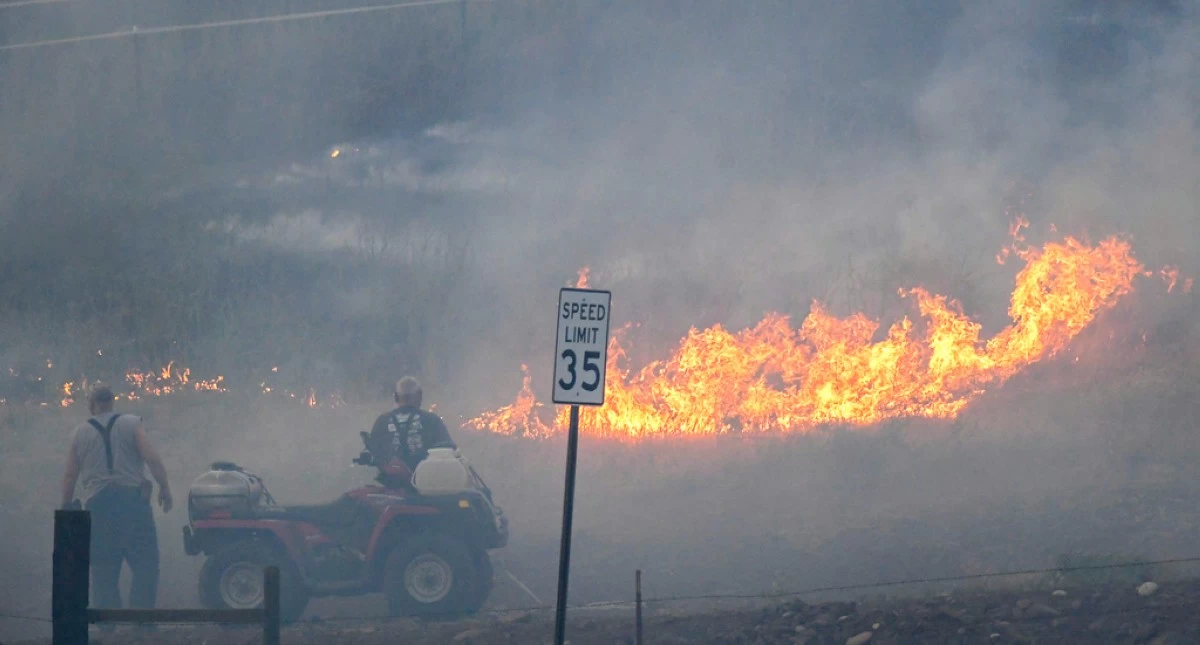
People watch as fire burns along Hatwai Road Saturday, May 31, 2025, in north Lewiston, Idaho. (August Frank/Lewiston Tribune via AP)

Most of the evacuated residents were from Manitoba, which declared a state of emergency last week. About 17,000 people there were evacuated by Saturday along with 1,300 in Alberta. About 8,000 people in Saskatchewan had been relocated as leaders there warned the number could climb.

Smoke was worsening air quality and reducing visibility in Canada and into some U.S. states along the border.

“Air quality and visibility due to wildfire smoke can fluctuate over short distances and can vary considerably from hour to hour,” Saskatchewan’s Public Safety Agency warned Sunday. “As smoke levels increase, health risks increase.”

Saskatchewan Premier Scott Moe said firefighters, emergency crews and aircraft from other provinces and U.S. states, including Alaska, Oregon and Arizona, were being sent to help fight the blazes.

“We are truly grateful, and we stand stronger because of you,” Moe said in a post on social media.

He said ongoing hot, dry weather is allowing some fires to grow and threaten communities, and resources to fight the fires and support the evacuees are stretched thin.

“The next four to seven days are absolutely critical until we can find our way to changing weather patterns, and ultimately a soaking rain throughout the north,” Moe said at a Saturday news conference.

In Manitoba, more than 5,000 of those evacuated are from Flin Flon, located nearly 645 kilometers (400 miles) northwest of the provincial capital of Winnipeg. In northern Manitoba, fire knocked out power to the community of Cranberry Portage, forcing a mandatory evacuation order Saturday for about 600 residents.

The fire menacing Flin Flon began a week ago near Creighton, Saskatchewan, and quickly jumped the boundary into Manitoba. Crews have struggled to contain it. Water bombers have been intermittently grounded due to heavy smoke and a drone incursion.

The U.S. Department of Agriculture’s Forest Service deployed an air tanker to Alberta and said it would send 150 firefighters and equipment to Canada.

In some parts of the U.S., air quality reached “unhealthy” levels Sunday in North Dakota and small swaths of Montana, Minnesota and South Dakota, according to the U.S. Environmental Protection Agency’s AirNow page.

“We should expect at least a couple more rounds of Canadian smoke to come through the U.S. over the next week,” said Bryan Jackson, a meteorologist with the National Weather Service in the U.S.

Separately, a fire in the U.S. border state of Idaho burned at least 100 acres (40 hectares) as of Sunday, prompting road closures and some evacuations, according to the Idaho Department of Lands. The agency said in a news release that at least one structure was burned, but did not provide additional details about the damage.

Strong gusty winds of 15 to 20 mph (24 to 32 kph) and steep terrain were making it difficult for firefighters battling the fire, which ignited Saturday.

Evacuation centers have opened across Manitoba for those fleeing the fires, one as far south as Winkler, 20 kilometers (12 miles) from the U.S. border. Winnipeg opened up public buildings for evacuees as it deals with hotels already crammed with other fire refugees, vacationers, business people and convention-goers.

Manitoba’s Indigenous leaders said Saturday at a news conference that hotel rooms in the cities where evacuees are arriving are full, and they called on the government to direct hotel owners to give evacuees priority.

Assembly of Manitoba Chiefs Grand Chief Kyra Wilson said it was one of the largest evacuations in the province since the 1990s.

“It’s really sad to see our children having to sleep on floors. People are sitting, waiting in hallways, waiting outside, and right now we just need people to come together. People are tired,” Wilson said at a news conference.

Canada’s wildfire season runs from May through September. Its worst-ever wildfire season was in 2023. It choked much of North America with dangerous smoke for months.

Related Tags

WORLDNEWS
ADVERTISEMENT
.most-popular .layout-ratio{ padding-bottom: 79.13%; } @media (min-width: 768px) and (max-width: 1024px) { .widget-title { font-size: 15px !important; } }

{{ articles_filter_1561_widget.title }}

.most-popular .layout-ratio{ padding-bottom: 79.13%; } @media (min-width: 768px) and (max-width: 1024px) { .widget-title { font-size: 15px !important; } }

{{ articles_filter_1562_widget.title }}

.most-popular .layout-ratio{ padding-bottom: 79.13%; } @media (min-width: 768px) and (max-width: 1024px) { .widget-title { font-size: 15px !important; } }

{{ articles_filter_1563_widget.title }}

{{ articles_filter_1564_widget.title }}

.mb-article-details { position: relative; } .mb-article-details .article-body-preview, .mb-article-details .article-body-summary{ font-size: 17px; line-height: 30px; font-family: "Libre Caslon Text", serif; color: #000; } .mb-article-details .article-body-preview iframe , .mb-article-details .article-body-summary iframe{ width: 100%; margin: auto; } .read-more-background { background: linear-gradient(180deg, color(display-p3 1.000 1.000 1.000 / 0) 13.75%, color(display-p3 1.000 1.000 1.000 / 0.8) 30.79%, color(display-p3 1.000 1.000 1.000) 72.5%); position: absolute; height: 200px; width: 100%; bottom: 0; display: flex; justify-content: center; align-items: center; padding: 0; } .read-more-background a{ color: #000; } .read-more-btn { padding: 17px 45px; font-family: Inter; font-weight: 700; font-size: 18px; line-height: 16px; text-align: center; vertical-align: middle; border: 1px solid black; background-color: white; } .hidden { display: none; }
function initializeAllSwipers() { // Get all hidden inputs with cms_article_id document.querySelectorAll('[id^="cms_article_id_"]').forEach(function (input) { const cmsArticleId = input.value; const articleSelector = '#article-' + cmsArticleId + ' .body_images'; const swiperElement = document.querySelector(articleSelector); if (swiperElement && !swiperElement.classList.contains('swiper-initialized')) { new Swiper(articleSelector, { loop: true, pagination: false, navigation: { nextEl: '#article-' + cmsArticleId + ' .swiper-button-next', prevEl: '#article-' + cmsArticleId + ' .swiper-button-prev', }, }); } }); } setTimeout(initializeAllSwipers, 3000); const intersectionObserver = new IntersectionObserver( (entries) => { entries.forEach((entry) => { if (entry.isIntersecting) { const newUrl = entry.target.getAttribute("data-url"); if (newUrl) { history.pushState(null, null, newUrl); let article = entry.target; // Extract metadata const author = article.querySelector('.author-section').textContent.replace('By', '').trim(); const section = article.querySelector('.section-info ').textContent.replace(' ', ' '); const title = article.querySelector('.article-title h1').textContent; // Parse URL for Chartbeat path format const parsedUrl = new URL(newUrl, window.location.origin); const cleanUrl = parsedUrl.host + parsedUrl.pathname; // Update Chartbeat configuration if (typeof window._sf_async_config !== 'undefined') { window._sf_async_config.path = cleanUrl; window._sf_async_config.sections = section; window._sf_async_config.authors = author; } // Track virtual page view with Chartbeat if (typeof pSUPERFLY !== 'undefined' && typeof pSUPERFLY.virtualPage === 'function') { try { pSUPERFLY.virtualPage({ path: cleanUrl, title: title, sections: section, authors: author }); } catch (error) { console.error('ping error', error); } } // Optional: Update document title if (title && title !== document.title) { document.title = title; } } } }); }, { threshold: 0.1 } ); function showArticleBody(button) { const article = button.closest("article"); const summary = article.querySelector(".article-body-summary"); const body = article.querySelector(".article-body-preview"); const readMoreSection = article.querySelector(".read-more-background"); // Hide summary and read-more section summary.style.display = "none"; readMoreSection.style.display = "none"; // Show the full article body body.classList.remove("hidden"); } document.addEventListener("DOMContentLoaded", () => { let loadCount = 0; // Track how many times articles are loaded const offset = [1, 2, 3, 4, 5, 6, 7, 8, 9, 10]; // Offset values const currentUrl = window.location.pathname.substring(1); let isLoading = false; // Prevent multiple calls if (!currentUrl) { console.log("Current URL is invalid."); return; } const sentinel = document.getElementById("load-more-sentinel"); if (!sentinel) { console.log("Sentinel element not found."); return; } function isSentinelVisible() { const rect = sentinel.getBoundingClientRect(); return ( rect.top < window.innerHeight && rect.bottom >= 0 ); } function onScroll() { if (isLoading) return; if (isSentinelVisible()) { if (loadCount >= offset.length) { console.log("Maximum load attempts reached."); window.removeEventListener("scroll", onScroll); return; } isLoading = true; const currentOffset = offset[loadCount]; window.loadMoreItems().then(() => { let article = document.querySelector('#widget_1690 > div:nth-last-of-type(2) article'); intersectionObserver.observe(article) loadCount++; }).catch(error => { console.error("Error loading more items:", error); }).finally(() => { isLoading = false; }); } } window.addEventListener("scroll", onScroll); });

Sign up by email to receive news.