







Most lay people see doctors as clinicians. Almost everyone assumes that if you have “MD” after your name, you see patients and help them get better. This makes for awkward moments during emergencies when a diagnostic radiologist, whose specialty is looking at imaging studies like CT scans, MRIs, and X-rays, or a pathologist, who looks at tissue under the microscope to make a diagnosis, is the only doctor around and they probably haven’t handled patients since medical school. A similar situation may occur with a doctor who is in a specialty focusing on a body part, for instance, an ophthalmologist, and hasn’t kept up with current medical knowledge for the rest of the body. What people really think when they hear the word “doctor” is an internist, pediatrician, or family practitioner who looks at the entire body and treats the most common illnesses seen in patients.
The dying art of medicine
Remembering the legendary Dr. Raymond Alonso
Published Jun 2, 2025 10:43 am


At A Glance
- Dr. Raymond Alonso was a legendary nephrologist and internist who was a larger-than-life character.
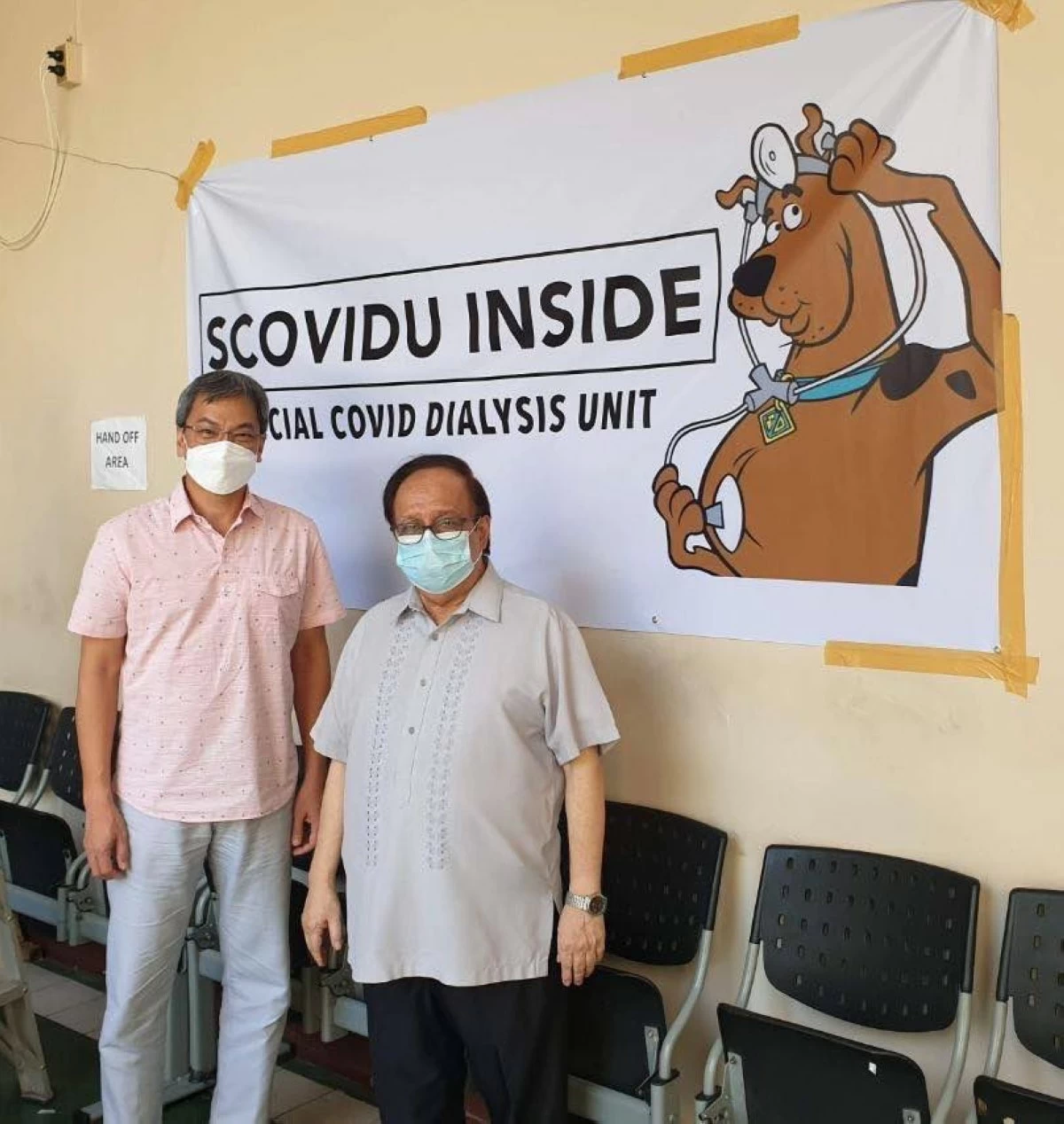
A BRIGHT SENSE OF HUMOR Dr. Alonso and PGH Director Gerardo “Gap” Legaspi at the SCOVIDU unit during the Covid-19 pandemic. (Photo from Dr. Maia Arbatin | Facebook)
Even among internists and pediatricians, however, there are subspecialties. As an infectious diseases subspecialist, I am called to see patients with serious infections and those who are going into sepsis. My wife and my father-in-law are both gastroenterologists and hepatologists. My mother-in-law is a pediatric endocrinologist. The choice to continue practicing as an internist is a personal one, and it usually surprises patients when I say I no longer routinely treat hypertension or asthma. This has more to do with how I choose to keep up with current knowledge in those diseases, since I also have to read up on the latest infectious diseases guidelines. My wife and my in-laws choose to continue seeing patients outside their subspecialty and keep up with much more knowledge than I do, but it does take up a lot of their time.
Unfortunately, this trend in superspecializing, of which I am guilty, is now becoming more the rule than the exception. Concentrating on your subspecialty is much more lucrative from a financial standpoint and is much less work. This means that fewer and fewer specialists are choosing to stay in primary care, and with this, I believe something is lost. Seeing the big picture is an art in itself, and this ability can lead to quicker diagnosis with less expense and better outcomes. One contributor to this lack of interest in clinical medicine is the emphasis that academic institutions place on research. As a research professor at the National Institutes of Health with a cross-appointment at the UP College of Medicine (UPCM), I have a reduced teaching load compared to my purely clinical faculty counterparts. Since the University places more importance on research, potentially brilliant clinicians, such as the new crop of MD-PhD graduates, choose to do less clinical work and more research. I believe that clinical practice and research are both noble goals and are equally important, so I am not so happy with the current state of things, even though I benefit from this arrangement. The art of medicine is literally lifesaving and should not be subordinate to any other endeavor, whatever its impact on the university’s international reputation and prestige. We recently lost one of the most brilliant clinicians at UPCM and the Philippine General Hospital. Dr. Raymond Alonso was a legendary nephrologist and internist who was a larger-than-life character. I remember one of his lectures when I was a medical student, where he threatened to outright flunk any student if they ever presented a medical case to him using the patient’s bed number and not the patient’s name. Dr. Alonso cared deeply about his patients, and he would send co-managing doctors little notes about his observations outside his subspecialty to help them make a diagnosis.
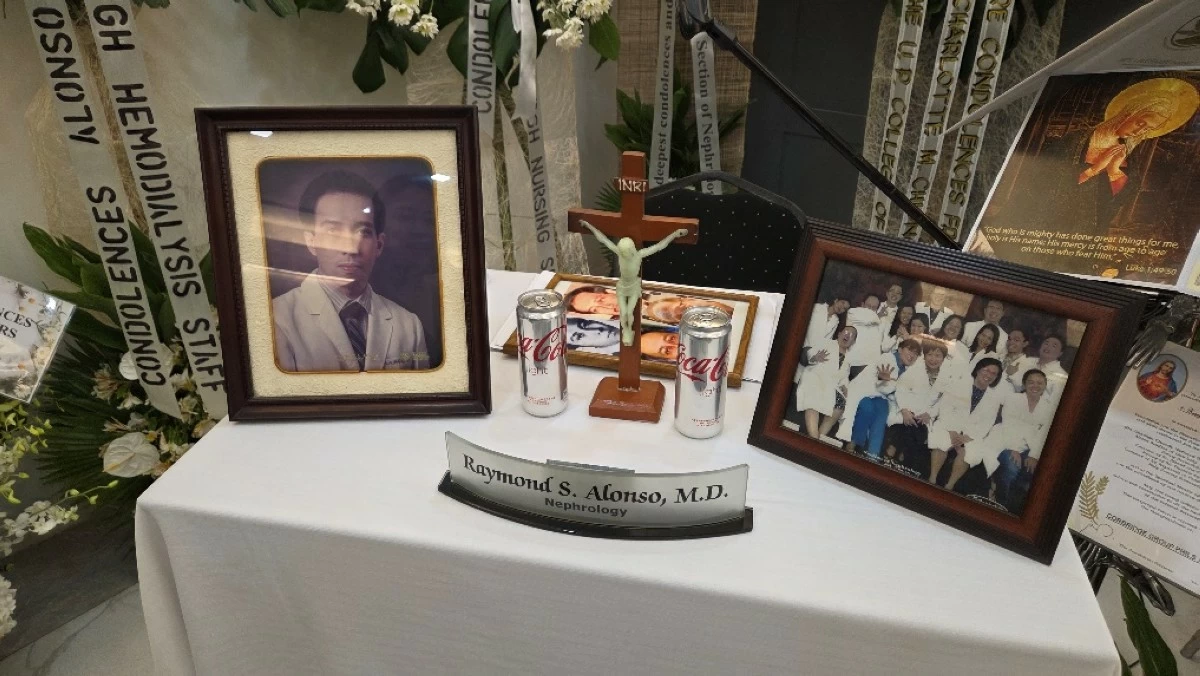
IN LOVING MEMORY Dr. Alonso was known to always drink Coke Light whenever he made hospital rounds.
He also had an irreverent sense of humor that surfaced even during the most trying times. During the Covid-19 pandemic, he set up a dialysis unit for Covid-19 positive patients and called it the Special Covid-19 Dialysis Unit (SCOVIDU) with a big picture of Scooby-doo on the tarpaulin at the unit entrance. Dr. Alonso was also known for his meticulous handwritten notes, which were written in different ballpoint colors in his distinctive style. I heard he was pretty upset about the transition to electronic medical records, and I agree with him since I always enjoyed reading his multicolored notes, sometimes containing just-as-colorful commentary on his thoughts on what was going on with the patient. Dr. Alonso had strong opinions about everything, not just medicine, and it was always an intellectually stimulating exercise to encounter him while doing rounds and engage in friendly banter. He had an outsized impact beyond his field of nephrology, as shown by the outpouring of love and support when news that he had passed came out. A lot of us learned proper medicine at his feet, especially in terms of treating our patients as human beings.
One final quirk about Dr. Alonso was that he always had a can of Diet Coke or, later on, Coke Lite in his hand. As a nephrologist, you would think that all the phosphoric acid and whatever else chemicals are in soft drinks would wreak havoc on his kidneys, but it never seemed to bother him. He had an interesting approach to potentially nephrotoxic interventions when the other subspecialties had to use them. He said that we should take care of our business if it helped the patient get better, and he would take care of the kidneys. One of his favorite lines was, “I can always dialyze it away.” Unfortunately, the sadness we feel at the passing of this consummate clinician is something that will not easily disappear, even if you try to dialyze it. And neither will the lessons, medical or otherwise, that he taught to a generation of physicians and our patients are better for it.