






 Philippines
National
CJ Gesmundo conferred honorary Doctor of Laws degree by University of Cebu School of Law
Philippines
National
CJ Gesmundo conferred honorary Doctor of Laws degree by University of Cebu School of Law
CJ Gesmundo conferred honorary Doctor of Laws degree by University of Cebu School of Law


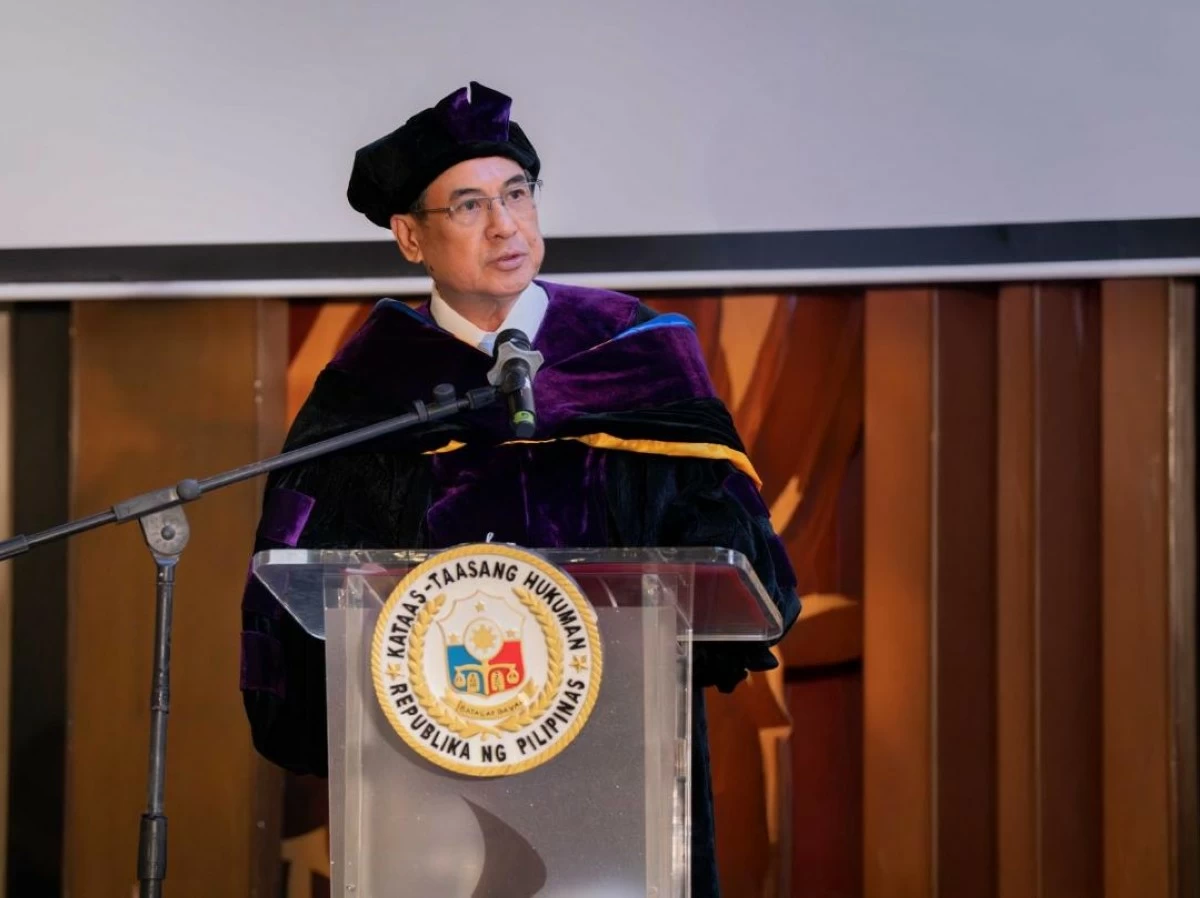
Supreme Court (SC) Chief Justice Alexander G. Gesmundo was conferred an honorary Doctor of Laws degree by the University of Cebu School of Law in Cebu City during the its recent commencement exercises.
The Chief Justice was honored as an “individual of integrity who has distinguished himself in the field of law and justice education, by excelling in various areas, including access to justice administration, leadership, and the delivery of responsive and real-time justice.”
In his graduation address and acceptance speech, the SC’s Office of the Spokesperson said that Gesmundo urged the university’s law graduates “to lead with integrity, innovation, and inclusion as they begin their legal careers.”
Gesmundo said: “Integrity in our profession is not just about following the law -- it is about being accountable to the people we serve. It is about earning the trust of those who turn to us for justice and living up to the ideals we hold as lawyers: honesty, fairness, and the pursuit of truth.”
He pointed out the importance of embracing technology in legal practice, “while cautioning that innovation must be guided by human judgment and conscience.”
“The law may be aided by computers and machines, but it must be guided by human judgment and conscience. That guidance is yours to provide,” he stressed.
His call to new law graduates was linked to the SC’s five-year Strategic Plan for Judicial Innovations (SPJI 2022-2027) which aims to address systemic issues in the judiciary.
He said: “It is not enough for courts to function. They must serve. They must adapt. And they must reach those who need them the most, when they need them. That is the promise of judicial reform—and we need you, our future lawyers, to help make that promise real.”
On the importance of inclusion in the legal system, particularly for the vulnerable and the marginalized, the Chief Justice said that “one way to uphold this value is Unified Legal Aid Service (ULAS), which requires lawyers to render at least 60 hours of pro bono (free of charge) service to indigent clients to ensure meaningful access to justice.”
Reminding the new law graduates, Gesmundo said: “The future of justice is already a matter for you and for your generation to define and defend. The future is yours to shape.”
The University of Cebu School of Law was established in 2002. It ranked fifth among law schools during the 2024 Bar examinations with a passing rate of 74.32 percent.