







Australia, Japan mull intel-sharing pact with PH


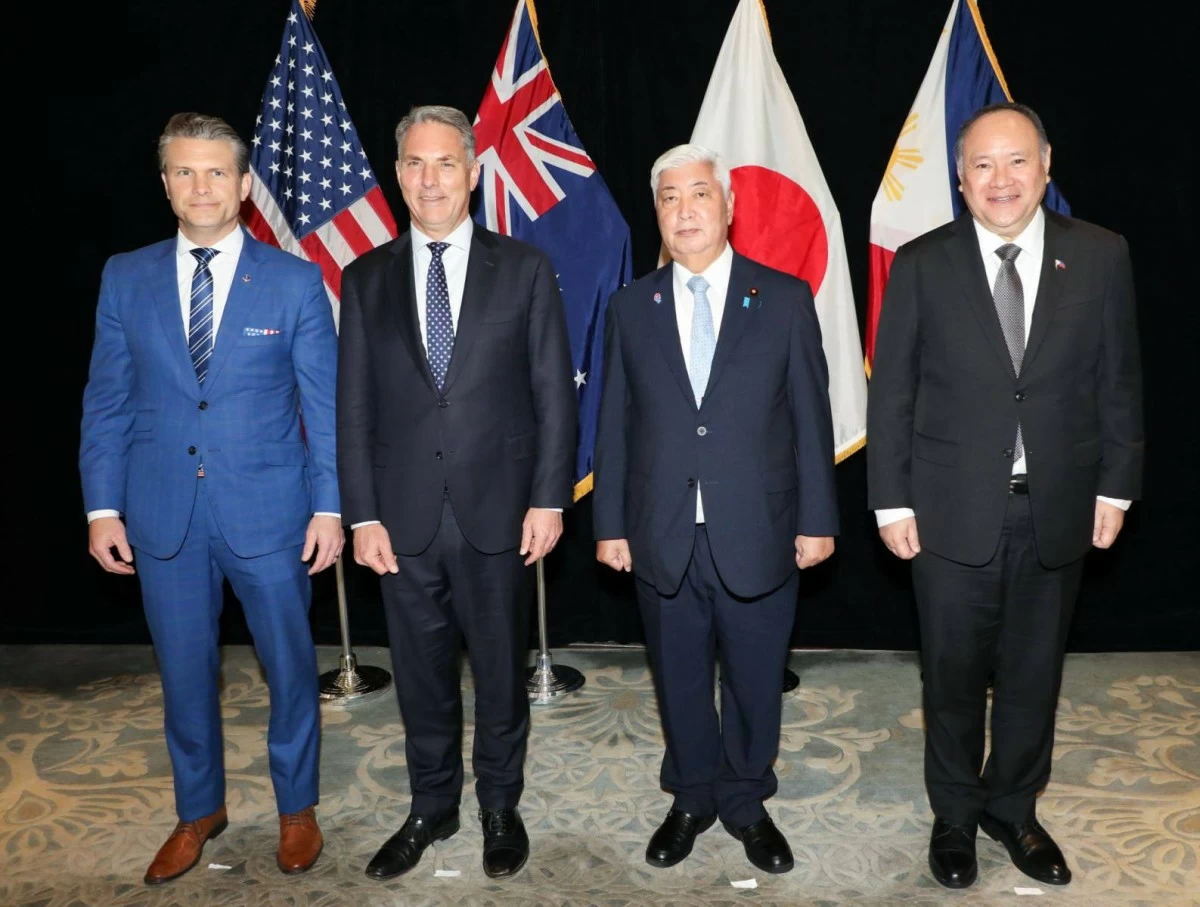
To establish a common operating picture in the South China Sea and Indo-Pacific region, Australia and Japan are considering to develop a military intelligence-sharing agreement with the Philippines.
This came as Department of National Defense (DND) Secretary Gilberto Teodoro Jr. met with Australian Deputy Prime Minister and Minister for Defence Richard Marles, Japanese Minister of Defense Nakatani Gen, and US Defense Secretary Pete Hegseth in Singapore on Saturday, May 31, on the sidelines of the Shangri-La Dialogue.
The defense chiefs recognized the importance of information-sharing among their countries, noting that Manila has a similar pact with the United States called the bilateral General Security of Military Information Agreement (GSOMIA).
“Australia and Japan intend to undertake bilateral discussions for similar agreements with the Philippines. They affirmed that these efforts will facilitate greater information-sharing and analysis, including at a combined hub for such purpose,” a joint statement from the three leaders read.
In November 2024, Teodoro and then US defense secretary Lloyd Austin III signed the GSOMIA, which concerns security measures for the protection of classified military information.
The accord enables the real-time exchange of classified intelligence and information amid mounting security concerns shared by the two countries over China’s growing presence in the South China Sea, including claims to areas within the Philippines’ 200-nautical mile exclusive economic zone (EEZ).
During their meeting, the four defense chiefs expressed “continued serious concern” about China’s “destabilizing actions” in the East China Sea (ECS) and the South China Sea (SCS) and any unilateral attempts to change the status quo by force or coercion.
They also reiterated their serious concern about dangerous conduct by China in the SCS against the Philippines and other countries, and stressed the importance of the peaceful resolution of disputes.
Aside from that, Teodoro, Marles, Gen, and Hegseth also reaffirmed the importance of enhancing security cooperation by aligning their efforts, including infrastructure investments, to support Philippine defense priorities and a free and open Indo-Pacific.
They noted that the installation of Japan-made air surveillance radar systems at Wallace Air Station in La Union, the United States’ continued development and integration of air domain sensors at Basa Air Base Command and Control Fusion Center in Pampanga, and Australia’s efforts to support the growing defense infrastructure in the Philippines have collectively helped improve the Armed Forces of the Philippines’ air domain awareness in the SCS.
They also reached a consensus on jointly investing in the Philippines’ cybersecurity and resilience for defense, including through existing defense exercises and training. The defense leaders also recognized the importance of cooperation to counter threats to national security posed by malicious actors.
Teodoro and his Australian, Japanese, and American counterparts also reaffirmed the significance of their operational collaboration and synchronization in the Indo-Pacific region, including in the ECS and SCS, for greater deterrence, peace, and security.
“Building on the success of past multilateral maritime cooperative activities, they committed to sustaining their participation and expanding the scope and frequency of such engagements with additional like-minded partners,” the statement read.
“They also reached [a] consensus to explore planning joint intelligence, surveillance and reconnaissance activities to improve interoperability and coordination on effective maritime and air domain awareness in the ECS, the SCS, and surrounding waters,” it added.
Engagement with US Congress
Meanwhile, Teodoro also engaged with representatives of the US Congress as he reinforced the critical role of sustained and visible United States leadership in ensuring global stability.
In his discussions with Representatives John Moolenaar, Chair of the House Select Committee on the Chinese Communist Party (CCP); Brian Mast, Chair of the House Foreign Affairs Subcommittee; Gus Bilirakis, Member of the House Select Committee on the CCP; and Greg Stanton, Member of the House Foreign Affairs Committee, both sides exchanged views on the evolving Indo-Pacific security landscape and other global challenges.
“One of the greatest comforts to the Philippines is the bipartisan support we’ve received from the U.S. Congress. We really cannot overstate how grateful we are,” Teodoro said. “American leadership is indispensable, and having this kind of leadership creates reassurance that there will be a balance of power.”
Teodoro told Rep. Moolenaar that the US’ sustained and visible leadership across global institutions and alliances already presents a big support to the Philippines.
“This is a time where engagement must be massive and led by the United States, not only in this region, not only in Europe, but also in international organizations,” Secretary Teodoro stated. “The United States remains the greatest shield against developments we do not want to see unfold in our lives.”