






 Philippines
National
PH Navy: No Chinese navy, coast guard patrols in Bajo de Masinloc
Philippines
National
PH Navy: No Chinese navy, coast guard patrols in Bajo de Masinloc
PH Navy: No Chinese navy, coast guard patrols in Bajo de Masinloc


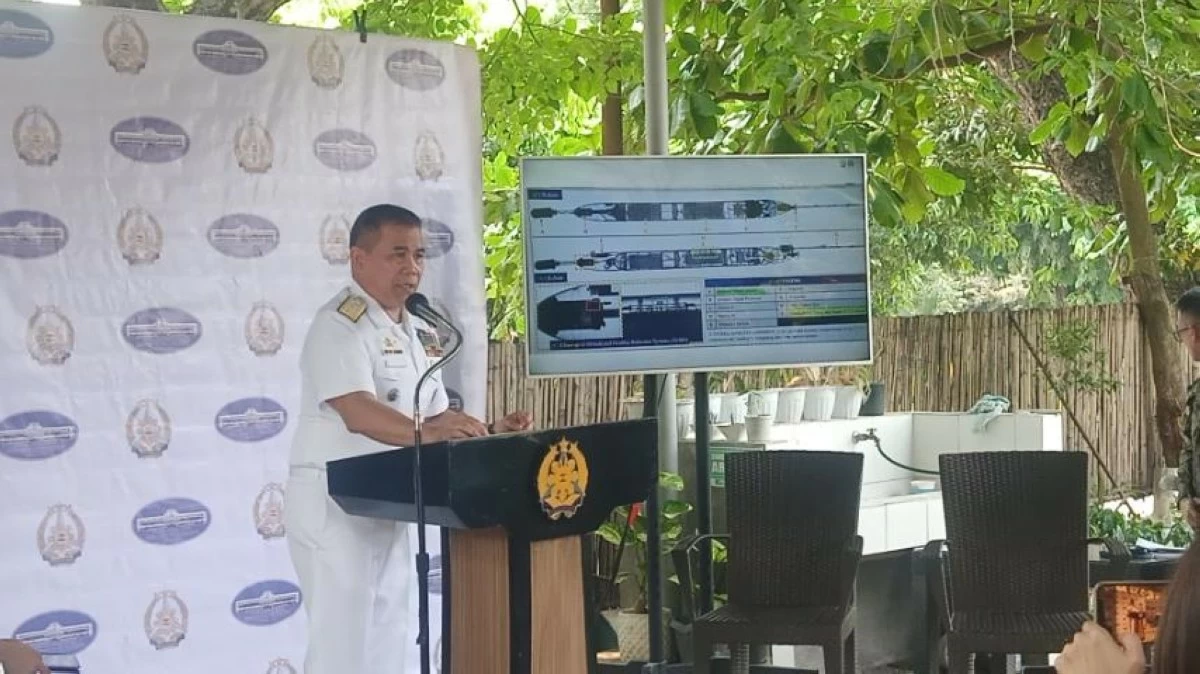
The Philippine Navy (PN) denied the reported maritime patrol of the Chinese navy and coast guard in Bajo de Masinloc (Scarborough or Panatag Shoal), West Philippine Sea (WPS) on Saturday, May 31.
Rear Admiral Roy Vincent Trinidad, PN spokesperson for WPS, said monitoring by the Armed Forces of the Philippines (AFP) and PN in the WPS, including the sovereign waters around Bajo de Masinloc, and the country’s entire 200-nautical mile exclusive economic zone (EEZ) indicated “no such activity” from the People’s Liberation Army’s Southern Theater Command (PLA-STC) or the China Coast Guard (CCG).
However, the PN confirmed the presence of 2 CCG ships and six maritime militia vessels in Bajo de Masinloc. There were also four fishing boats from Vietnam and three fishing vessels from Taiwan in the said shoal.
“News like these are all part of information-shaping operations by the Chinese Communist Party to address any internal dissent or shape the international discourse to their favor,” Trinidad said.
According to Chinese media Global Times, the PLA-STC organized troop forces for a “combat readiness patrol” while the CCG conducted law enforcement patrols in the territorial waters and airspace around Huangyan Dao, the name it calls Bajo de Masinloc, and nearby areas.
It said the command has continued to strengthen patrol and alert operations around Huangyan Dao since May.
Despite this, the PN said that it would continue to uphold the country’s territorial integrity and sovereignty in the WPS.
“The Philippine Navy and the Armed Forces of the Philippines will continue to secure and protect our maritime domain as we remain committed to regional peace and stability,” Trinidad said.
Beijing claims Bajo de Masinloc, which is located 124 nautical miles (229 kilometers) from the coast of Zambales, within the EEZ of the Philippines.
In contrast, the shoal lies 472 nautical miles (872 kilometers) from the nearest Chinese landmass, which is Hainan province.
Last May 5, the AFP said that a Chinese navy frigate with bow number “BN 573” tailed and dangerously crossed the bow of PN patrol ship BRP Emilio Jacinto (PS35) which resulted to a near-collision encounter approximately 11.8 nautical miles southeast of Bajo de Masinloc.
Security think tank SeaLight said earlier this month that China has doubled the deployment of its coast guard and maritime militia vessels in Bajo de Masinloc in the past 12 months.
The National Security Council (NSC) had said that any attempt by China to construct an artificial island in Bajo de Masinloc – like what it did to Fiery Cross (Kagitingan) Reef, Mischief (Panganiban) Reef, and Subi (Zamora) Reef – would be tantamount to “crossing a red line” for the Philippine government.
Aside from China and the Philippines, other countries with overlapping claims in the South China Sea include Brunei, Indonesia, Malaysia, Taiwan, and Vietnam.
The Association of Southeast Asian Nations (ASEAN) and China adopted the Declaration on the Conduct of Parties in the South China Sea in 2002 which requires claimant countries to maintain the status quo in the strategic waterway.
President Marcos Jr. called on ASEAN leaders during the 46th ASEAN Summit in Kuala Lumpur, Malaysia last Monday to expedite the adoption of a legally binding Code of Conduct (COC) in the South China Sea, of which, negotiations have been ongoing since the early ‘90s.
Meanwhile, Trinidad said the AFP would be ready to implement the COC once it is finalized.
“The AFP is an armed force for peace. Nevertheless, we are prepared to perform our mandate regardless of any challenge, especially in the maritime domain,” he said. “Whatever comes out of the Code of Conduct, the AFP is prepared to implement.”