ADVERTISEMENT

PH calls for rules-based maritime order amid global challenges

Published May 31, 2025 02:05 pm
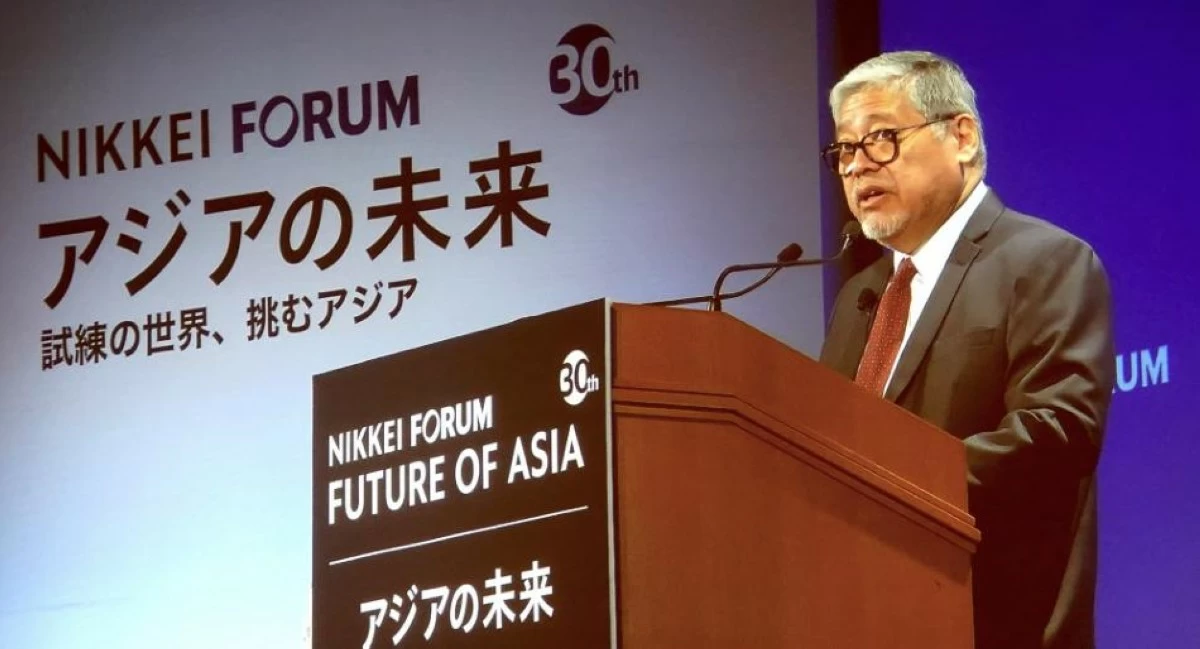
Department of Foreign Affairs (DFA) Secretary Enrique Manalo underscored the primacy of rules-based order, global connectedness, and international order in the progress, development, and security in the Indo-Pacific region.

DFA Secretary Enrique Manalo delivers his remarks at the 30th Nikkei Forum held in Tokyo, Japan on May 30, 2025. (DFA Photo)

Speaking during the “Nikkei Forum 30th Future of Asia” on Friday, May 30, the Foreign Affairs chief urged Indo-Pacific countries, including Japan, to address the current challenges in the region with methods anchored in international order and the rule of law, including the 1982 United Nations Convention on the Law of the Sea (UNCLOS).

“The unprecedented level of connectedness of the global community - where events in one region can cast significant ripples in the rest of the world make cooperation necessary and vital. The rules-based order that nations have painstakingly built over decades provides the essential framework for predictability, equity, and stability of our relationships especially during this age of transformation,” he said during the forum held in Tokyo, Japan.

“It assures that all sovereign states, regardless of size, clout or strength, are able to exercise their agency in pursuit of their legitimate interests. It is key to preserving trust and solidarity amidst risks of fragmentation,” he added.

Central, however, to a rules-based order for a maritime region like Asia and maritime nations like the Philippines and Japan is the UNCLOS as it provides a comprehensive legal framework that governs maritime activities.

Manalo addressed the Philippines’ competing maritime issue with China during the forum, reiterating how the 2016 Arbitral Award on the South China Sea “definitively settled the status of historic rights and maritime entitlements in the South China Sea.”

He stressed that despite China’s activities within Manila’s maritime zones, the Philippines continue to persevere “in addressing these disputes through diplomacy and dialogue, in accordance with UNCLOS and the Arbitral Award of 2016.”

It is within this context, the DFA secretary said, that the Philippines has been working together with the Association of Southeast Asian Nations (ASEAN) and China for a “substantive and effective” Code of Conduct (COC) in the South China Sea that must be consistent with UNCLOS and other international laws.

With the formal negotiations for the COC now in its sixth year, Manalo said that the “urgency for ASEAN and China to deliver a Code anchored on international law cannot be overemphasized.”

“The Philippines does not accept, and indeed rejects, narratives that depict the South China Sea merely as a theater for major power rivalry. Such narratives disregard an essential truth: that all states in this region possess the inherent right and agency to determine their own destinies and secure their own futures, free from coercion or external imposition,” he said.

“It is not just the great powers that will shape the future; all nations co-create it. This is the spirit of the UN Charter. The future of the Asia-Pacific or Indo-Pacific is being shaped not by one or two powers alone, but by the collective will and actions of all nations within it. More than at any point in history, we see many states actively shaping our regional and global agenda,” the DFA chief added.

PH-Japan relations

With the Philippines and Japan set to celebrate the 70th year of their diplomatic ties in 2026, Manalo noted the “golden age” of the relations.


“But I believe there is much more to be unveiled in terms of the fruition of the full potential of Philippine-Japan ties. The Philippines and Japan are bound by a shared faith in democracy, the rule of law, respect for human rights, and a commitment to a free and open regional economy. Our engagements are broad, multifaceted, rich in substance and promise,” he said, adding that Japan is currently the Philippines’ leading trade partner, top investor, and development partner.
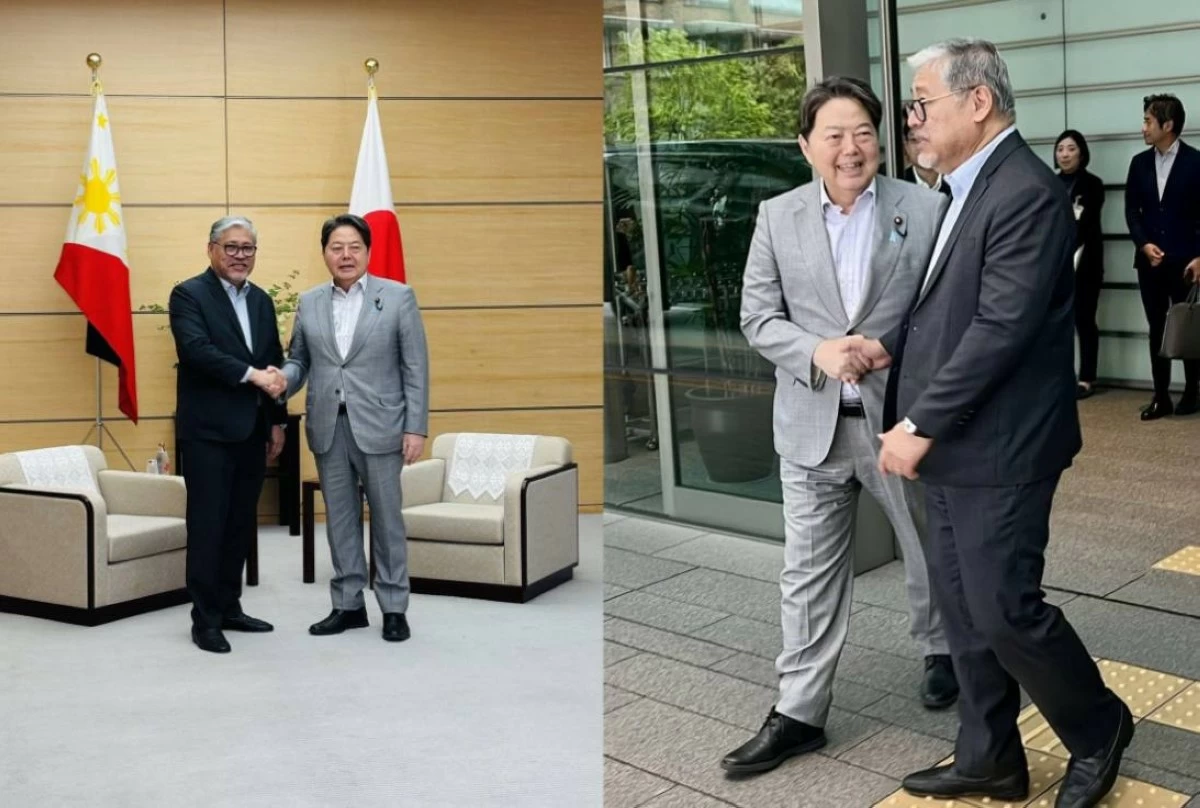
DFA Secretary Enrique Manalo with Chief Cabinet Secretary Yoshimasa Hayashi at the Prime Minister's Office in Tokyo on May 29, 2025. (DFA Photo)


The two countries have even signed and agreed on the Reciprocal Access Agreement (RAA), which will allow Filipino soldiers to undergo combat training with their counterparts in Japan, as well as the trilateral cooperation between the Philippines, United States, and Japan.

“This arc of the journey of our friendship, from historical adversity to profound partnership, illustrates the spirit of kapwa (neighbor) at work. We have come to a deep sense of affinity, and we fully know our shared stake in a future where peace in our region assures the flourishing of nations and peoples,” Manalo said.

In his visit to Tokyo, the DFA chief held a bilateral meeting with Japanese Foreign Minister Takeshi Iwaya and paid a courtesy call to Chief Cabinet Secretary Yoshimasa Hayashi.

His visit builds upon the momentum of Japanese Prime Minister Shigeru Ishiba’s official visit to the Philippines in April 2025, where he and President Marcos hailed the two countries’ ties ahead of the 70th anniversary of the normalization of their diplomatic relations and the 15th anniversary of their Strategic Partnership in 2026.

Related Tags

Enrique Manalo South China Sea UNCLOS Indo-Pacific PH-Japan ties
ADVERTISEMENT
.most-popular .layout-ratio{ padding-bottom: 79.13%; } @media (min-width: 768px) and (max-width: 1024px) { .widget-title { font-size: 15px !important; } }

{{ articles_filter_1561_widget.title }}

.most-popular .layout-ratio{ padding-bottom: 79.13%; } @media (min-width: 768px) and (max-width: 1024px) { .widget-title { font-size: 15px !important; } }

{{ articles_filter_1562_widget.title }}

.most-popular .layout-ratio{ padding-bottom: 79.13%; } @media (min-width: 768px) and (max-width: 1024px) { .widget-title { font-size: 15px !important; } }

{{ articles_filter_1563_widget.title }}

{{ articles_filter_1564_widget.title }}

.mb-article-details { position: relative; } .mb-article-details .article-body-preview, .mb-article-details .article-body-summary{ font-size: 17px; line-height: 30px; font-family: "Libre Caslon Text", serif; color: #000; } .mb-article-details .article-body-preview iframe , .mb-article-details .article-body-summary iframe{ width: 100%; margin: auto; } .read-more-background { background: linear-gradient(180deg, color(display-p3 1.000 1.000 1.000 / 0) 13.75%, color(display-p3 1.000 1.000 1.000 / 0.8) 30.79%, color(display-p3 1.000 1.000 1.000) 72.5%); position: absolute; height: 200px; width: 100%; bottom: 0; display: flex; justify-content: center; align-items: center; padding: 0; } .read-more-background a{ color: #000; } .read-more-btn { padding: 17px 45px; font-family: Inter; font-weight: 700; font-size: 18px; line-height: 16px; text-align: center; vertical-align: middle; border: 1px solid black; background-color: white; } .hidden { display: none; }
function initializeAllSwipers() { // Get all hidden inputs with cms_article_id document.querySelectorAll('[id^="cms_article_id_"]').forEach(function (input) { const cmsArticleId = input.value; const articleSelector = '#article-' + cmsArticleId + ' .body_images'; const swiperElement = document.querySelector(articleSelector); if (swiperElement && !swiperElement.classList.contains('swiper-initialized')) { new Swiper(articleSelector, { loop: true, pagination: false, navigation: { nextEl: '#article-' + cmsArticleId + ' .swiper-button-next', prevEl: '#article-' + cmsArticleId + ' .swiper-button-prev', }, }); } }); } setTimeout(initializeAllSwipers, 3000); const intersectionObserver = new IntersectionObserver( (entries) => { entries.forEach((entry) => { if (entry.isIntersecting) { const newUrl = entry.target.getAttribute("data-url"); if (newUrl) { history.pushState(null, null, newUrl); let article = entry.target; // Extract metadata const author = article.querySelector('.author-section').textContent.replace('By', '').trim(); const section = article.querySelector('.section-info ').textContent.replace(' ', ' '); const title = article.querySelector('.article-title h1').textContent; // Parse URL for Chartbeat path format const parsedUrl = new URL(newUrl, window.location.origin); const cleanUrl = parsedUrl.host + parsedUrl.pathname; // Update Chartbeat configuration if (typeof window._sf_async_config !== 'undefined') { window._sf_async_config.path = cleanUrl; window._sf_async_config.sections = section; window._sf_async_config.authors = author; } // Track virtual page view with Chartbeat if (typeof pSUPERFLY !== 'undefined' && typeof pSUPERFLY.virtualPage === 'function') { try { pSUPERFLY.virtualPage({ path: cleanUrl, title: title, sections: section, authors: author }); } catch (error) { console.error('ping error', error); } } // Optional: Update document title if (title && title !== document.title) { document.title = title; } } } }); }, { threshold: 0.1 } ); function showArticleBody(button) { const article = button.closest("article"); const summary = article.querySelector(".article-body-summary"); const body = article.querySelector(".article-body-preview"); const readMoreSection = article.querySelector(".read-more-background"); // Hide summary and read-more section summary.style.display = "none"; readMoreSection.style.display = "none"; // Show the full article body body.classList.remove("hidden"); } document.addEventListener("DOMContentLoaded", () => { let loadCount = 0; // Track how many times articles are loaded const offset = [1, 2, 3, 4, 5, 6, 7, 8, 9, 10]; // Offset values const currentUrl = window.location.pathname.substring(1); let isLoading = false; // Prevent multiple calls if (!currentUrl) { console.log("Current URL is invalid."); return; } const sentinel = document.getElementById("load-more-sentinel"); if (!sentinel) { console.log("Sentinel element not found."); return; } function isSentinelVisible() { const rect = sentinel.getBoundingClientRect(); return ( rect.top < window.innerHeight && rect.bottom >= 0 ); } function onScroll() { if (isLoading) return; if (isSentinelVisible()) { if (loadCount >= offset.length) { console.log("Maximum load attempts reached."); window.removeEventListener("scroll", onScroll); return; } isLoading = true; const currentOffset = offset[loadCount]; window.loadMoreItems().then(() => { let article = document.querySelector('#widget_1690 > div:nth-last-of-type(2) article'); intersectionObserver.observe(article) loadCount++; }).catch(error => { console.error("Error loading more items:", error); }).finally(() => { isLoading = false; }); } } window.addEventListener("scroll", onScroll); });

Sign up by email to receive news.