






Ballet is a dance, an art, that requires a lot of discipline. Its beauty lies in the dichotomy of grace and strength, fluidity and power, elegance and endurance. Prima ballerina Lisa Macuja-Elizalde can attest to that. Through the years, she has danced both here and abroad, gaining applause and accolades along the way, making her a key figure in the ballet scene. But she knows that dancers must put in the work to achieve success.
Manila Bulletin
 Lifestyle
Luminaries and Life
Lisa Macuja-Elizalde reflects on ballet, legacy, and Ballet Manila's new 'Swan Lake'
Lifestyle
Luminaries and Life
Lisa Macuja-Elizalde reflects on ballet, legacy, and Ballet Manila's new 'Swan Lake'
Lifestyle
Luminaries and Life
Lisa Macuja-Elizalde reflects on ballet, legacy, and Ballet Manila's new 'Swan Lake'
Lisa Macuja-Elizalde reflects on ballet, legacy, and Ballet Manila's new 'Swan Lake'
By John Legaspi
Published May 31, 2025 10:22 am



“A ballet dancer needs to have the discipline to take ballet class every day, train, and strengthen their body because their body is their instrument,” she says. “It starts with warming up properly, a good and healthy diet, and enough sleep to take care of your instrument.”

Ballet Manila's artistic director Lisa Macuja-Elizalde
Since founding Ballet Manila in 1995, Lisa has made it her mission to make ballet accessible to wider audiences. That continues today as the company celebrates its 30th year with a roster of spectacular performances, one of which is their take on the beloved classical ballet “Swan Lake.”
For the season, Ballet Manila welcomes artists from the San Francisco Ballet—Katherine Barkman, Esteban Hernández, and Nathaniel Remez—to be part of its “Swan Lake”
production.In a conversation with Manila Bulletin Lifestyle, Lisa looks back on her journey as a ballerina, the legacy of Pyotr Ilyich Tchaikovsky’s romantic ballet, and how dance forges collaboration and connection.
First of all, what inspired you to be a ballerina?
Way back when I was a ballet student, I was fortunate to meet Japanese prima ballerina Yoko Morishita. She performed in “Swan Lake” with Fernando Bohones at the Cultural Center of the Philippines. I was 14 years old at that time. When I met her, I saw a very Asian-looking ballerina dancing the role of Swan Queen. Before that, I had the impression that the Swan Queen, which is the epitome of a classical ballerina role, was reserved for tall Europeans and Americans. But when I saw Yoko dance the Swan Queen, I thought that if an Asian ballerina can dance the role of the Swan Queen, then I have a chance.
That dream eventually came true. You performed the Swan Queen role many times on stage. For you, what does it take for a ballerina to perform Odette and Odile effectively?
First of all, you have to have a mastery of technique. Odette and Odile demand impeccable technique and unusual stamina. You have to have the stamina to dance in all acts, especially since the Black Swan part can be very demanding. There is also the artistic soul—I call it artistic schizophrenia. One has to be very soft, lyrical, vulnerable, and innocent as the White Swan. As the Black Swan, they have to be the complete opposite—strong, seductive, evil, and manipulative.
Also, the role is not danced as a princess or a girl like Giselle. We are talking about a woman who has transformed into a swan. That extra artistry—being able to portray a woman trapped in a swan—is a fantasy-creature kind of approach to a role. That makes the ballet really interesting and difficult.
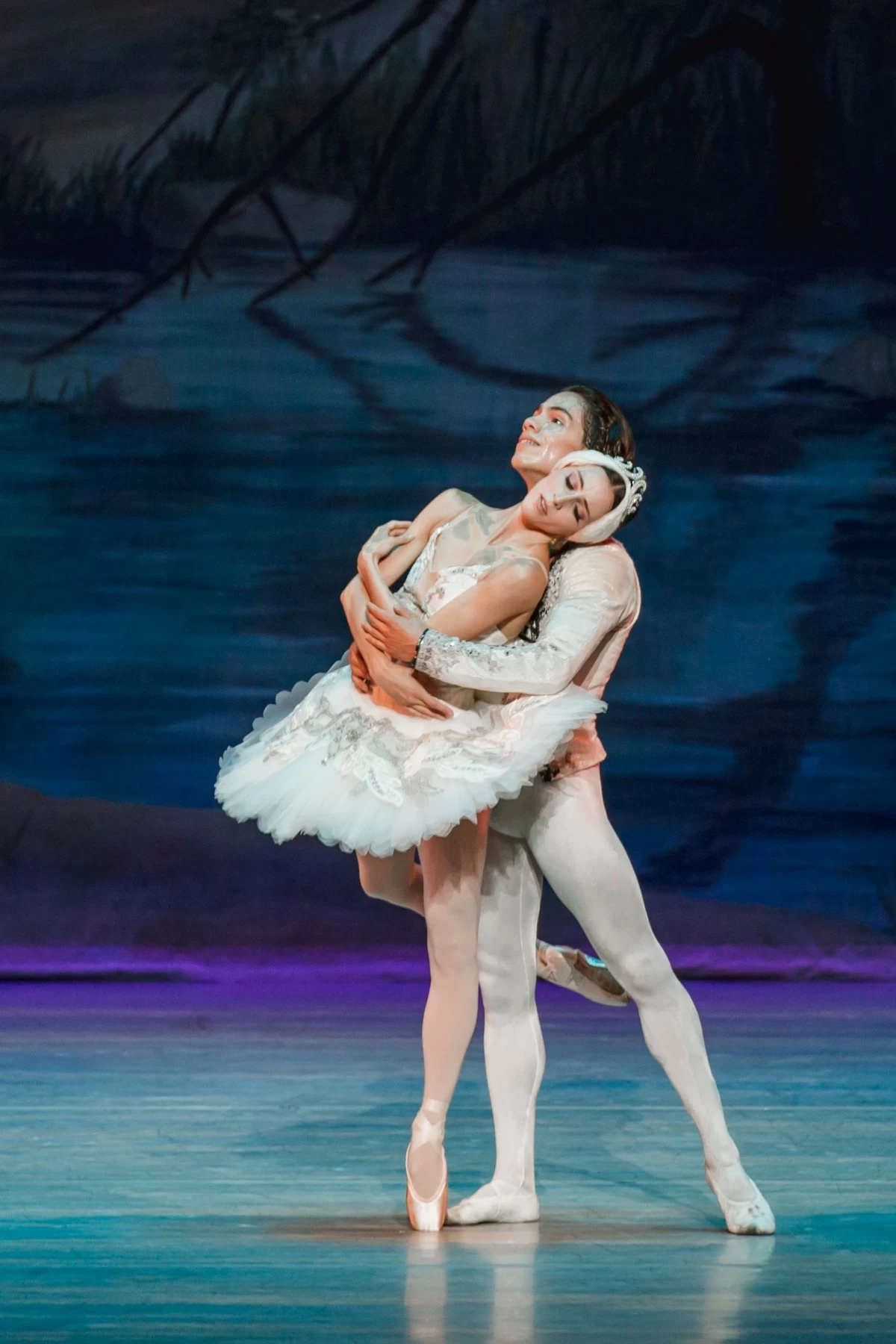
San Francisco Ballet soloist Katherine Barkman and principal dancer Esteban Hernandez (photo courtesy of Kristen Laing)

San Francisco Ballet soloist Katherine Barkman and principal dancer Esteban Hernandez (photo courtesy of Tony Abello)
What makes this new production of ‘Swan Lake’ different from Ballet Manila’s past productions?
It is different because I reworked the Act 1 and Act 3 dances. I re-choreographed a lot of it. Some choreography from our old version I kept. I also changed the ending a little bit.
We have new sets, since our old sets were destroyed in a fire in 2019. We also have many new dancers in the various roles. We did lose some dancers during the pandemic. This is a new corps de ballet. We also have our guest artists from San Francisco. It is a very special production—unique in the sense that this production has never been performed like this before.
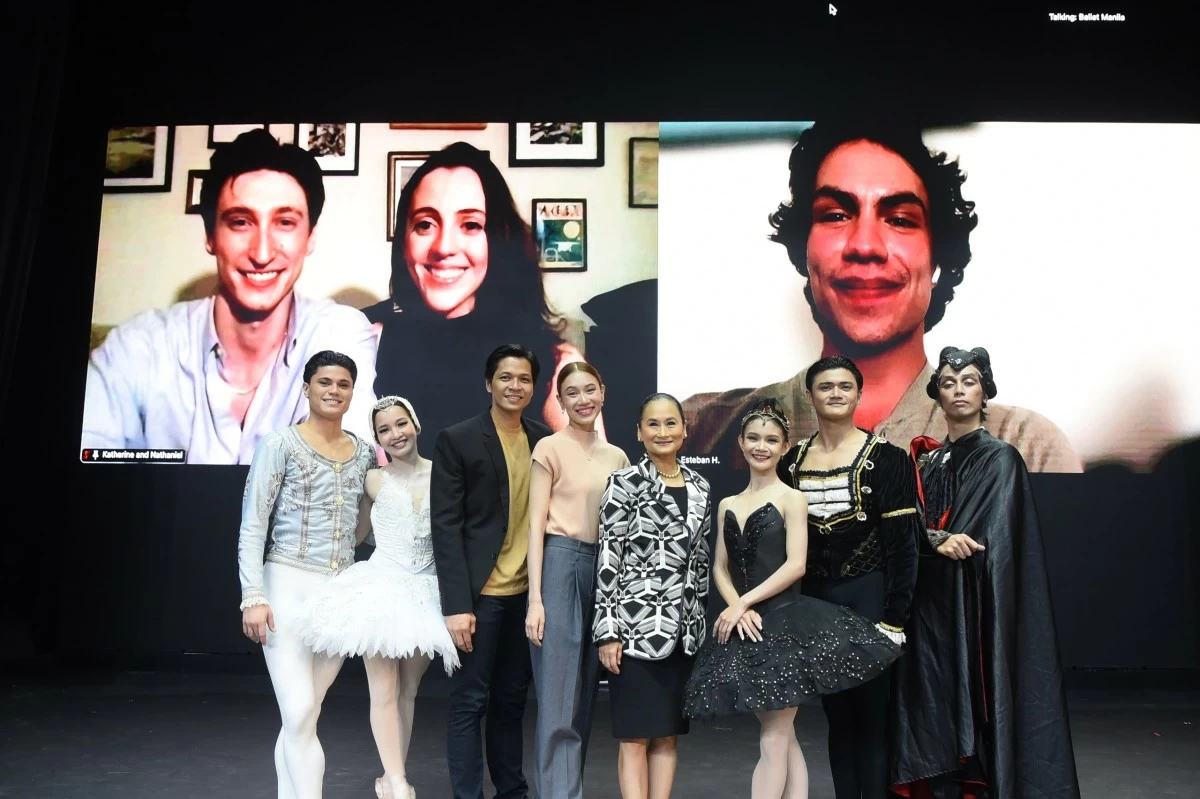
(First row) Ballet Manila company soloist Noah Esplana, principal dancers Jessica Pearl Dames, Mark Sumaylo, and Abigail Lynn Oliveiro, CEO and artistic director Lisa Macuja-Elizalde, principal dancers Shaira May Comeros and Joshua Enciso, and soloist John Ralph Balagot,
(Second row via Zoom) San Francisco Ballet company artist Nathaniel Remez, first soloist Katherine Barkman, and principal dancer Esteban Hernandez
What’s your favorite thing about ‘Swan Lake’?
“Swan Lake” is a ballet that truly has it all—romance, seduction, and manipulation. It’s a quintessential company ballet, designed to showcase the strength and unity of the entire troupe. The demands placed on both the corps de ballet and the soloists elevate the performance beyond individual talent, highlighting the company’s collective artistry. When you watch “Swan Lake,” you’re not just seeing one dancer shine—you’re witnessing the whole company come alive together.
Apart from “Swan Lake,” Ballet Manila is also offering "Don Quixote" in August as part of its Pearl Anniversary celebration. For updates, visit @balletmanila on Instagram.