






Previously dubbed as the “poster boy of tax reform” for spearheading the Philippines’ most significant fiscal overhaul in decades, Karl Kendrick Chua is now championing another kind of transformation—this time at the intersection of data, artificial intelligence (AI), and innovation.
Manila Bulletin
 Business
The Stock Market
From tax reform to tech reform: Karl Chua's data-driven mission at Ayala
Business
The Stock Market
From tax reform to tech reform: Karl Chua's data-driven mission at Ayala
Business
The Stock Market
From tax reform to tech reform: Karl Chua's data-driven mission at Ayala
From tax reform to tech reform: Karl Chua's data-driven mission at Ayala
Published May 31, 2025 08:56 am


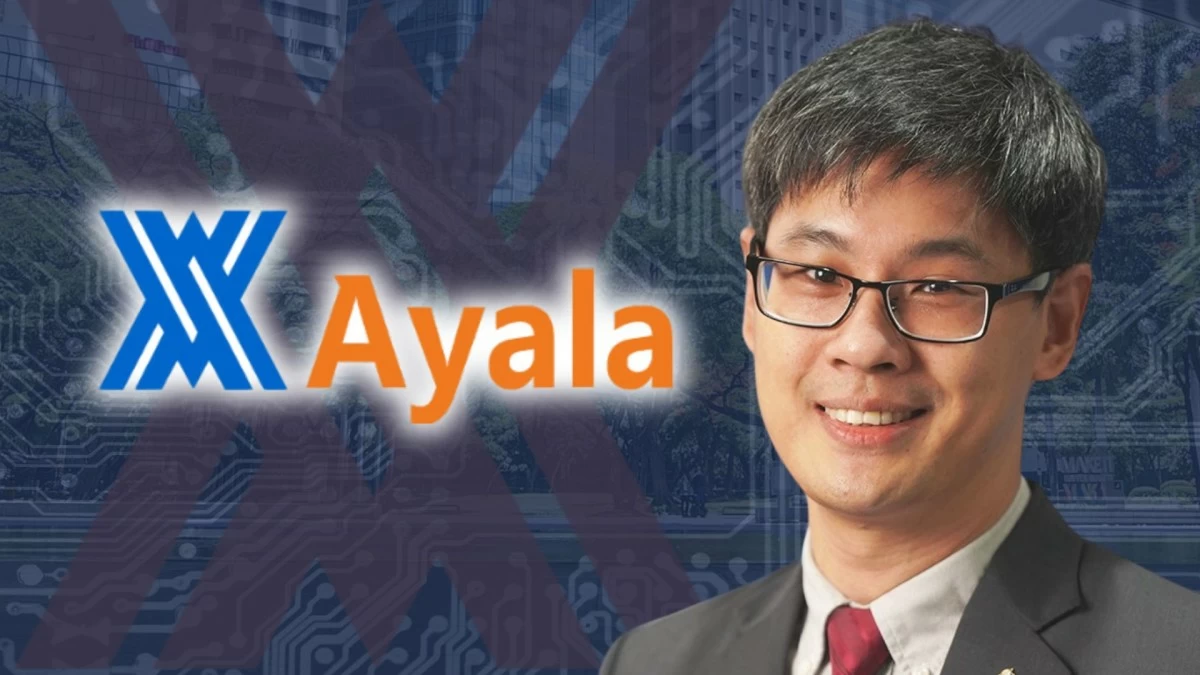
As a former Department of Finance (DOF) undersecretary—and later the country’s chief economist as the National Economic and Development Authority (NEDA) Secretary during one of its most trying moments, the Covid-19 pandemic—Chua earned national acclaim for architecting a series of tax reform measures and market liberalization reforms that continue to bolster the Philippines’ fiscal and economic health today. Now, in his new role as managing director and group head for data science and AI at Ayala Corp., Chua is harnessing the power of data and technology to serve Filipino consumers more effectively through one of the country’s most influential business groups.
From public service to private-sector impact
For his role in pushing for tax reforms that we enjoy to this day, Chua became synonymous with smart governance and data-driven policy. Today, his impact is channeled through a different arena—the digital corridors of Ayala, the Philippines’ oldest and most diversified conglomerate, which spans banking (Bank of the Philippine Islands), telecommunications (Globe Telecom), fintech (GCash), real estate (Ayala Land), healthcare (AC Health), energy (ACEN), logistics (AC Logistics), transport (ACMobility), and more.
In an interview with Manila Bulletin, Chua explained his new mission succinctly: “Bong Consing, who hired me, wanted me to help the Ayala Group become a data- and AI-driven organization,” referring to Ayala President and Chief Executive Officer (CEO) Cezar Consing.
To do this, Chua expanded Ayala Analytics—a team focused on creating the tech infrastructure, governance framework, and cultural shift required to embed data and AI into every corner of the business. “AI is a people play, not just a tech play. The tech is actually the easy part,” he noted. “Before we can become an AI-driven organization, we have to become a digitally transformed organization. And before that, we have to improve our business process.”
His team, while small at around 10 members plus several interns, works with over 200 active analytics professionals across the Ayala ecosystem. Together, they drive AI strategy across Ayala’s many business units—from developing a group-wide AI strategy to route optimization in logistics, customer traffic and personalization in malls and healthcare, and drone-powered monitoring and prediction in renewable energy (RE).
How does this help the planet?
In a poignant moment during a commencement address at the University of the Philippines’ (UP) National Graduate School of Engineering last year, Chua shared a question posed by his first-born son, Keid Ashby (now nine years old), after visiting his office: “Daddy, what do you do in Ayala?” Chua told him he worked on data science and AI. But then came the follow-up: “How does that exactly benefit the planet?”
Chua admitted the question stumped him. “I struggled to articulate an answer. Perhaps that is what a Miss Universe candidate feels during the ‘question and answer’ portion,” he said. Yet, the question cuts to the core of what drives his current work.
Defend, extend, upend
Ayala’s AI strategy is organized into three progressive layers:
- Defend: Establish the digital foundations—cybersecurity, quality data, governance protocols—necessary to deploy AI responsibly;
- Extend: Enhance current business processes using AI tools. One example: improving the productivity of meetings by using generative AI like Microsoft Copilot to summarize discussions and identify action points; and
- Upend: Create entirely new products or services driven by AI. GCash’s GScore, for instance, is an AI-generated credit scoring system that helps expand access to credit while maintaining low default rates.
Chua emphasized that while not all Ayala business units are ready to “upend,” all of them can at least “extend” their capabilities through AI. “Everyone has to embrace it. If the transition from manual to computer and then to the internet was difficult, this one is more difficult—but it has to be done,” he said.
Is AI a friend or foe?
Asked whether AI is a friend or a foe, Chua did not hesitate: “I think it is a tool that many people can use to help themselves improve, and in the process, help improve the company, and in the process, offer better products or services to the customers.”
But he also acknowledged the fears. “If the internet as a tool made some people very scared, AI is much bigger in scope,” he warned.
To address these concerns, Chua is spearheading a comprehensive reskilling and retooling effort within Ayala. His team produces a weekly AI digest, conducts technical workshops, and manages executive courses to ensure everyone—from junior staff to senior leaders—understands how AI works and how it can be ethically and effectively integrated into daily operations.
“The job may be replaced,” Chua said candidly, “but our objective is to make sure the person doing the job has a different skill set—an AI skill set—so that he or she can do something better.”
Making AI work for the people
Chua’s vision goes beyond corporate performance. He sees AI as a tool to address long-standing inequalities in Filipino society.
In his UP speech, Chua underscored how the Covid-19 pandemic worsened disparities in education, healthcare, and income. “We cannot create a prosperous society if there is huge inequality,” he said. “While we cannot control outcome inequality, we can give every Filipino an equal opportunity to succeed.”
He offered tangible AI-driven solutions:
- An app like Singapore’s LifeSG that streamlines citizen-government interactions;
- AI-assisted route planning to make public transport more efficient;
- Drones and sensors to help farmers increase yields and get fairer prices; and
- Mapping cell tower coverage to ensure educational connectivity in underserved barangays.
Chua also posed Keid Ashby’s powerful question to the graduates—and to anyone working in tech: “How will your work exactly benefit the planet?”
Smart cities, sustainability, and ethics
At Ayala, Chua is also helping the group’s move toward smart, sustainable cities. “Connectivity of people and information—basically roads, transport and ICT [information and communications technology]—is not great today. A smart city will integrate them better,” he said. With partners like Ayala Land, he envisions communities powered by solar energy, populated by electric vehicles (EVs), and driven by citizen data—all optimized through AI.
But for Chua, innovation must be tempered by responsibility. “We now have to upgrade from just thinking about data privacy and governance into AI governance,” he explained.
Ayala is working with global partners such as the National University of Singapore (NUS) and international regulatory bodies to refine its AI ethics and safeguard systems. “Doing AI is not magic. It requires solid foundations,” Chua emphasized. “If organizations are unable to do AI, chances are their foundations are not ready.”
Educating and empowering the next generation
Chua is particularly proud of Ayala’s partnership with UP’s pioneering AI program. “There are many data science courses, but there’s only one AI program—and that is in the UP College of Engineering,” he said.
Ayala supports this through internships, scholarships, and faculty research collaborations, offering real-world exposure to students while tapping into fresh talent for national development. “We also commission nation-building projects that don’t benefit Ayala directly, but benefit the country broadly,” he added.
From reform to revolution
Despite having moved into corporate life, Chua remains guided by public purpose. “Our purpose is something bigger—how do we become better in what we do and what we offer to our customers through better use of data?”
He closed his UP address with a call for courage and integrity, quoting Theodore Roosevelt’s famed “Man in the Arena” speech. “The credit belongs to the man who is actually in the arena… who strives valiantly… who errs… but who does actually strive to do the deeds.”
In Chua’s case, the arena has changed—from the halls of Congress to the boardroom, from tax codes to algorithms—but his fight remains the same: building a more inclusive, innovative, and intelligent future for the Filipino people.
From shaping public policy to driving digital progress, the Ayala executive’s work reflects a rare blend of visionary leadership, technical expertise, and nation-building ethos.


