






 Business
Trade & Industry
Employers group opposes mandatory WFH during EDSA 'rebuild'
Business
Trade & Industry
Employers group opposes mandatory WFH during EDSA 'rebuild'
Employers group opposes mandatory WFH during EDSA 'rebuild'


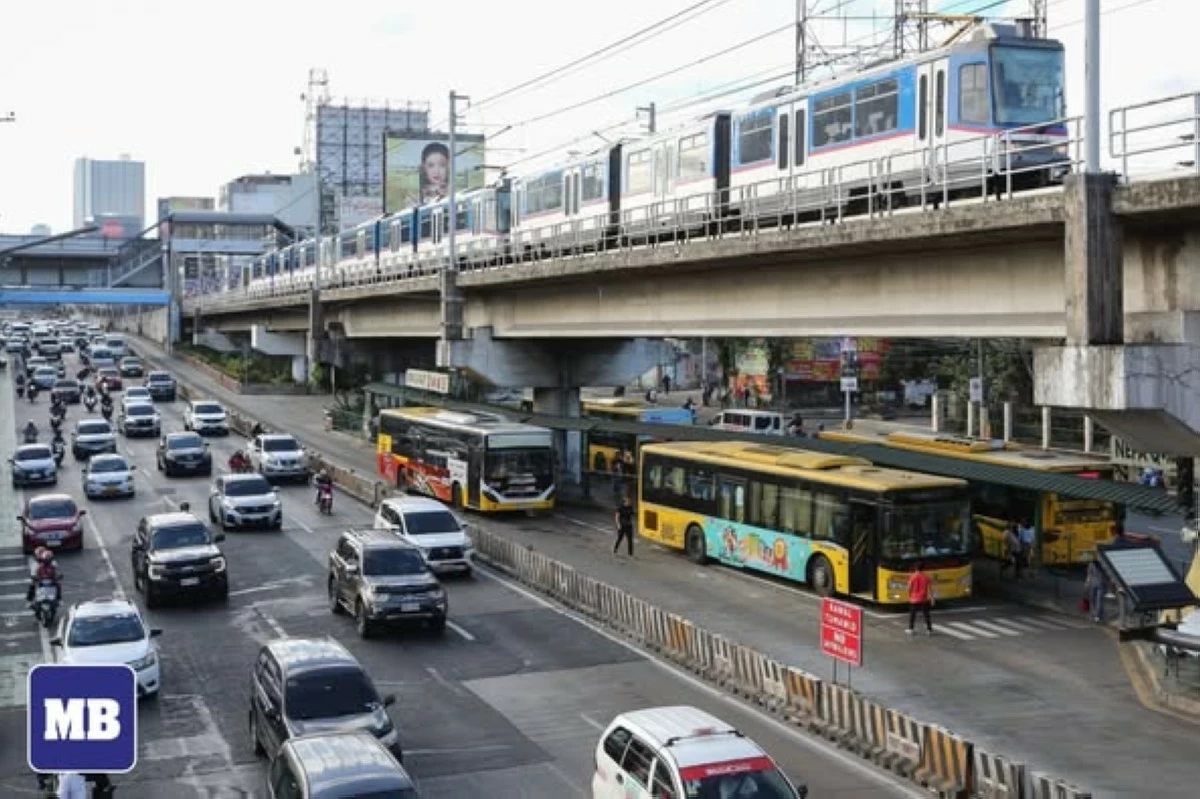
The country’s largest group of employers is urging the government to allow companies to implement their own work-from-home schemes, rather than imposing an industry-wide policy, during the upcoming rehabilitation work on EDSA.
With the preparatory works on the EDSA rebuild set to begin next month, the Employers Confederation of the Philippines (ECOP) said the government must be swift in its response to the expected gridlock along Metro Manila’s busiest highway.
ECOP President Sergio Ortiz-Luis Jr. said the business group is agreeable to a work-from-home setup to ease the daily burden of employees from commuting, which will likely be affected by the heavy traffic.
Ortiz-Luis said a hybrid work scheme will make it easier for employees to perform their duties, similar to what happened during the Covid-19 pandemic when workers were forced to stay in their homes as a measure to curb the spread of the virus.
However, he said employers are hoping that the government won’t “get carried away” in proposing policies that would make it mandatory for all companies, even if it may not apply to their specific office setup.
“Okay lang yan pero dapat yan walang formulang fits-all sa mga kumpanya,” said Ortiz-Luis.
(It’s okay as long as there’s no one-size-fits-all formula covering all companies.)
“Huwag sanang ma-e-excite masyado rin naman yung mga policymaker, mga legislator na maglagay ng regulasyon. Pabayaan natin yung mga kumpanya to determine what is good for them,” he added.
(We hope policymakers and legislators don’t become too excited about issuing regulations. Let the companies determine what’s good for them.)
The ECOP president stated that mandatory implementation could cause widespread operational disruptions, potentially upending businesses.
While the work-from-home scheme is in play, Ortiz-Luis said the EDSA rebuild project will nonetheless affect companies’ efficiency and costs “to some extent”.
He explained that the impact “should not be very bad” as most establishments strive to do their best to adjust to the rebuilding project which will take between one year and a half and two years.
As the first major rebuild of Metro Manila’s main thoroughfare since 1980, more than 437,000 vehicles that traverse the highway every day will be affected.
The Department of Transportation (DOTr) earlier projected that the entire project will have a total cost of approximately ₱8.7 billion.
One of the major interventions that the government will implement to help ease the traffic congestion is the odd-even scheme.
Under the policy, vehicles with license plates ending in odd numbers—one, three, five, seven, and nine—are prohibited in EDSA on Mondays, Wednesdays, and Fridays.
Those with license plates ending in even numbers—zero, two, four, six, and eight—are not allowed on EDSA on Tuesdays, Thursdays, and Saturdays.
The scheme will not be enforced on Sundays.
Ortiz-Luis said that while this may initially ease congestion along EDSA, it may eventually “backfire” by pushing the public to purchase another vehicle or motorcycle.
He said the influx of new wheels on the road would lead to an even greater congestion, further worsening the commuting situation for the public.