ADVERTISEMENT

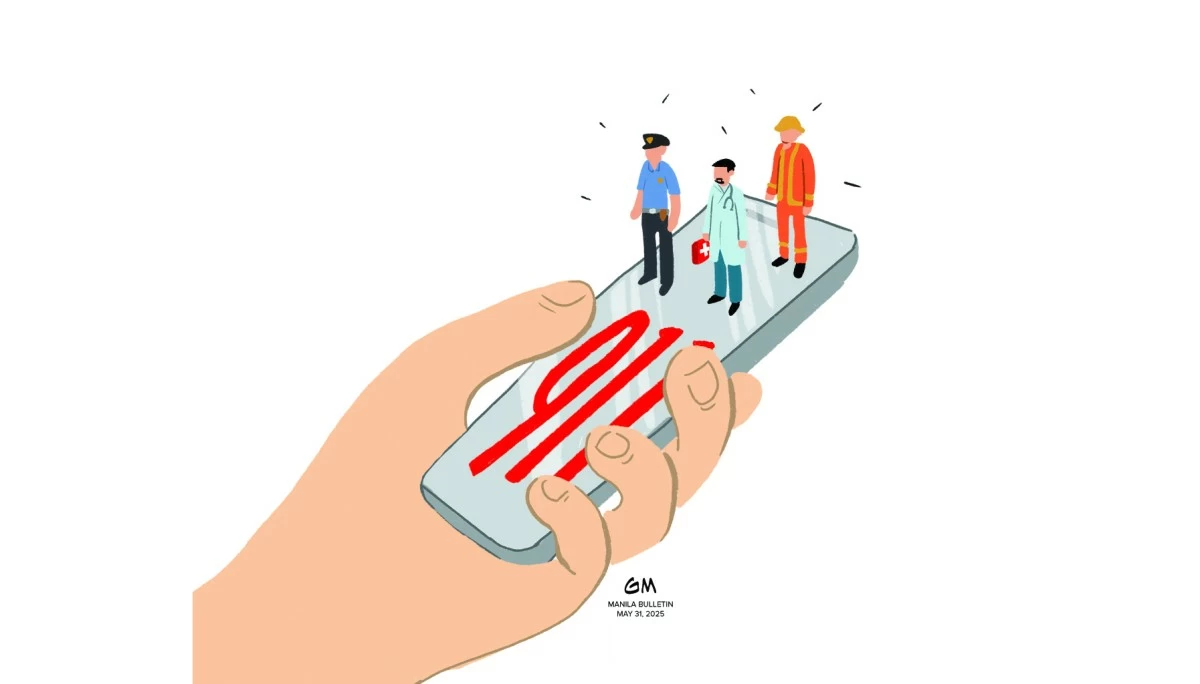
A Unified 911 System that citizens can rely on

Published May 31, 2025 12:05 am  |  Updated May 30, 2025 06:07 pm
In emergencies, seconds can mean the difference between life and death. In solving crime, fast reaction time can lead to the arrest of perpetrators, therefore contributing to crime prevention.
For many nations, a single, unified emergency hotline offers a lifeline that citizens can rely on.
Beginning July 2025, Metro Manila and three other key regions — Bangsamoro Autonomous Region in Muslim Mindanao (BARMM), Ilocos Region, and Central Visayas — will launch the much-anticipated Unified 911 Emergency System. This initiative by the Department of the Interior and Local Government (DILG), under Secretary Jonvic Remulla, represents a bold step toward a centralized, technology-powered emergency response mechanism aimed at saving lives and ensuring faster, more coordinated action during crises.
The core purpose of the Unified 911 System is clear: to provide a single, reliable emergency hotline that integrates responses for crimes, disasters, fires, and other emergencies. For years, we have relied on multiple hotlines (like 117 for the police), which fragmented emergency response and often delayed action. With this new system, all emergency calls will be channeled through one platform, simplifying the process for citizens and enhancing the efficiency of frontline responders like the Philippine National Police (PNP) and Bureau of Fire Protection (BFP).
The idea for a nationwide emergency hotline was institutionalized by Executive Order No. 56, s. 2018 and its implementation has gained significant traction under the Marcos administration. This system brings cutting-edge tools — such as real-time video streaming, geolocation, and integrated data platforms — to the hands of call-takers and dispatchers. The inclusion of features like body-worn camera feeds, CCTV integration, and IoT data capabilities — enhances the effectiveness of the system.
A pressing issue the Unified 911 System directly addresses is the rampant problem of prank calls. Secretary Remulla noted that up to 60 percent of emergency calls are pranks—a dangerous misuse of resources. The new system incorporates caller identification and geolocation tracking, making it easier to pinpoint and penalize pranksters. These deterrents, combined with public education, are expected to reduce fake calls significantly and preserve resources for real emergencies.
The technical workings of the system follow a streamlined structure – calls to 911 are routed to the E911 National Office, which then delegates the task to the appropriate agency—crimes to the PNP, fires to the BFP, and other emergencies to relevant responders.
Agency-specific command centers like the PNP’s 117 will remain operational, serving as hubs for specialized interventions. With 24/7 staffing, upgraded infrastructure, and rapid dispatch capabilities, response times have already improved drastically. Data showed that response time has greatly improved due to the new system.
Beyond immediate responses, the system contributes significantly to crime prevention and disaster preparedness. Quick dispatches and real-time intelligence help authorities solve cases faster and sometimes even prevent crimes in progress. In disaster management, the 911 system is boosted by broader government efforts to promote “Build Back Better” strategies, integrate scientific tools, and strengthen early warning systems.
The unified system is more than a technological upgrade. It is a 10-year national investment in resilience and public safety. It is designed to be insulated from political transitions, ensuring stability and continuity.
As the Unified 911 System expands nationwide, it has the potential to revolutionize how the country responds to crises. Its success depends not only on technology but also on sustained inter-agency cooperation and public trust. If executed effectively, this initiative could very well be a defining legacy in the nation’s journey toward a safer, more responsive society.
ADVERTISEMENT
.most-popular .layout-ratio{ padding-bottom: 79.13%; } @media (min-width: 768px) and (max-width: 1024px) { .widget-title { font-size: 15px !important; } }

{{ articles_filter_1561_widget.title }}

.most-popular .layout-ratio{ padding-bottom: 79.13%; } @media (min-width: 768px) and (max-width: 1024px) { .widget-title { font-size: 15px !important; } }

{{ articles_filter_1562_widget.title }}

.most-popular .layout-ratio{ padding-bottom: 79.13%; } @media (min-width: 768px) and (max-width: 1024px) { .widget-title { font-size: 15px !important; } }

{{ articles_filter_1563_widget.title }}

{{ articles_filter_1564_widget.title }}

.mb-article-details { position: relative; } .mb-article-details .article-body-preview, .mb-article-details .article-body-summary{ font-size: 17px; line-height: 30px; font-family: "Libre Caslon Text", serif; color: #000; } .mb-article-details .article-body-preview iframe , .mb-article-details .article-body-summary iframe{ width: 100%; margin: auto; } .read-more-background { background: linear-gradient(180deg, color(display-p3 1.000 1.000 1.000 / 0) 13.75%, color(display-p3 1.000 1.000 1.000 / 0.8) 30.79%, color(display-p3 1.000 1.000 1.000) 72.5%); position: absolute; height: 200px; width: 100%; bottom: 0; display: flex; justify-content: center; align-items: center; padding: 0; } .read-more-background a{ color: #000; } .read-more-btn { padding: 17px 45px; font-family: Inter; font-weight: 700; font-size: 18px; line-height: 16px; text-align: center; vertical-align: middle; border: 1px solid black; background-color: white; } .hidden { display: none; }
function initializeAllSwipers() { // Get all hidden inputs with cms_article_id document.querySelectorAll('[id^="cms_article_id_"]').forEach(function (input) { const cmsArticleId = input.value; const articleSelector = '#article-' + cmsArticleId + ' .body_images'; const swiperElement = document.querySelector(articleSelector); if (swiperElement && !swiperElement.classList.contains('swiper-initialized')) { new Swiper(articleSelector, { loop: true, pagination: false, navigation: { nextEl: '#article-' + cmsArticleId + ' .swiper-button-next', prevEl: '#article-' + cmsArticleId + ' .swiper-button-prev', }, }); } }); } setTimeout(initializeAllSwipers, 3000); const intersectionObserver = new IntersectionObserver( (entries) => { entries.forEach((entry) => { if (entry.isIntersecting) { const newUrl = entry.target.getAttribute("data-url"); if (newUrl) { history.pushState(null, null, newUrl); let article = entry.target; // Extract metadata const author = article.querySelector('.author-section').textContent.replace('By', '').trim(); const section = article.querySelector('.section-info ').textContent.replace(' ', ' '); const title = article.querySelector('.article-title h1').textContent; // Parse URL for Chartbeat path format const parsedUrl = new URL(newUrl, window.location.origin); const cleanUrl = parsedUrl.host + parsedUrl.pathname; // Update Chartbeat configuration if (typeof window._sf_async_config !== 'undefined') { window._sf_async_config.path = cleanUrl; window._sf_async_config.sections = section; window._sf_async_config.authors = author; } // Track virtual page view with Chartbeat if (typeof pSUPERFLY !== 'undefined' && typeof pSUPERFLY.virtualPage === 'function') { try { pSUPERFLY.virtualPage({ path: cleanUrl, title: title, sections: section, authors: author }); } catch (error) { console.error('ping error', error); } } // Optional: Update document title if (title && title !== document.title) { document.title = title; } } } }); }, { threshold: 0.1 } ); function showArticleBody(button) { const article = button.closest("article"); const summary = article.querySelector(".article-body-summary"); const body = article.querySelector(".article-body-preview"); const readMoreSection = article.querySelector(".read-more-background"); // Hide summary and read-more section summary.style.display = "none"; readMoreSection.style.display = "none"; // Show the full article body body.classList.remove("hidden"); } document.addEventListener("DOMContentLoaded", () => { let loadCount = 0; // Track how many times articles are loaded const offset = [1, 2, 3, 4, 5, 6, 7, 8, 9, 10]; // Offset values const currentUrl = window.location.pathname.substring(1); let isLoading = false; // Prevent multiple calls if (!currentUrl) { console.log("Current URL is invalid."); return; } const sentinel = document.getElementById("load-more-sentinel"); if (!sentinel) { console.log("Sentinel element not found."); return; } function isSentinelVisible() { const rect = sentinel.getBoundingClientRect(); return ( rect.top < window.innerHeight && rect.bottom >= 0 ); } function onScroll() { if (isLoading) return; if (isSentinelVisible()) { if (loadCount >= offset.length) { console.log("Maximum load attempts reached."); window.removeEventListener("scroll", onScroll); return; } isLoading = true; const currentOffset = offset[loadCount]; window.loadMoreItems().then(() => { let article = document.querySelector('#widget_1690 > div:nth-last-of-type(2) article'); intersectionObserver.observe(article) loadCount++; }).catch(error => { console.error("Error loading more items:", error); }).finally(() => { isLoading = false; }); } } window.addEventListener("scroll", onScroll); });

Sign up by email to receive news.