






 Business
Trade & Industry
Pickup truck tax reimposed as Marcos signs CMEPA with partial vetoes
Business
Trade & Industry
Pickup truck tax reimposed as Marcos signs CMEPA with partial vetoes
Pickup truck tax reimposed as Marcos signs CMEPA with partial vetoes


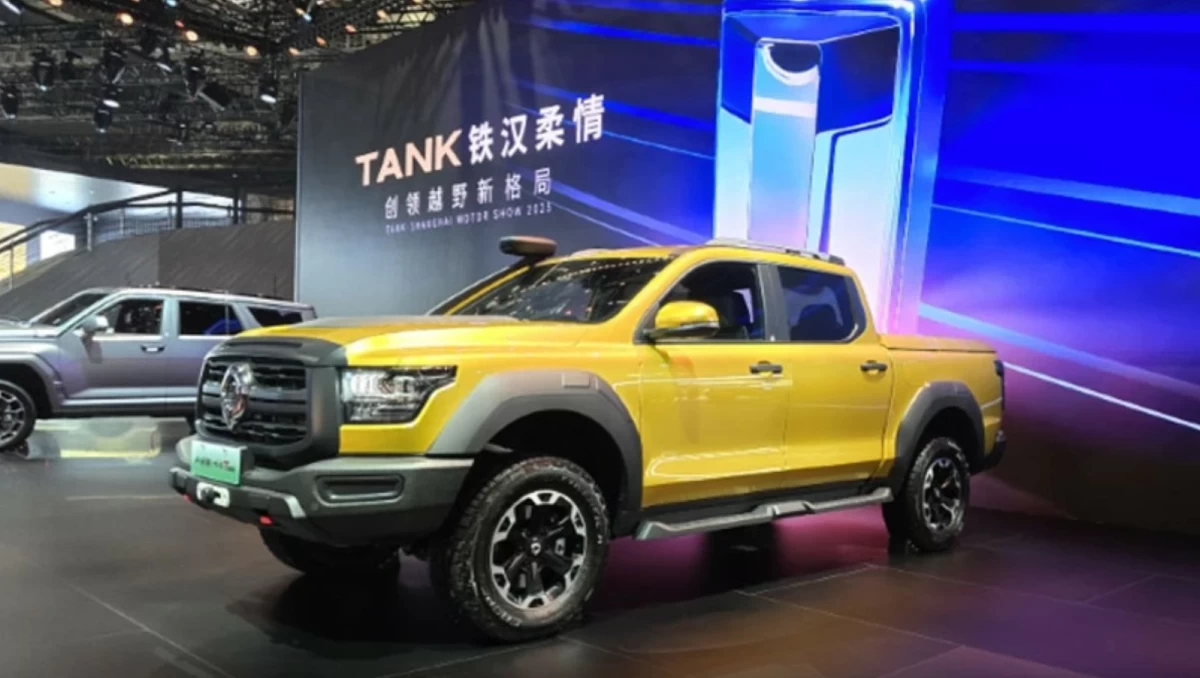
Expect pickup trucks to be more costly after the provision reimposing the excise tax on the vehicle type was approved, alongside other tax reform measures under the proposed Capital Market Efficiency Promotion Act (CMEPA).
The CMEPA, a legislation deemed a priority of the administration under the Legislative-Executive Development Advisory Council (LEDAC), was approved by President Ferdinand “Bongbong Marcos Jr. on Thursday, May 29.
In a veto message addressed to House Speaker Martin Romualdez, Marcos lauded the proposed legislation as it aims to increase the government’s revenue base, contributing to fiscal sustainability with positive revenue gains.
However, the President opted to veto three provisions of the bill, reportedly because they were not aligned with the administration’s policy of enhancing investor confidence, preserving fiscal prudence, and building public trust.
The three provisions that were vetoed include the removal of the tax exemption on nonresidents' income from their transactions with Foreign Currency Deposit Units (FCDUs), the express imposition of documentary stamp tax (DST) on bettors in authorized number games, and the repeal of the tax exemptions granted to the Philippine Guarantee Corp. (PHILGUARANTEE).
One of the provisions that was not vetoed, hereby receiving the full approval of Marcos, is the reimposition of the excise tax on pickup trucks.
The vehicle was previously granted tax exemption under the Tax Reform for Acceleration and Inclusion (TRAIN) law during the previous Duterte administration.
Pickup trucks were given special tax treatment under the TRAIN law, as the government acknowledged their crucial role in enabling small business owners to transport goods.
The Department of Finance (DOF), which had previously argued for the return of the excise tax, now maintains that this basis has become invalid, as it was observed that the vehicle was being used for passenger transport and other personal needs.
From the DOF’s view, the law is seen to be circumvented by this scheme, defeating the purpose of the tax exemption in the first place.
Under the agency’s proposal, taxes ranging from four to 50 percent will now be slapped on pickup trucks, depending on the net manufacturer's price or importer's selling price.
The Chamber of Automotive Manufacturers of the Philippines Inc. (CAMPI), the country’s leading group of vehicle manufacturers, said this will undoubtedly lead to higher prices of pickup trucks.
“It will certainly have an impact on the price of pickup trucks,” CAMPI President Rommel Gutierrez told Manila Bulletin.
This view was echoed by Rizal Commercial Banking Corp. (RCBC) chief economist Michael Ricafort, who added that this would lead to lower sales in the pickup segment.
Ricafort said pickup trucks, which have become the cheaper alternative since the enactment of the TRAIN law, are now expected to have a narrower price difference with sports utility vehicles (SUVs).
He explained that businesses, specifically micro, small, and medium enterprises (MSMEs) that primarily use the vehicle for cargo purposes, would be the “hardest hit” by the price hike.
When CMEPA was still undergoing congressional inquiry last year, the DOF said the reimposition of the excise tax would add a total of ₱30.06 billion to the government's tax collection by 2028.