






 Business
Trade & Industry
Philippine exports to US climb in April amid Trump tariff threat
Business
Trade & Industry
Philippine exports to US climb in April amid Trump tariff threat
Philippine exports to US climb in April amid Trump tariff threat


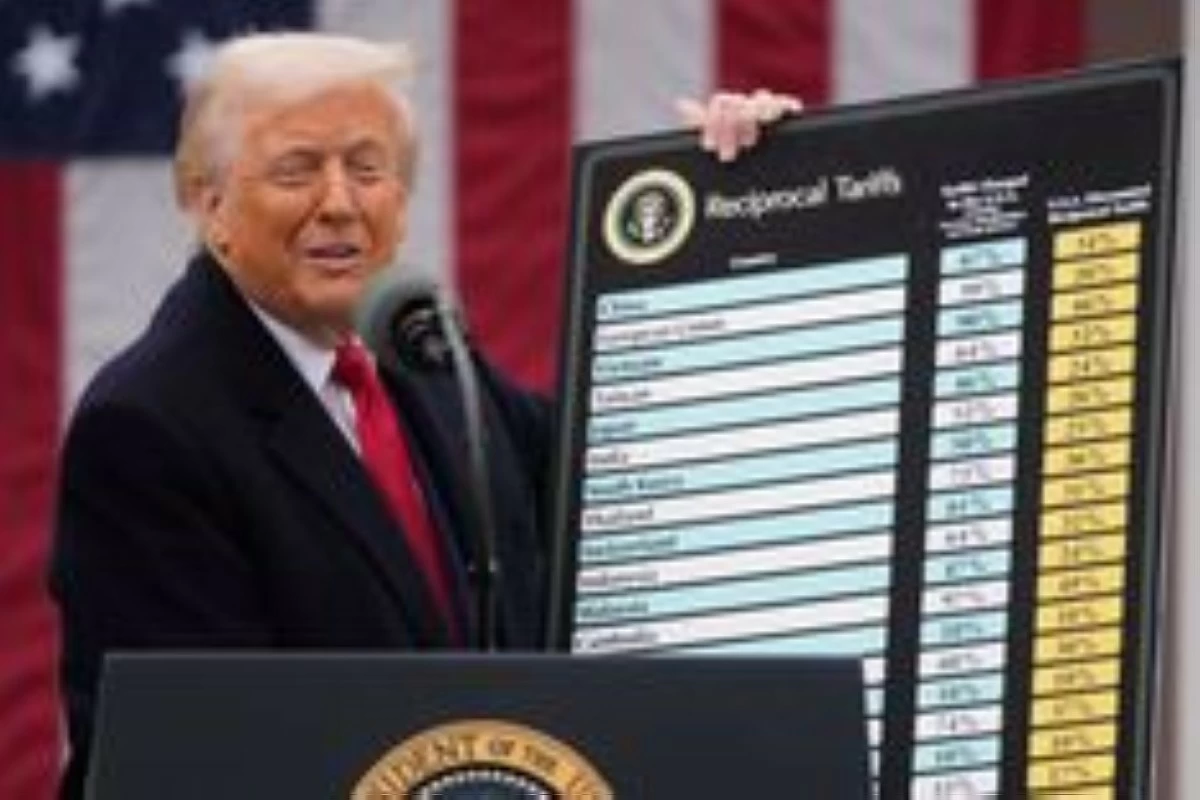
Philippine exports to the United States (US) continued to grow, while imported goods from China slid in April—when US President Donald Trump imposed tariffs on America's trading partners.
The latest preliminary data from the Philippine Statistics Authority (PSA) on Friday, May 30, showed that shipments of Philippine-made merchandise to the US increased by 5.9 percent year-on-year last April to $1.03 billion—the only export destination that surpassed the $1-billion mark that month.
As such, the US remained the Philippines' top export market during the first four months of 2025, with sales totaling $4.26 billion, up 10.6 percent year-on-year.
It was in April when Trump, during his so-called "Liberation Day," announced a 17-percent reciprocal tariff on Philippine exports to the US.
In a May 29 report, Oxford Economics senior economist Callee Davis said the think tank's economists believe that it remains "uncertain" if the US' Liberation Day tariffs will be reinstated on the Philippines by July 9, although the country is among those "likely" to soon reach a trade deal with the US.
This is because the Philippines has offered to import more products from the US, while also not posing any threat to retaliate in response to Trump's reciprocal tariff, Davis said.
Oxford Economics economist Sheana Yue noted in a separate May 28 report that across Asia, excluding China, goods exports accelerated at the start of the second quarter, as exporters frontloaded their shipments to the US.
"The extent of frontloading suggests this strength is unlikely to endure past the second quarter even if, as we expect, higher tariffs don't come on board after the 90-day delay," Yue said.
"Nonetheless, increased trade barriers and uncertainty are detrimental for Asia's exports. In seasonally adjusted quarter-on-quarter terms, we anticipate the region's real exports to weaken from hereon," she added.
The Philippines' total merchandise exports in April grew by seven percent year-on-year to $6.75 billion, bringing four-month sales up by 9.5 percent to $26.87 billion.
On the other hand, the value of imported goods fell by 7.2 percent year-on-year to $10.24 billion in April, even as the first four months saw cumulative imports rise by 5.6 percent year-on-year to $42.78 billion.
China, the country's top source of imported products, recorded a 4.3-percent year-on-year decline in April shipments to $3.01 billion, although four-month Chinese imports remained the fastest growing, at 17.5 percent year-on-year.
Globally, Yue explained that Chinese exports moderated amid the threat of higher US tariffs.
But the Philippines' end-April imports from China, which stood at $12.05 billion, were not even close to second placer South Korea, which was the source of $3.18-billion worth. The Chinese products imported in April alone also far exceeded South Korea's $878.4 million, also in second position that month.
Imports from the US, meanwhile, dropped 17 percent year-on-year to $604.4 million in April, such that the end-April figure declined by 2.4 percent year-on-year to $2.6 billion.
Economists expect net importing countries like the Philippines to be flooded by imports from China as the trading giant seeks alternative markets to the US.