ADVERTISEMENT

Level up your ride

Harman/Kardon makes car sound upgrades easy

Published May 30, 2025 01:16 pm
Filipinos can be very particular about the sound quality of music and content they access. The evidence is everywhere: They invest in home theater systems, great headphones or earphones, and even vehicle sound systems.
Enter Harman/Kardon, the premium audio brand established in 1953 by Sidney Harman and Bernard Kardon. The brand’s parent company, Harman International, became a subsidiary of Samsung Electronics in 2017, and this allowed the marque to expand its offerings. Recently, Waido Marketing and Distribution, Inc. brought the brand in for local car enthusiasts looking for a heightened cabin listening experience with two “natural-sounding, luxury audio” lines.
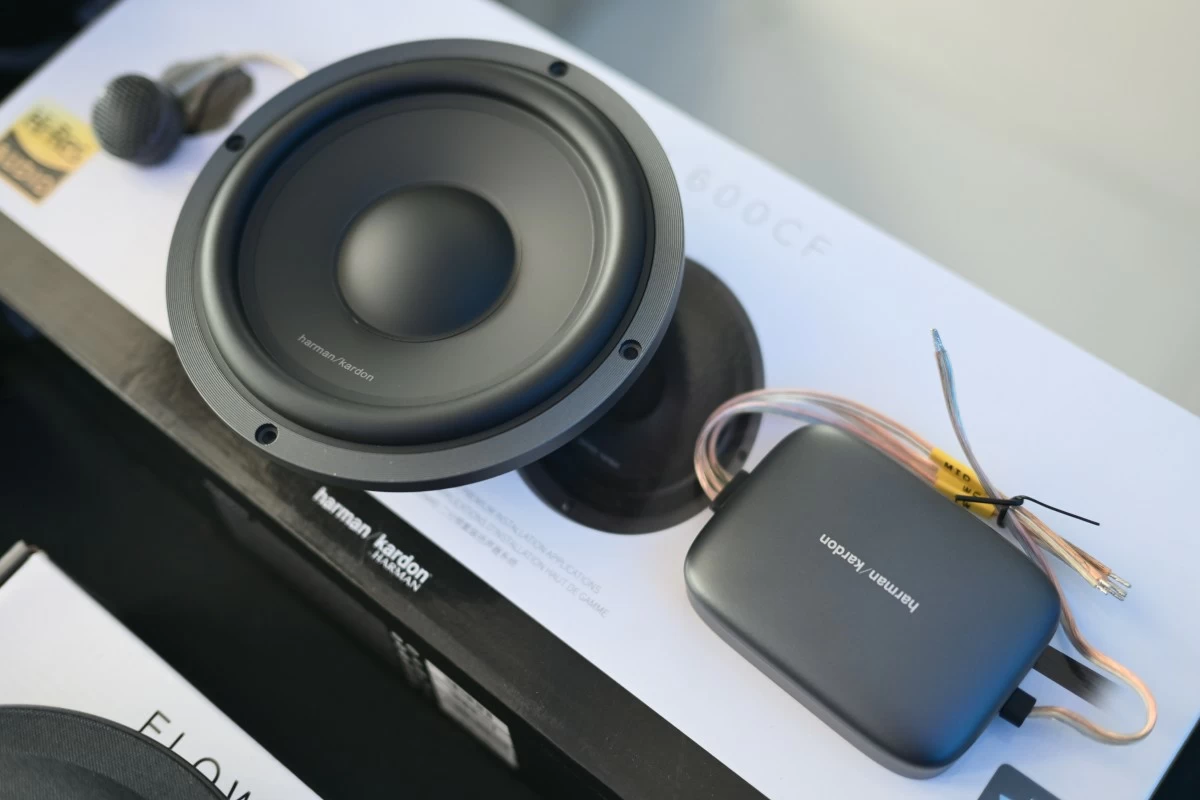
The Flow Component Speaker System features Aluminum Deep Ceramic Composite (DCC) cones and the brand’s patented Plus One technology that frees sound from “distortion and unwanted colorization.” It is also equipped with a low-profile outboard crossover network that allows the two-way component system to operate as a full three-way system with the addition of the three-inch Harman/Kardon Flow midrange.
At a launch with members of the media, content creators, mobility brand representatives, and car enthusiasts, the brand’s Flow 600CF was fitted into the BAIC B30e Dune for front mid-bass and tweeters and rear speakers, along with the Feel 700 as an underseat subwoofer. A BMW X5 features the same unit and was matched with 300S for front mid-bass and tweeters, Flow 300 for both the front mid-range and rear speakers, and two sets of the Flow 80 for underseat subwoofers.
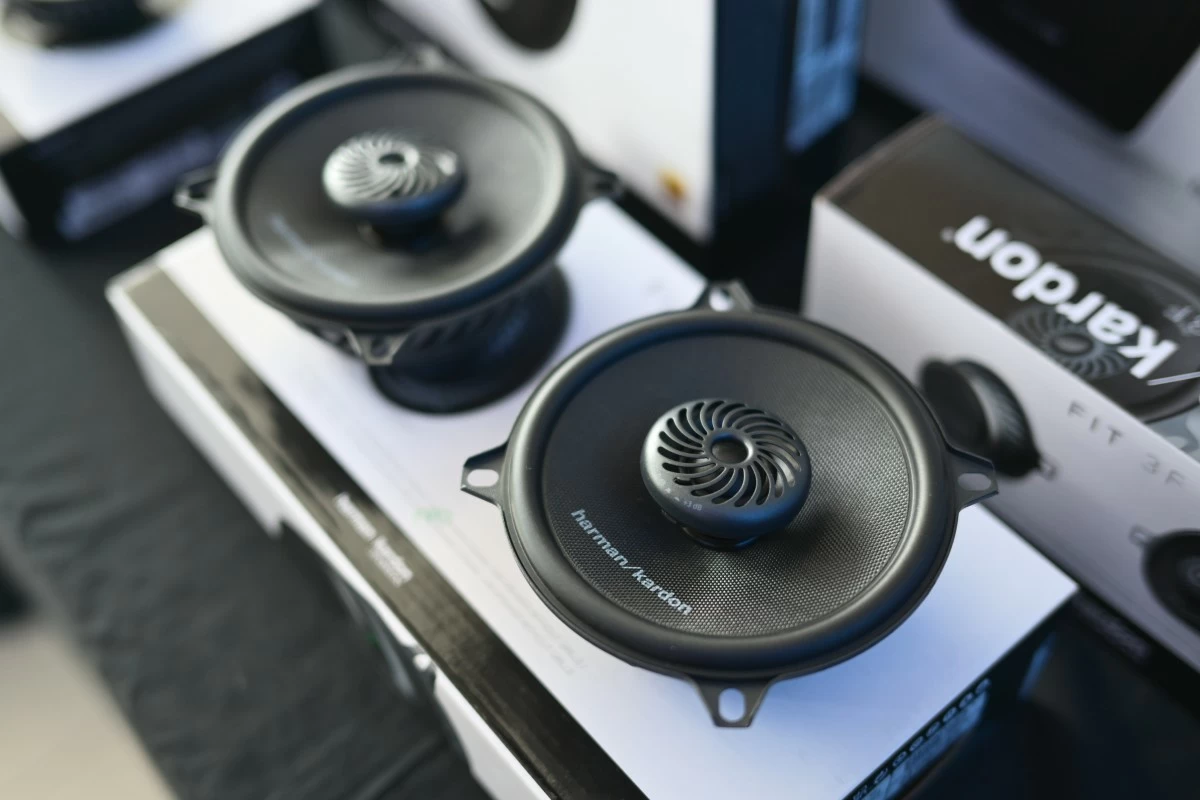
Fit car speakers also have the Plus One technology. Glass woofer cones enhance high-resolution audio, and edge-driven textile tweeters deliver smooth and detailed high frequencies. The product is the recommended choice for car owners looking to make sustainable choices as well, since the speakers are made from post-consumer recycled (PCR) materials.
The Fit was installed in a Lexus IS 300h and paired with a Fit 3F for the front mid-range, tweeter, and central channel, Flow 80 for the front mid-bass, Fit 6 for the rear speakers, and Flow 80 for the rear subwoofer. A Toyota Fortuner was fitted with a Flow 601CFS for the front mid-bass and Tweeters, Flow 300S for the front mid-range, Flow 600CF for the rear speakers, Feel 700 for the underseat subwoofer, and Flow 80 for the rear subwoofer.
The best part about the aforementioned Harman/Kardon speakers, according to Waido, is that these can be installed very easily as drop-in solutions. There’s no need for complicated setups or dismantling. They are, quite simply, good to go.
To learn more about Harman/Kardon Car Audio, visit the brand’s social media pages on Facebook: Harman Kardon Car Audio-Philippines and Instagram: @harmankardoncaraudioph.
ADVERTISEMENT
.most-popular .layout-ratio{ padding-bottom: 79.13%; } @media (min-width: 768px) and (max-width: 1024px) { .widget-title { font-size: 15px !important; } }

{{ articles_filter_1561_widget.title }}

.most-popular .layout-ratio{ padding-bottom: 79.13%; } @media (min-width: 768px) and (max-width: 1024px) { .widget-title { font-size: 15px !important; } }

{{ articles_filter_1562_widget.title }}

.most-popular .layout-ratio{ padding-bottom: 79.13%; } @media (min-width: 768px) and (max-width: 1024px) { .widget-title { font-size: 15px !important; } }

{{ articles_filter_1563_widget.title }}

{{ articles_filter_1564_widget.title }}

.mb-article-details { position: relative; } .mb-article-details .article-body-preview, .mb-article-details .article-body-summary{ font-size: 17px; line-height: 30px; font-family: "Libre Caslon Text", serif; color: #000; } .mb-article-details .article-body-preview iframe , .mb-article-details .article-body-summary iframe{ width: 100%; margin: auto; } .read-more-background { background: linear-gradient(180deg, color(display-p3 1.000 1.000 1.000 / 0) 13.75%, color(display-p3 1.000 1.000 1.000 / 0.8) 30.79%, color(display-p3 1.000 1.000 1.000) 72.5%); position: absolute; height: 200px; width: 100%; bottom: 0; display: flex; justify-content: center; align-items: center; padding: 0; } .read-more-background a{ color: #000; } .read-more-btn { padding: 17px 45px; font-family: Inter; font-weight: 700; font-size: 18px; line-height: 16px; text-align: center; vertical-align: middle; border: 1px solid black; background-color: white; } .hidden { display: none; }
function initializeAllSwipers() { // Get all hidden inputs with cms_article_id document.querySelectorAll('[id^="cms_article_id_"]').forEach(function (input) { const cmsArticleId = input.value; const articleSelector = '#article-' + cmsArticleId + ' .body_images'; const swiperElement = document.querySelector(articleSelector); if (swiperElement && !swiperElement.classList.contains('swiper-initialized')) { new Swiper(articleSelector, { loop: true, pagination: false, navigation: { nextEl: '#article-' + cmsArticleId + ' .swiper-button-next', prevEl: '#article-' + cmsArticleId + ' .swiper-button-prev', }, }); } }); } setTimeout(initializeAllSwipers, 3000); const intersectionObserver = new IntersectionObserver( (entries) => { entries.forEach((entry) => { if (entry.isIntersecting) { const newUrl = entry.target.getAttribute("data-url"); if (newUrl) { history.pushState(null, null, newUrl); let article = entry.target; // Extract metadata const author = article.querySelector('.author-section').textContent.replace('By', '').trim(); const section = article.querySelector('.section-info ').textContent.replace(' ', ' '); const title = article.querySelector('.article-title h1').textContent; // Parse URL for Chartbeat path format const parsedUrl = new URL(newUrl, window.location.origin); const cleanUrl = parsedUrl.host + parsedUrl.pathname; // Update Chartbeat configuration if (typeof window._sf_async_config !== 'undefined') { window._sf_async_config.path = cleanUrl; window._sf_async_config.sections = section; window._sf_async_config.authors = author; } // Track virtual page view with Chartbeat if (typeof pSUPERFLY !== 'undefined' && typeof pSUPERFLY.virtualPage === 'function') { try { pSUPERFLY.virtualPage({ path: cleanUrl, title: title, sections: section, authors: author }); } catch (error) { console.error('ping error', error); } } // Optional: Update document title if (title && title !== document.title) { document.title = title; } } } }); }, { threshold: 0.1 } ); function showArticleBody(button) { const article = button.closest("article"); const summary = article.querySelector(".article-body-summary"); const body = article.querySelector(".article-body-preview"); const readMoreSection = article.querySelector(".read-more-background"); // Hide summary and read-more section summary.style.display = "none"; readMoreSection.style.display = "none"; // Show the full article body body.classList.remove("hidden"); } document.addEventListener("DOMContentLoaded", () => { let loadCount = 0; // Track how many times articles are loaded const offset = [1, 2, 3, 4, 5, 6, 7, 8, 9, 10]; // Offset values const currentUrl = window.location.pathname.substring(1); let isLoading = false; // Prevent multiple calls if (!currentUrl) { console.log("Current URL is invalid."); return; } const sentinel = document.getElementById("load-more-sentinel"); if (!sentinel) { console.log("Sentinel element not found."); return; } function isSentinelVisible() { const rect = sentinel.getBoundingClientRect(); return ( rect.top < window.innerHeight && rect.bottom >= 0 ); } function onScroll() { if (isLoading) return; if (isSentinelVisible()) { if (loadCount >= offset.length) { console.log("Maximum load attempts reached."); window.removeEventListener("scroll", onScroll); return; } isLoading = true; const currentOffset = offset[loadCount]; window.loadMoreItems().then(() => { let article = document.querySelector('#widget_1690 > div:nth-last-of-type(2) article'); intersectionObserver.observe(article) loadCount++; }).catch(error => { console.error("Error loading more items:", error); }).finally(() => { isLoading = false; }); } } window.addEventListener("scroll", onScroll); });

Sign up by email to receive news.