







The K to 12 program was introduced in 2013 with the noble objective of enhancing the employability of Filipino youth by extending basic education and aligning it with industry needs. However, it may have to navigate through a lot of challenges before it realizes its desired potential.
K to 12 needs fine-tuning
Published May 30, 2025 12:05 am
|
Updated May 29, 2025 06:06 pm


Take it from Pasig City Rep. Roman Romulo, chairman of the House Committee on Basic Education and Culture.
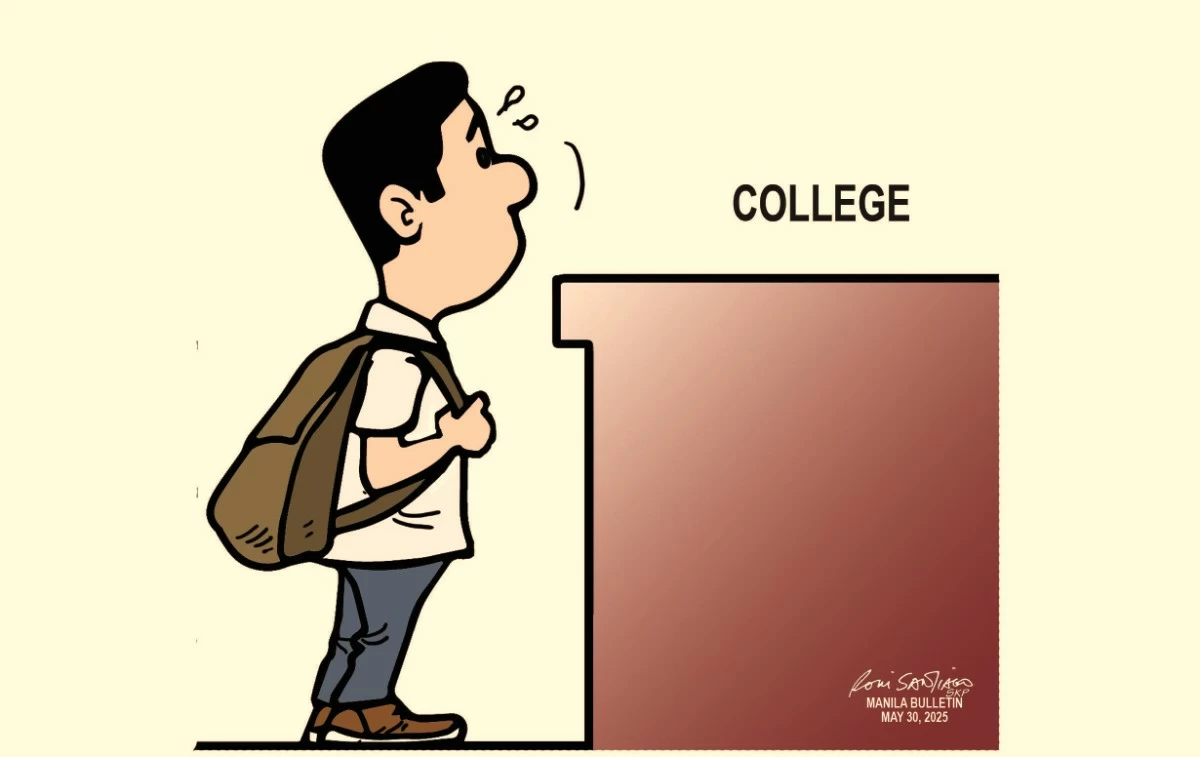
“K to 12 graduates are not job-ready,” Romulo stressed during his committee’s hearing on the plan of the Department of Education (DepEd) to start implementing the Strengthened Senior High School (SHS) Program in School Year (SY) 2025–2026. He went further by pointing out that some K to 12 graduates are not even college-ready.
This is worrisome for a program which was crafted with a lofty objective of producing job-ready Filipino youth. If graduates of the program are not even college-ready, the more they are not prepared for employment.
With this development, it is incumbent upon our lawmakers and education stakeholders to come together and revisit the K to 12 program to fine-tune it to attain the desired results.
Over a decade since its implementation, concerns persist regarding the readiness of graduates for the workforce.
Despite the program’s intent, a significant gap exists between the skills imparted in schools and those demanded by employers. A 2024 study by the Philippine Business for Education (PBEd) revealed that only 27 percent of entry-level jobs were projected to be filled by senior high school graduates, with companies still preferring applicants with college degrees. Employers also cited lack of suitable candidates, technical skills, and soft skills as reasons for unfilled positions.
This mismatch is further exacerbated by the congested curriculum, which, according to Rep. Romulo, needs simplification and alignment with industry requirements to make graduates more employable.
To address these challenges, there have been several measures proposed to address these issues. One group proposes curriculum reform by urging the Department of Education (DepEd) to consider revising the senior high school curriculum to reduce the number of core subjects and focus on essential competencies. The strengthened SHS Program may be a good start. This adjustment aims to make the curriculum more responsive to the needs of the labor market.
Another proposal is Enhanced Work Immersion Programs. Under this program is the pursuit of strong on-the-job training (OJT) systems. By collaborating with the private sector, these programs can provide students with hands-on experience that will help bridge the gap between theoretical knowledge and practical skills.
Industry partnerships may be a big boost to the K to 12 Program. Engaging employers in curriculum development ensures that the skills taught align with industry needs. Such collaborations can lead to certifications and apprenticeships that would help enhance the employability of graduates.
Crucial among these is government support. The government must start incentivizing employers to hire K to 12 graduates by offering tax breaks or subsidies. This would encourage companies to invest in training and hiring young talents.
No doubt, the K to 12 program is a step in the right direction. However, its success hinges on continuous evaluation and adaptation. In this fast-changing digital environment, implementing curriculum reforms, strengthening industry partnerships, and providing government incentives are very crucial in ensuring that future graduates are equipped with the skills necessary to thrive in the workforce. Only through collective effort among stakeholders can we bridge the gap between education and employment to eventually fulfill the program’s original intent.