






Manila Bulletin
 Environment and Sustainability
How Plastic Bank empowers waste workers to turn trash into treasure
Environment and Sustainability
How Plastic Bank empowers waste workers to turn trash into treasure
Environment and Sustainability
How Plastic Bank empowers waste workers to turn trash into treasure
How Plastic Bank empowers waste workers to turn trash into treasure
Helping businesses link with plastic collection groups to help ease EPR compliance
By Mat Richter
Published May 30, 2025 03:30 pm


Big businesses were asked in 2022 to take accountability for their plastic packaging. Those with P100 million or more in assets were tasked to gradually recover 80 percent of their plastic product footprint by 2028. Over 2,000 companies are obliged to do that.
Three years have passed and, alas, only 942 or barely half have started complying, as per latest data by the Department of Environment and Natural Resources.
The Extended Producer Responsibility Act, RA No. 11898, demands they recover and recycle the pollutant and prolong products’ life cycle for a circular economy. Doing this, especially when they have what looks like an insatiable thirst for profit, is no piece of cake. So, waste workers come to the rescue.
Social fintech Plastic Bank offers companies with solutions to combat plastics by partnering with waste workers to recover and recycle them. Here’s a look at how trash pickers, garbage collectors, and recyclers, as well as the organization, are helping businesses do their duty.
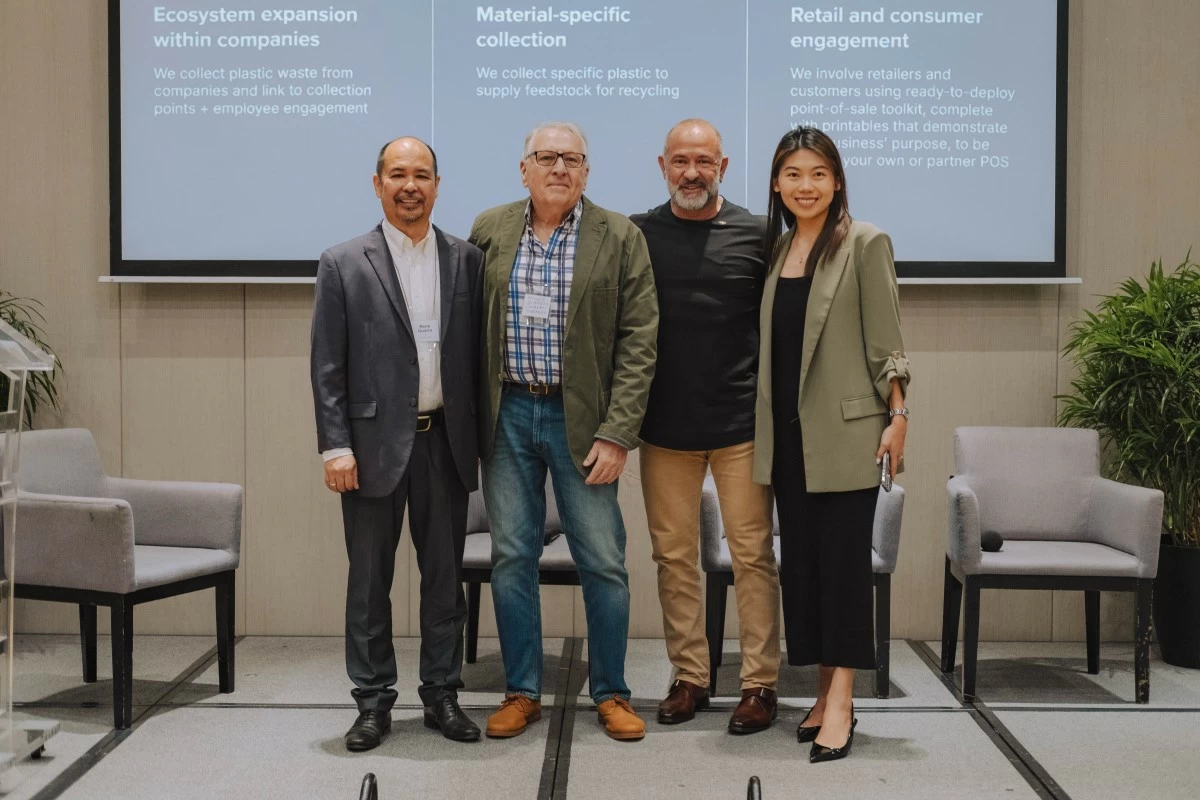
Rene Guarin, Plastic Bank PH country manager; Roger Dimmell, Canadian Chamber of Commerce trustee; David Katz, Plastic Bank founder and CEO; and Kimberly Chen, Arcadia executive director
Waste is wealth
Operating over 260 branches spanning junk shops to public schools, Plastic Bank links enterprises with plastic collection groups for EPR compliance.
What seemed filthy and useless was found to be wealth for the social fintech and trash workers.
"If we provide businesses with the guidance and resources to integrate purpose into their business and help them build a tribe of like-minded customers who recognize and reward this shift, we can drive unprecedented growth," said David Katz, founder and CEO of Plastic Bank.
From waste collectors (recovery) to junk dealers (recycling), it provides digital services to the informal sector along the supply chain. Collected bottles, for example, are returned “as recycled feedstock to the circular economy.”
“We're going to be offering zero-interest loans to the poor. See, it's a poverty-alleviating mechanism. What I'm inviting you into, no matter what brand you are, is to participate in something that is globally transformative for humanity,” he added, stressing that collective participation goes beyond EPR goals.
The organization has served communities across Indonesia, Egypt, Brazil, Thailand, and Cameroon, having collected eight million bottles earlier this year, it said.
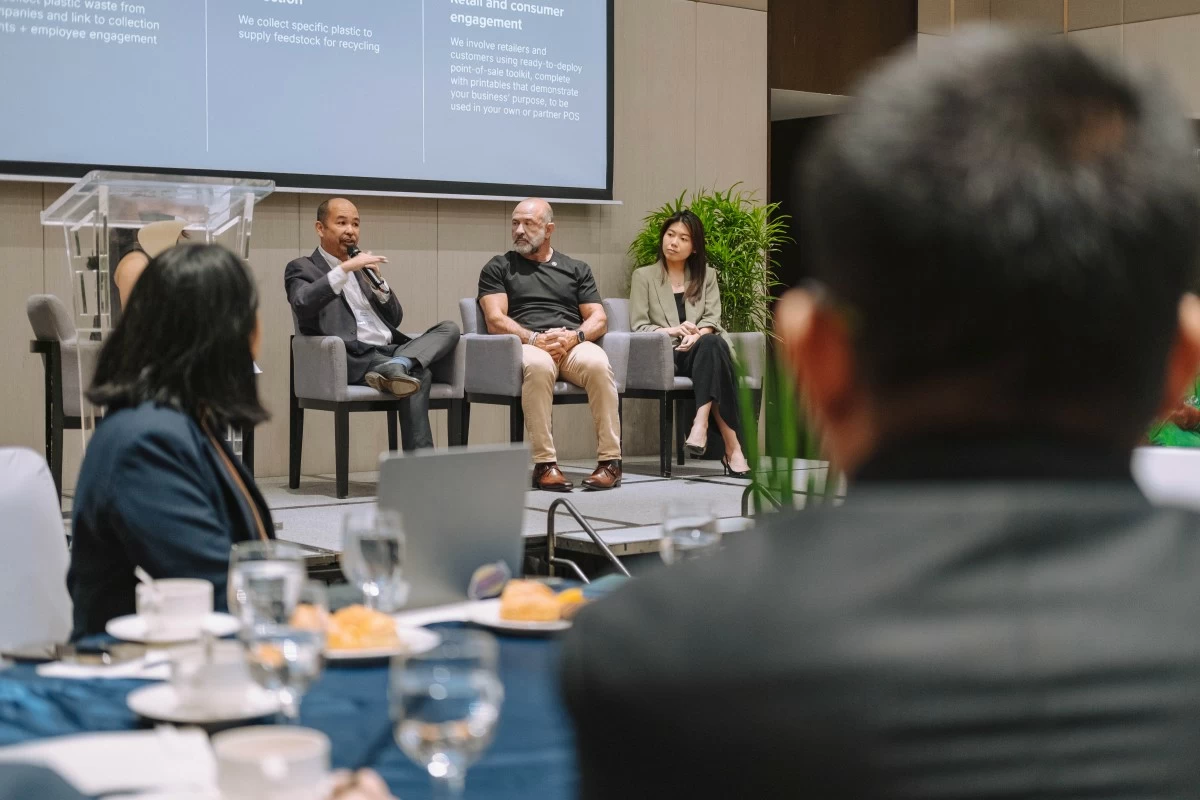
During the panel discussion on EPR compliance
Pushing for a trash-free society
The social fintech and business works with individual collectors “to help them get the plastic out of the environment" and "orient them on the quality," said Rene Guarin, country manager for the Philippines and VP for Asia-Pacific of Plastic Bank.
After segregation and cleaning, Guarin said these are brought to junk shops, which will consolidate locally, then to aggregators for a bigger consolidation, until the aggregator operators transport this to processors.
They would then convert the plastic into pellets to be shipped overseas. These, he said, become free stock for big manufacturing companies that turn them into new packaging materials or products.
“We have a system to keep track of all of those data. From who collected what and from where, who processed this, what product came out, and who was the manufacturing company that took that,” he added.
Meanwhile, for Chris Ilagan, president of The Canadian Chamber of Commerce of PH (CanCham), EPR is no longer a matter of compliance.
“It has become a tool for major transformation that merges regulatory and market innovations that can contribute to global competitiveness of high ambition countries like the Philippines and Canada. The role of private enterprise has never been more essential or more promising,” he said.
To achieve and see EPR's full potential, Ilagan said we must go beyond mandates and empower companies to invest in circularity systems. In turn, the Joint Four Chambers of Canada including CanCham have proposed to the government to consider incentivizing obliged companies.
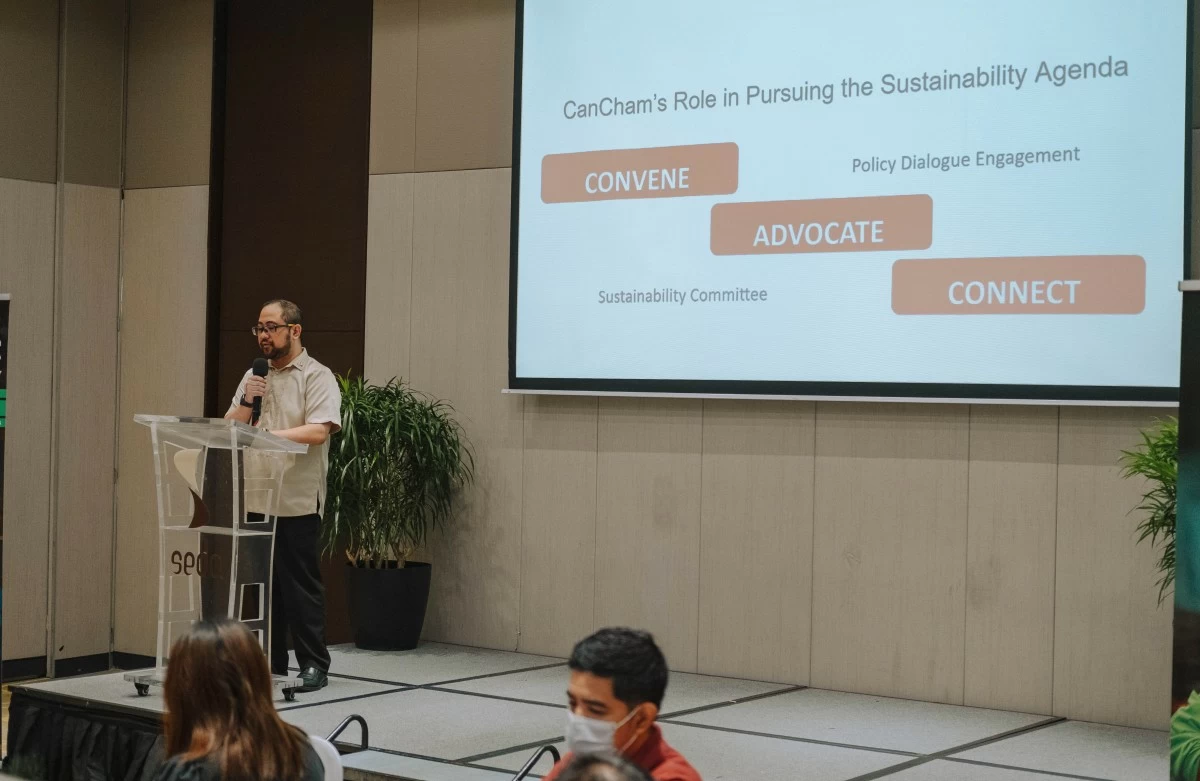
Chris Ilagan, president at CanCham, pushes for incentivization and circular solutions.
“Incentives such as tax rebates, offsets of collection targets, or reduced EPR fees can accelerate the adoption of design for recycling guidelines and make circular packaging the default. Companies that invest in packaging that is recyclable, reusable, or made from recycled content should be recognized,” he urged.
The chamber looks forward to establishing a sustainability committee to explore opportunities, form partnerships with local businesses, and contribute to the just transition toward a circular economy.
“Allowing duty-free importation of recyclable and reusable packaging and the raw materials to produce them will support early adopters and reduce the cost of circular compliance,” he added.
So, is it really filth that these waste workers work with? A glaring no. And they're here not to pick up after our litter, but to teach us the importance of putting value on what seems invaluable.