






 Business
Banking & Finance
US tax proposal may slash $477 million from Philippine remittance inflows yearly
Business
Banking & Finance
US tax proposal may slash $477 million from Philippine remittance inflows yearly
US tax proposal may slash $477 million from Philippine remittance inflows yearly


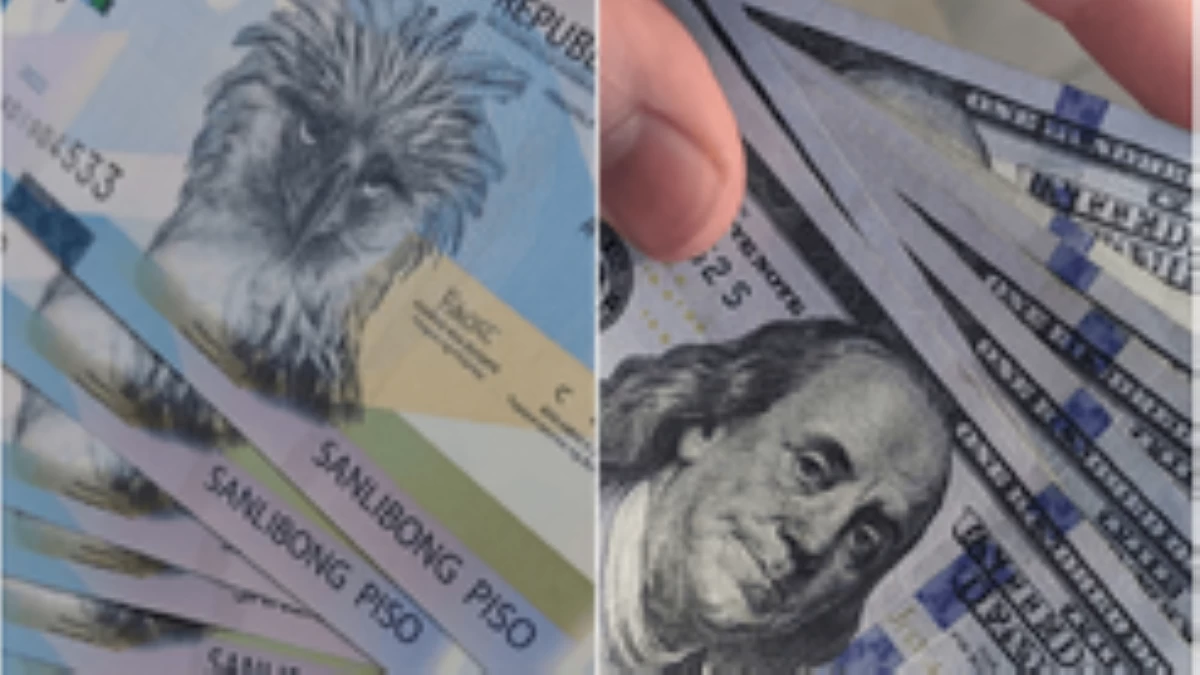
The proposal to tax outbound remittances of non-United States (US) nationals would slash Philippine inflows by as much as $476.5 million or over ₱26 billion per year, according to estimates from the Washington-based Center for Global Development (CGD).
In a May 28 blog post, CGD experts Helen Dempster, Charley Ward, and Sam Huckstep said the proposed 3.5-percent tax on remittances under the One Big Beautiful Bill—already passed by the US Lower House—would affect 40 million non-US citizens, as well as their families and friends abroad who receive money sent back home by migrants working or living in America.
"Remittances are a crucial source of household income and economic stability for low- and middle-income countries. Indeed, for many of these countries, the impact of the remittance tax will far outweigh the impact of aid cuts," CGD noted.
"If the new tax raises costs by 3.5 percent, that could lead to a 5.6-percent drop in remittances" from the US, CGD said, citing research that the amount remitted declines by 1.6 percent for every one-percent uptick in transfer costs.
CGD's estimates showed that the top US remittance destinations to be most badly hit by the tax measure are Mexico, Guatemala, India, the Philippines, China, Dominican Republic, El Salvador, Honduras, Vietnam, Nigeria, and Colombia.
This estimate took into consideration that senders would likely not only reduce the amount they send back home but also avoid remitting money altogether through formal channels like banks and money transfer service providers.
Also, the tax is expected to hike remittance fees when there is less demand for such services, resulting in higher costs that would ultimately redound to a reduction in cash migrants sent home.
In the case of the Philippines, CGD estimates showed that the remittances to be lost to the actual tax would reach $176.8 million yearly, on top of $299.7 million in losses due to the price effect.
The estimated $476.5 million in total reduction to annual Philippine remittances would be equivalent to 0.1 percent of the country's gross national income (GNI), or total earnings of its citizens inside the country, as measured by gross domestic product (GDP), plus those overseas.
In 2024, Filipinos in the US remitted to the Philippines about $14.6 billion, CGD noted, although this figure may be bloated as formal remittance channels pass money through their US offices whether sourced from America or not.
CGD also lamented that the remittance tax proposal "would be a further crushing blow after the recent cuts to US aid."
The Philippines stands to lose $104 million from cuts in official development assistance (ODA) disbursed by the shuttered US Agency for International Development (USAID), CGD estimates showed.
CGD warned that the tax "may change the way migrants send remittances" in a negative way.
Citing a report by Spanish financial services firm Banco Bilbao Vizcaya Argentaria S.A. (BBVA), CGD said migrants could opt to avoid paying the tax by "[asking] people who have US citizenship to send money on their behalf; [using] interbank transfers rather than remittance service providers; and [using] informal remittance channels."
"One study commissioned by the remittance service provider Western Union considered the effect of an analogous five percent tax on inward remittance flows by the Philippines, and projected that it would lead to a total decline in remittances of 9.9 percent; a decline in formal transfers of 17.7 percent; and a rise in informal transfers of 21.6 percent," CGD added.
While "cheaper and quicker" informal money transfers are already around 50 percent bigger than formal channels, CGD pointed out that the former are "more subject to abuse."
If the intention of the tax proposal is to deter more migration to the US, CGD argued that "migrants will likely find alternative, albeit riskier, ways to send remittances home, and given, it is unlikely future migrants will be deterred."
As a measure to generate more revenues, "even if the tax works as intended, it will only bring in a small fraction of the roughly $150 billion in funding included in the measure for border security and immigration enforcement," CGD added.
As a whole, "taxing money sent to low- and lower-middle-income countries could bring in $940 million a year but could cost those countries $2.5 billion a year in total," CGD said.
Last week, Manila Bulletin asked Governor Eli M. Remolona Jr. if the Bangko Sentral ng Pilipinas (BSP) had already assessed the impact of this tax proposal, but he did not reply.