






The Philippines and Japan agreed to work together, and get the United States involved, to realize a “free and open” Indo-Pacific region based on the rule of law, the Ministry of Foreign Affairs of Japan (MOFA) said.
Manila Bulletin
 Philippines
National
Japan, PH reaffirm cooperation with US over Indo-Pacific security
Philippines
National
Japan, PH reaffirm cooperation with US over Indo-Pacific security
Philippines
National
Japan, PH reaffirm cooperation with US over Indo-Pacific security
Japan, PH reaffirm cooperation with US over Indo-Pacific security
Published May 29, 2025 11:51 am
|
Updated May 29, 2025 02:34 pm


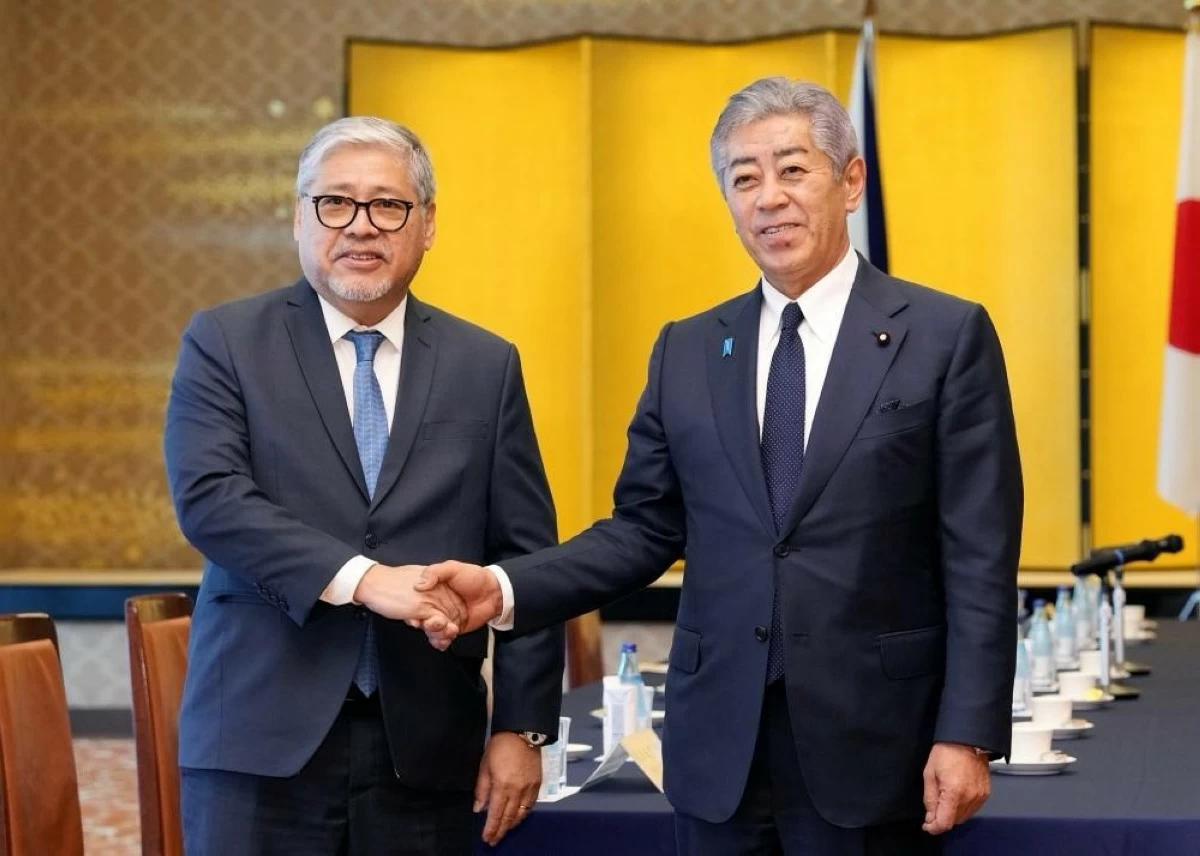
(From left) DFA Secretary Enrique Manalo and Japanese Foreign Minister Takeshi Iwaya shake hands during a meeting in Japan on Wednesday, May 28, 2025. (Photo from Ministry of Foreign Affairs of Japan)
In a statement posted on the MOFA’s website on Wednesday, May 28, the ministry announced the Japan-Philippines Foreign Ministers' Meeting and Working Lunch between Department of Foreign Affairs (DFA) Secretary Enrique Manalo and Japanese Foreign Minister Takeshi Iwaya.
During the meeting, the two officials agreed on the importance of the US’ continuing involvement in various issues affecting the Indo-Pacific region, including regional matters, such as the East China Sea and the South China Sea.
The Philippines and Japan both have competing territorial claims with China.
“In this context, the two foreign ministers reaffirmed the importance of coordinating with the United States and other allied and like-minded countries in addressing these challenges and agreed to continue to deepen Japan-Philippines and Japan-Philippines-US cooperation, with the continued involvement of the United States, toward the realization of a free and open Indo-Pacific based on the rule of law,” the statement read.
Aside from the Japan-China territorial issue in the East China Sea and the Philippines’ own maritime dispute with China in the South China Sea, the two foreign ministers also discussed issues in Myanmar and the Middle East, as well as Russia’s invasion of Ukraine, North Korea’s nuclear program, and the tariff measures imposed by Washington that impacted the global economy.
In his opening remarks, the ministry quoted Iwaya who lauded the strengthening of Tokyo’s relations with Manila through the Japan-Philippines Summit Meeting held last April.
He described the Philippines as a “neighbor” connected by sea and commended the “close bilateral relations” that paved the way for his meeting with Manalo.
“He also stated that our partnership has evolved into a near-alliance status, and we would like to work together to realize a ‘free and open Indo-Pacific,’” the statement said.
Manalo, for his part, expressed his pleasure at meeting Iwaya again after the latter’s visit to Manila in January.
“He then stated that although the international situation has been turbulent since then, he highly appreciates the further progress in cooperation between the two countries through Prime Minister Ishiba's visit to the Philippines in April,” the statement read.
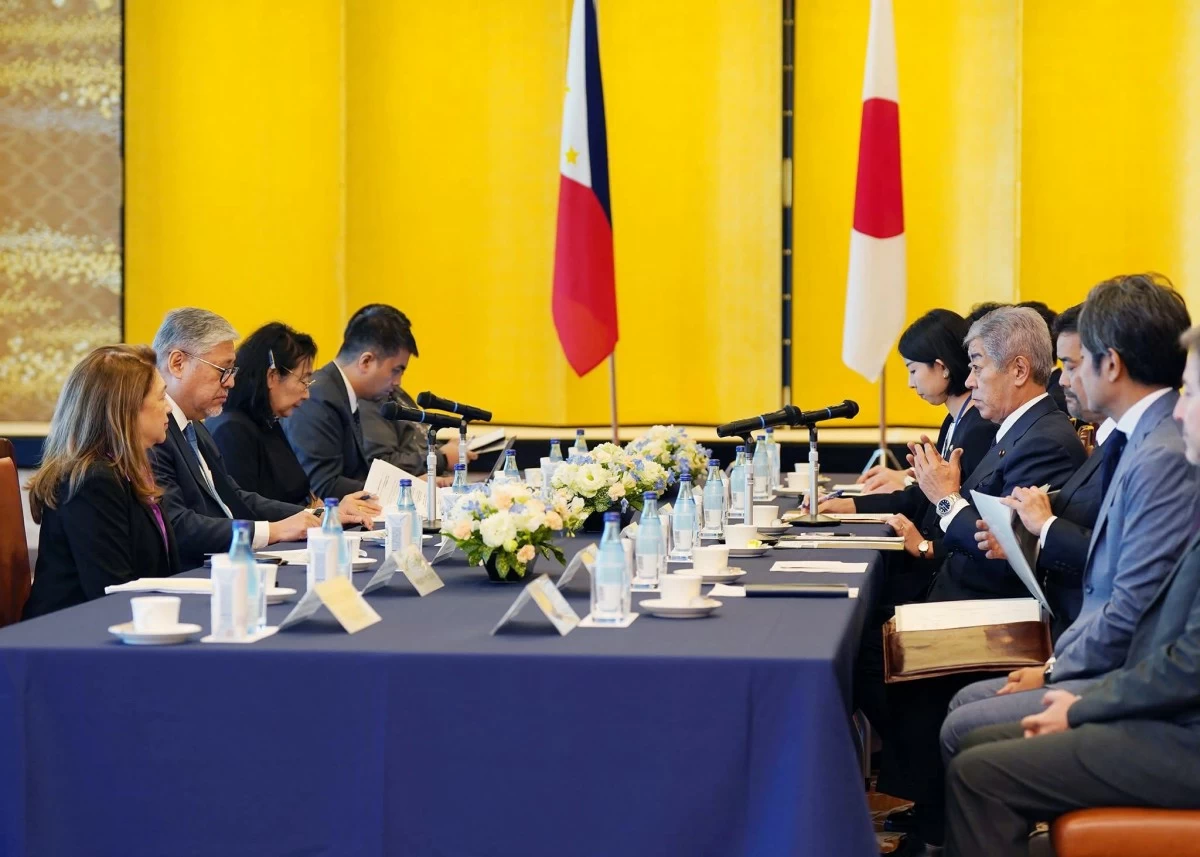
Japan-Philippines Foreign Ministers' Meeting and Working Lunch (MOFA Photo)
“Looking ahead to the 70th anniversary of the normalization of diplomatic relations between Japan and the Philippines next year, he expressed his desire to use this meeting as an opportunity to further strengthen cooperation as partners who share common values and interests,” he added.
In a separate post on X (formerly Twitter), Manalo said their meeting reaffirmed “the robust Philippines-Japan Strategic Partnership.”
“Building on the recent visit of President Marcos Jr. and Prime Minister Ishiba, we held substantive discussions on maritime and security cooperation, economic resilience, and our shared vision for a free and open Indo-Pacific #PHJapan,” the incoming Philippine Representative to the United Nations wrote.
Security, economic cooperation
Manalo and Iwaya also held “in-depth discussions” on strengthening “the foundation for security and defense cooperation” based on the Summit Meeting last month.
They commended, among others, the start of negotiations on the Japan-Philippines Acquisition and Cross-Servicing Agreement (ACSA), discussions on a possible future Agreement on the Security of Information, and the steady progress of the entry into force of the Japan-Philippines Reciprocal Access Agreement (RAA).
Furthermore, Japan’s Official Security Assistance (OSA) will help in capacity building in the Philippines and push for better cooperation, Iwaya said.
The foreign ministers also agreed to hold Maritime Consultations and Vice-Ministerial Strategic Dialogue within this year “to share strategic perceptions and further advance cooperation in the field of security, including the maritime domain.”
Amid Japan’s role in the global economy, its foreign ministers shared his country’s plan to “further promote infrastructure development” in the Philippines through public-private partnerships, agreeing to prepare for the next Japan-Philippines High Level Joint Committee on Infrastructure Development and Economic Cooperation to be held in Japan this year.
In terms of tourism and people-to-people exchanges, Iwaya expressed concern about the security situation in the Philippines and the safety of Japanese nationals.
He said that the security of Japanese citizens, whether they’re in the country as investors or tourists, is essential for promoting investment “and that he strongly hopes for improvements in the security situation in the Philippines.”
“In response, Foreign Minister Manalo explained that the matter is being handled at the highest level and that the Philippine government will make every effort to ensure the safety of Japanese nationals, whether they visit for business or tourism,” the statement read.