







Government to broker pork prices as MSRP is set to return


The Department of Agriculture (DA) is charting the return of the maximum suggested retail price (MSRP) on pork in Metro Manila’s wet markets in the third quarter of the year, which will now see the government play a more substantial role as a middleman to curb rising pork prices.
The MSRP, which was enforced as a measure to lower retail prices of pork, was earlier suspended by the DA over low compliance.
Based on the agency’s monitoring, compliance with the price cap was below five percent as of May 2, a steep decline from the already low 30 percent compliance on April 1.
Agriculture Secretary Francisco Tiu Laurel said he is looking into reimplementing the MSRP on pork between July and August.
The MSRP, initially set in March, will remain unchanged.
The price limit of pork was set at ₱350 per kilo for pigue (leg/ham) and kasim (shoulder), ₱380 per kilo for liempo (pork belly), and ₱300 per kilo for “sabit ulo” or freshly slaughtered carcass at ₱300 per kilo.
Laurel said there is no definitive date yet on its return as the agency is still “fixing” internal rules, particularly on the side of the National Meat Inspection Service (NMIS).
To prevent low compliance in its return, the DA is reverting to the classic hallmark of market economics: competition.
The DA, through the state-run Food Terminal Inc. (FTI), has been procuring 100 live hogs daily from Thailand-based Charoen Pokphand Foods PLC (CP Foods), which will then be processed to be delivered to various retailers.
It was recently disclosed that the government will raise the daily delivery to 500 hogs before the year-end.
So far, Laurel said the FTI has already been procuring from local farms for over a month to bolster the delivery, as negotiations with other suppliers are also underway.
Laurel explained that the FTI, through its own budget, will now ramp up efforts to purchase more hogs from suppliers.
In particular, the government is targeting to procure approximately 150,000 tons of pork before the end of the year.
He, however, noted that attached agency may request as much as ₱500 million from Malacañang as “standby money” in case it is needed.
Under this scheme, the FTI will provide directly to retailers, providing them with a margin of ₱30 to ₱50 to ensure that their earnings remain robust.
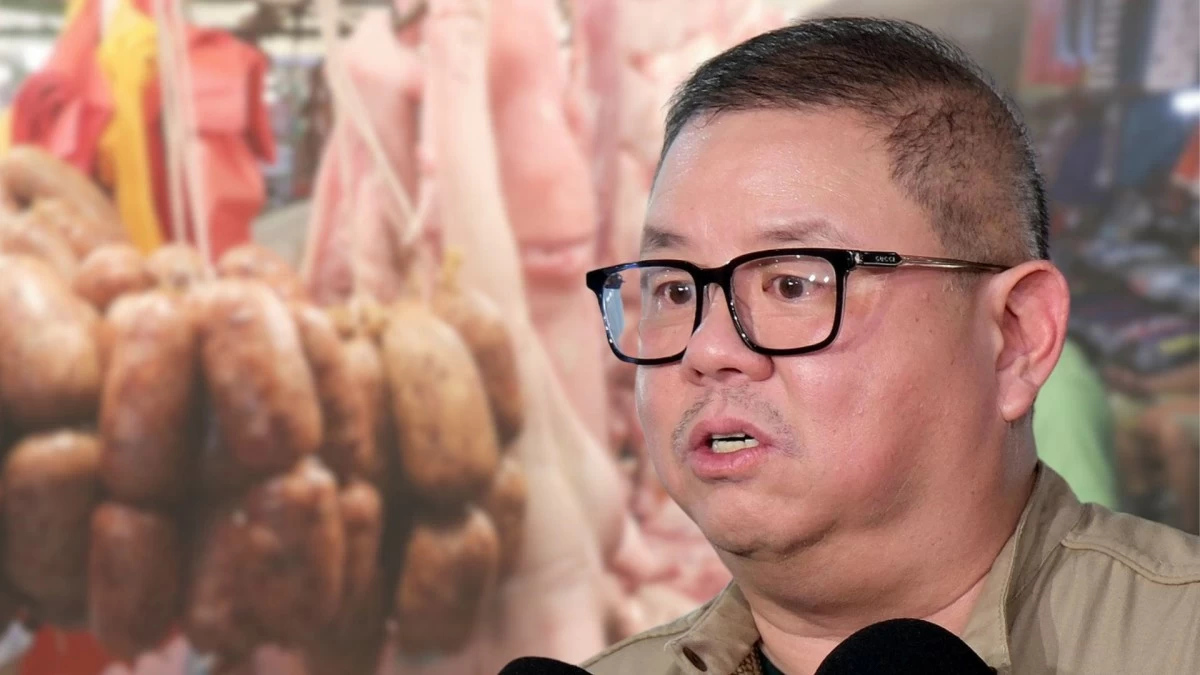
“The middleman won't totally disappear, but the President's order is to reduce the middleman, make a way for the pork to be cheaper,” Laurel said in an interview.
The secretary said the retailers which will be sourcing its supply from the FTI would likely have lower retail prices, which could impel other retailers to bring their prices down to attract customers.
“If we compete with other retailers, so dapat bumaba ang presyo (then prices should go down). We're creating competition,” he emphasized.
In a related development, Laurel said the testing of the vaccine against the African swine fever (ASF) is now on its genome sequencing phase, one step closer to its commercial rollout.
While the results of this study will be released this week, the Food and Drug Administration (FDA) will be tapping a third-party group of academics and experts to further evaluate the vaccine.
Laurel said this is part of the repopulation measure of the government to restore the country’s hog population before the emergence of the ASF in 2019.
Pre-ASF, hog population stood at around 13 million. Now, it has fell to approximately 8.5 million.