






 World
Trump's immigration crackdown unnerves Cuban exiles long shielded from deportation
World
Trump's immigration crackdown unnerves Cuban exiles long shielded from deportation
Trump's immigration crackdown unnerves Cuban exiles long shielded from deportation


er the name El Funky, said he received notice this month that he had 30 days to leave the U.S.
Thanks to Cold War laws aimed at removing Fidel Castro, Cuban migrants for many decades enjoyed almost automatic refugee status in the U.S. and could obtain green cards a year after entry, unlike migrants from virtually every other country.
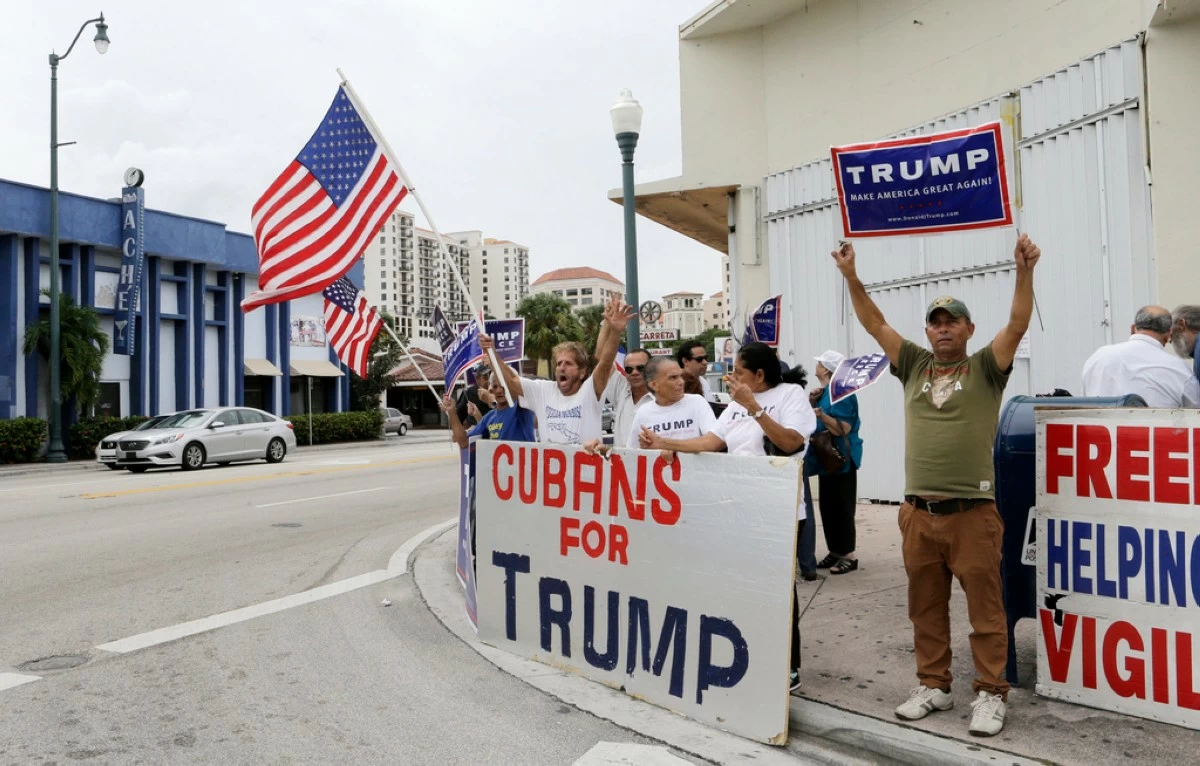
Support for Trump among likely Cuban-American voters in Miami was at an all-time high on the eve of last year’s election, according to a poll by Florida International University, which has been tracking the Cuban-American community since 1991. Trump rarely mentions Cubans in his attacks on migrant targets including Venezuelans and Haitians. That has given many Cubans hope that they will remain immune to immigration enforcement actions.
Politics of a crackdown
Democrats, meanwhile, have been trying to turn the immigration crackdown to their advantage. In April, grassroots groups erected two giant billboards on Miami highways calling Rubio and Republican Reps. Mario Díaz-Balart, María Elvira Salazar and Carlos Giménez “traitors” to the Cuban-American community for failing to protect tens of thousands of migrants from Trump’s immigration policies.
The arrest of former Cuban state agents is one way to bolster Trump allies, Gamarra said.
In March, Giménez sent Homeland Security Secretary Kristi Noem a letter with the names of 108 people he said were former Cuban state agents or Communist Party officials living unlawfully in the U.S.
“It is imperative that the Department of Homeland Security enforce existing U.S. laws to identify, deport and repatriate these individuals who pose a direct threat to our national security, the integrity of our immigration system and the safety of Cuban exiles and American citizens alike,” Giménez wrote, adding that the U.S. remains a "beacon of hope and freedom for those escaping tyranny.”
A mission to topple the government
Giménez's target list was compiled by Luis Dominguez, who left Cuba in 1971 and has made it his mission to topple Cuba's government. In 2009, when the internet was still a novelty in Cuba, Dominguez said he posed as a 27-year-old female sports journalist from Colombia to lure Castro’s son Antonio into an online romance.
“Some people dream with making money, or with growing old and going on vacation,” said Dominguez, who lives in Connecticut. “I dream with seeing my country free.”
With support from the right-wing Foundation for Human Rights in Cuba, he started combing social media and relying on a well-oiled network of anti-socialist sources, inside Cuba and outside the country, to dox officials allegedly behind human rights abuses and violations of democratic norms. To date, his website, Represores Cubanos — Cuban Repressors — has identified more than 1,200 such state agents, some 150 in the United States.
“They're chasing the American dream, but previously they condemned it while pursuing the Cuban dream,” Dominguez said. "It's the typical double life of any Communist regime. When they were in power they criticized anything about the U.S. But now that they're here, they love it."
Dominguez, 62, said he regularly shares his findings with federal law enforcement but a spokesman for U.S. Immigration and Customs Enforcement didn't comment on the agency's relationship with the activist.
An elite spy department
Enrique Garcia, a former colleague, said he studied with Hernández in the former Soviet Union in the 1970s. Upon their return, Hernández was sent to work in the spy agency's elite “North America” department, said Garcia.
Garcia, who defected to the U.S. in the 1990s and has devoted himself to helping American spy catchers unmask Cuban agents, said one-time Cuban agents have infiltrated the current migration wave while hiding their past and even current loyalties to the Cuban government.
“You can’t be on both sides at the same time,” he said.
It’s not known when Hernández entered the U.S. and why. U.S. immigration law generally bars people who’ve belonged to Communist parties. Anyone caught lying on their green card application can be deported or prosecuted.
But removing Cubans who are no longer welcome in the U.S. could prove challenging.
The Trump administration sends a single 60-passenger plane to Cuba every month as part of its deportation drive, unchanged from the past year's average, according to Witness at the Border, which tracks removal flights. At that rate, it would take almost 700 years to send back the estimated 500,000 Cubans who arrived during the Biden administration and now lack protected status.
Crackdown on loyal fans
At Versailles Restaurant, the epicenter of Miami's Little Havana, few among its anti-Communist clientele seemed poised to turn on Trump, who visited the iconic cafe twice during the recent presidential campaign. One regular retiree, 83-year-old Rafael Nieto, even wore a giant Trump 2024 hat and pin.
Most of the aging exiles applauded Trump's migration crackdown overhaul but there were a few cracks in the GOP armor. As the late afternoon banter switched between talk of CIA plots to assassinate Castro and President John F. Kennedy's failure to provide air cover during the 1961 Bay of Pigs invasion, one retiree stood up and quietly stepped away from his friends.
“People are trembling,” Tony Freitas, who came to the U.S. from Cuba in the 1980 Mariel boatlift, said in a hushed voice. “For any little thing, you could be deported.”