ADVERTISEMENT

NMESIS missile system deployed for PH-US Kamandag Exercise

Published May 27, 2025 02:25 pm
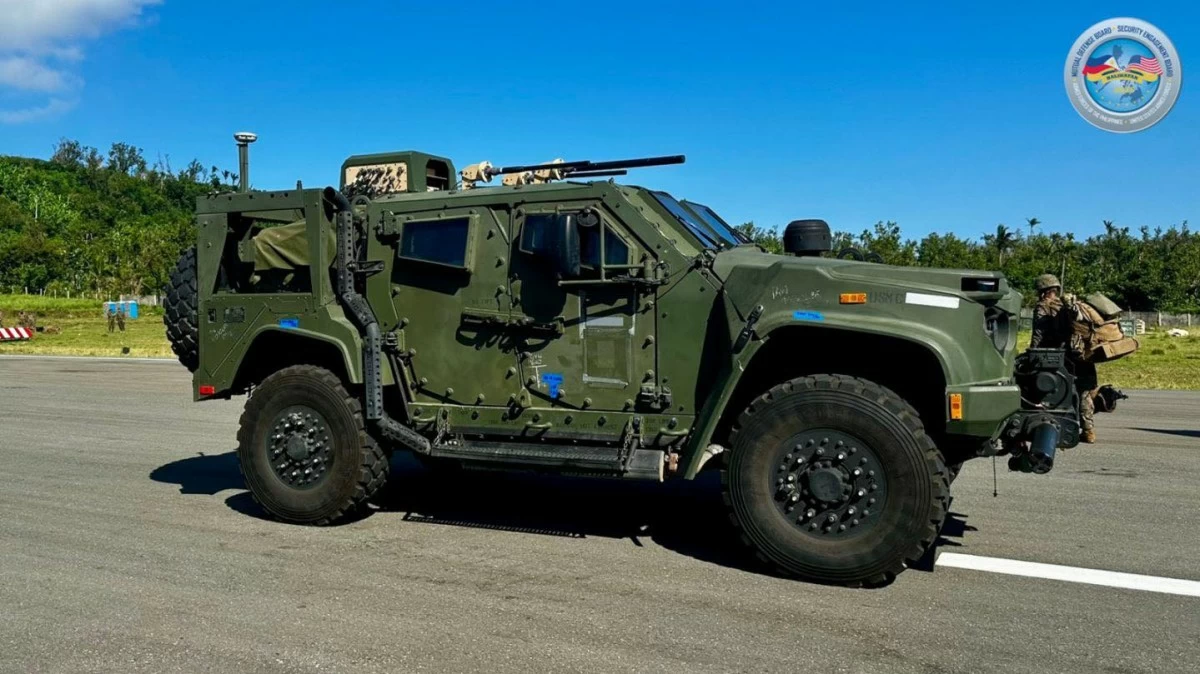
The Navy-Marine Expeditionary Ship Interdiction System (NMESIS), a US-made anti-ship missile system, is deployed to the Philippines during the Balikatan Exercises on April 26, 2025. (Photo: Armed Forces of the Philippines)

The Philippine Marine Corps (PMC) and United States Marine Corps (USMC) will test the Navy-Marine Expeditionary Ship Interdiction System (NMESIS), an American-made anti-ship missile system, during the Kamandag Exercise next week. 

Kamandag, or “Kaagapay ng mga Mandirigma Mula sa Dagat”, is an annual bilateral training between the PMC and USMC designed to enhance interoperability and readiness for joint territorial defense, particularly focused on archipelagic coastal defense in the Indo-Pacific region.

“The deployment of the NMESIS, which is the Navy-Marine Expeditionary Ship Interdiction System, is part of Kamandag. Its objective is for us to be able to conduct joint operations or combined operations with other marine corps or other nations,” Philippine Navy spokesperson Captain John Percie Alcos said on Tuesday, May 27.

The NMESIS will be utilized in a maritime strike on June 1, according to Alcos. An advisory from the PMC showed that the maritime strike will be held in Burgos, Ilocos Norte.

However, the official did not clarify whether the NMESIS would be actually fired or if only a “dry firing” would take place.

Dry firing refers to the activation of the firing mechanism of a weapon without loaded ammunition, essentially simulating firing without firing a live round.

“Whether it will be fired or not depends on the actual situation or actual criteria that will be met on the day of the maritime strike demonstration,” Alcos said.

He said that what matters most is that the PMC would be able to familiarize themselves with the use of the NMESIS through the exercise as it is one of the assets that the Philippine Navy looks to acquire as part of its modernization.

“We have already submitted, to [AFP] higher headquarters to include and to the Department of National Defense, the list of essential or critical capabilities that the Navy or the AFP intends to have, and this is one of the capabilities that we intend to have,” Alcos said.

Kamandag kicked off on Monday, May 26, at the Marine barracks in Taguig City. It will run until June 6. 

It involves around 4,000 PMC and USMC personnel who will train side by side in various training locations under the Northern Luzon Command (Nolcom), the Western Command (Wescom), the Western Mindanao Command (Westmincom), as well as selected areas in Cavite and Manila.

Aside from the maritime strike, other exercises include a live fire integration, counter-landing/defensive retrograde operation, special operating forces strike, humanitarian assistance and disaster relief (HADR), chemical, biological, radiological, nuclear and explosive (CBRNE) subject matter expert exchange (SMEE); and senior enlisted leaders symposium (SELS).

Forces from Japan, South Korea, and Britain will join the exercise while a dozen observers from Australia, Bahrain, Canada, France, Indonesia, Netherlands, New Zealand, and Thailand will witness the events.

China previously slammed the deployment of the NMESIS during the Balikatan Exercises in April.

“I think the Secretary of National Defense [Gilberto Teodoro Jr.] said it best. Walang pakialam and kahit sinong bansa (No country has the right to interfere) when it comes to the deployment of assets, whether it is our own or if it belongs to our allies,” Alcos said.

“So, we will continue to deploy or train with our allies in the objective of enhancing combined operations or to be able to do operations with them in the future,” he added.

Related Tags

Kamandag Exercise Philippine Marine Corps US Marine Corps NMESIS anti-ship missile West Philippine Sea
ADVERTISEMENT
.most-popular .layout-ratio{ padding-bottom: 79.13%; } @media (min-width: 768px) and (max-width: 1024px) { .widget-title { font-size: 15px !important; } }

{{ articles_filter_1561_widget.title }}

.most-popular .layout-ratio{ padding-bottom: 79.13%; } @media (min-width: 768px) and (max-width: 1024px) { .widget-title { font-size: 15px !important; } }

{{ articles_filter_1562_widget.title }}

.most-popular .layout-ratio{ padding-bottom: 79.13%; } @media (min-width: 768px) and (max-width: 1024px) { .widget-title { font-size: 15px !important; } }

{{ articles_filter_1563_widget.title }}

{{ articles_filter_1564_widget.title }}

.mb-article-details { position: relative; } .mb-article-details .article-body-preview, .mb-article-details .article-body-summary{ font-size: 17px; line-height: 30px; font-family: "Libre Caslon Text", serif; color: #000; } .mb-article-details .article-body-preview iframe , .mb-article-details .article-body-summary iframe{ width: 100%; margin: auto; } .read-more-background { background: linear-gradient(180deg, color(display-p3 1.000 1.000 1.000 / 0) 13.75%, color(display-p3 1.000 1.000 1.000 / 0.8) 30.79%, color(display-p3 1.000 1.000 1.000) 72.5%); position: absolute; height: 200px; width: 100%; bottom: 0; display: flex; justify-content: center; align-items: center; padding: 0; } .read-more-background a{ color: #000; } .read-more-btn { padding: 17px 45px; font-family: Inter; font-weight: 700; font-size: 18px; line-height: 16px; text-align: center; vertical-align: middle; border: 1px solid black; background-color: white; } .hidden { display: none; }
function initializeAllSwipers() { // Get all hidden inputs with cms_article_id document.querySelectorAll('[id^="cms_article_id_"]').forEach(function (input) { const cmsArticleId = input.value; const articleSelector = '#article-' + cmsArticleId + ' .body_images'; const swiperElement = document.querySelector(articleSelector); if (swiperElement && !swiperElement.classList.contains('swiper-initialized')) { new Swiper(articleSelector, { loop: true, pagination: false, navigation: { nextEl: '#article-' + cmsArticleId + ' .swiper-button-next', prevEl: '#article-' + cmsArticleId + ' .swiper-button-prev', }, }); } }); } setTimeout(initializeAllSwipers, 3000); const intersectionObserver = new IntersectionObserver( (entries) => { entries.forEach((entry) => { if (entry.isIntersecting) { const newUrl = entry.target.getAttribute("data-url"); if (newUrl) { history.pushState(null, null, newUrl); let article = entry.target; // Extract metadata const author = article.querySelector('.author-section').textContent.replace('By', '').trim(); const section = article.querySelector('.section-info ').textContent.replace(' ', ' '); const title = article.querySelector('.article-title h1').textContent; // Parse URL for Chartbeat path format const parsedUrl = new URL(newUrl, window.location.origin); const cleanUrl = parsedUrl.host + parsedUrl.pathname; // Update Chartbeat configuration if (typeof window._sf_async_config !== 'undefined') { window._sf_async_config.path = cleanUrl; window._sf_async_config.sections = section; window._sf_async_config.authors = author; } // Track virtual page view with Chartbeat if (typeof pSUPERFLY !== 'undefined' && typeof pSUPERFLY.virtualPage === 'function') { try { pSUPERFLY.virtualPage({ path: cleanUrl, title: title, sections: section, authors: author }); } catch (error) { console.error('ping error', error); } } // Optional: Update document title if (title && title !== document.title) { document.title = title; } } } }); }, { threshold: 0.1 } ); function showArticleBody(button) { const article = button.closest("article"); const summary = article.querySelector(".article-body-summary"); const body = article.querySelector(".article-body-preview"); const readMoreSection = article.querySelector(".read-more-background"); // Hide summary and read-more section summary.style.display = "none"; readMoreSection.style.display = "none"; // Show the full article body body.classList.remove("hidden"); } document.addEventListener("DOMContentLoaded", () => { let loadCount = 0; // Track how many times articles are loaded const offset = [1, 2, 3, 4, 5, 6, 7, 8, 9, 10]; // Offset values const currentUrl = window.location.pathname.substring(1); let isLoading = false; // Prevent multiple calls if (!currentUrl) { console.log("Current URL is invalid."); return; } const sentinel = document.getElementById("load-more-sentinel"); if (!sentinel) { console.log("Sentinel element not found."); return; } function isSentinelVisible() { const rect = sentinel.getBoundingClientRect(); return ( rect.top < window.innerHeight && rect.bottom >= 0 ); } function onScroll() { if (isLoading) return; if (isSentinelVisible()) { if (loadCount >= offset.length) { console.log("Maximum load attempts reached."); window.removeEventListener("scroll", onScroll); return; } isLoading = true; const currentOffset = offset[loadCount]; window.loadMoreItems().then(() => { let article = document.querySelector('#widget_1690 > div:nth-last-of-type(2) article'); intersectionObserver.observe(article) loadCount++; }).catch(error => { console.error("Error loading more items:", error); }).finally(() => { isLoading = false; }); } } window.addEventListener("scroll", onScroll); });

Sign up by email to receive news.